The water in Lake Sampaloc is thick, heavy, and smells of old laundry and wet feed. For generations, the fishermen of San Pablo City knew exactly what this volcanic crater lake would yield. They would row out into the damp morning air, cast their nets, and pull up ayungin—the modest, silver perch that has long filled the bellies and frying pans of the local community. It is a quiet, rhythmic life, bounded by the steep green walls of an ancient caldera.
But lately, the nets are coming up heavy with a terrifying brilliance.
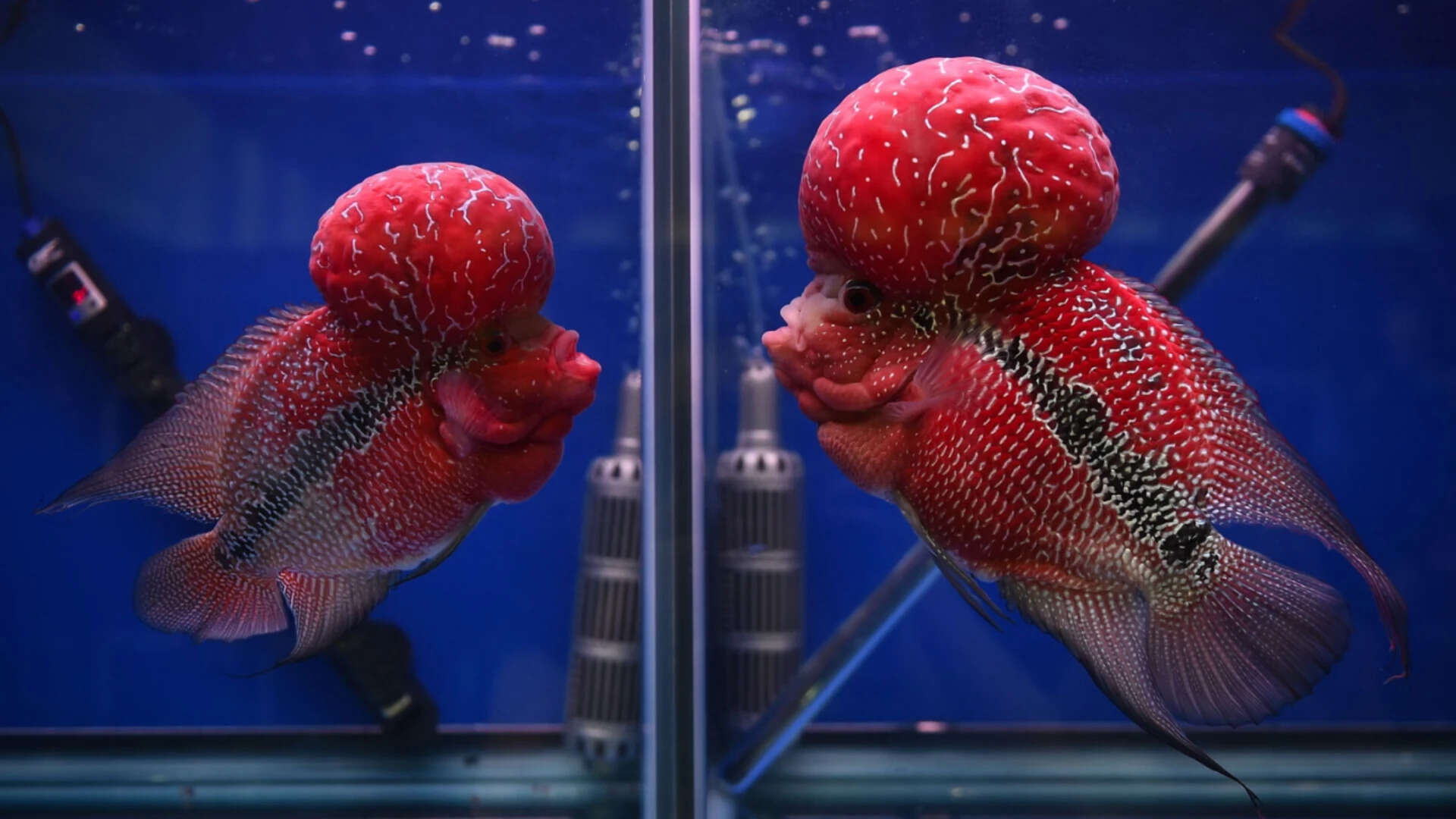
Out of the murky, nutrient-choked depths emerges a creature that looks like a neon nightmare. It is bathed in electric gold, patterned with jagged black spots, and possesses a bizarre, bulbous hump protruding from its forehead like a crown. This is the Flowerhorn cichlid. It was never meant to swim here. It was never meant to exist in nature at all.
Created in laboratories and high-end breeding facilities by crossbreeding various ornamental species, the Flowerhorn is a Frankenstein of the aquarium trade. It is prized by collectors worldwide for its aggressive personality and striking, artificial beauty. Yet, during a savage typhoon, the rising waters broke the boundaries of nearby breeding pens, providing a watery bridge for these captive exhibitionists to slide into the wild.
The escape was quiet. The consequences are deafening.
The Conquest of the Caldera
Imagine a guest who arrives at a crowded, run-down boarding house, eats everyone else’s dinner, takes the best bed, and begins rearranging the furniture. That is the Flowerhorn in Lake Sampaloc.
The 104-hectare lake was already in deep trouble before the gold rush arrived. Decades of untreated household sewage, agricultural runoff, plastic waste, and intensive tilapia farming have pumped the water full of nitrogen and phosphorus. It is a degraded, stressed environment that would make sensitive native species suffocate.
But the Flowerhorn thrives in the filth.
Biologists call this phenotypic plasticity—a scientific term for an terrifyingly high level of adaptability. Where the native ayungin struggles to find clean water to breathe and breed, the Flowerhorn treats the polluted, cloudy lake like a luxury suite. They are fiercely territorial, hyper-aggressive, and reproduce with staggering speed. They do not merely share the lake; they colonize it.
Consider what happens next for the local fishermen. When the invasive cichlids claim the best breeding grounds and monopolize the food supply, the native fish simply vanish. The ayungin, once a common, dependable staple of the local diet, has become a ghost in its own home, driving the International Union for Conservation of Nature to classify it as an endangered species.
A net full of brilliant gold sounds like a treasure trove. In reality, it is the color of an ecosystem collapsing from the inside out.
The Economics of a Beautiful Disaster
Human beings are nothing if not opportunistic. When a disaster wears a beautiful coat, someone will always try to sell it.
In the floating tilapia cages that dot Lake Sampaloc, fishermen frequently find wild Flowerhorns that have pried their way inside, hunting for food. Instead of destroying them, some locals have begun keeping them. They separate the golden invaders, nurse them, and sell them back into the ornamental pet trade. Some have even started intentionally stocking them, turning a biological crisis into a side hustle.
It is a short-sighted survival strategy born of economic necessity, but it creates a dangerous feedback loop. The intentional retention and redistribution of these fish ensure that the invasive population stays firmly rooted, expanding its footprint across the caldera every single day.
But the true cost of this trade might be hidden inside the flesh of the fish itself.
In captive breeding environments, Flowerhorns have been known to host Paracapillaria philippinensis, a insidious parasitic roundworm. If ingested by humans, this parasite causes intestinal capillariasis—a horrific disease characterized by chronic diarrhea, agonizing abdominal pain, and severe malnutrition.
Walk along the shores of the lake, and you will see visiting recreational fishers pulling these bright cichlids from the water, chatting excitedly about how they plan to take them home and toss them into a hot frying pan for dinner. While researchers from Ateneo de Manila University have not yet detected the parasite in Lake Sampaloc's wild Flowerhorn population, the biological chamber is loaded. Promoting these fish as a local food source is a game of ecological Russian roulette.
Shifting Tides and Hard Choices
The tragedy of Lake Sampaloc is not an isolated incident. It is a microcosm of a global crisis. We live in an era where the boundary between the domestic pet store and the pristine wild is dissolving under the weight of human carelessness and extreme weather.
As climate change intensifies, bringing unpredictable typhoons and shifting regional temperatures, the maps of aquaculture will inevitably redraw themselves. Species will escape. Non-native predators will find themselves washed into vulnerable new homes.
Are we watching the slow-motion collapse of an ancient aquatic community, or are we witnessing the brutal, messy birth of a new, synthetic ecosystem?
The scientists studying the lake are not content to sit back and watch the gold rush destroy what remains of San Pablo’s heritage. They are proposing a radical shift toward a circular economy: harvesting the wild Flowerhorns en masse and processing them into high-protein feed for the local tilapia farms. It is a poetic solution—turning the predator into sustenance for the very aquaculture system it seeks to disrupt. But it requires strict, expensive screening for heavy metals, microplastics, and parasites before a single fish can be ground down.
Until those systems are built, the golden invader remains king of the crater.
On a quiet evening, as the mist settles over the volcanic walls of Lake Sampaloc, the surface of the water breaks. For a brief second, a flash of brilliant, unnatural gold catches the dying sunlight before diving back down into the dark, murky depths, leaving nothing behind but a widening ripple on a dying lake.