The morning does not arrive with a trumpet blast. It arrives with the dull, blue-white glow of a terminal screen casting long shadows across an empty desk in lower Manhattan. At 7:02 AM, the air smells of stale espresso and ozone. To the outside observer, the financial markets appear as a cathedral of immutable laws, governed by mathematics, discounted cash flows, and the cold, unblinking logic of capital allocation. But underneath the steel and glass, the system is remarkably fragile. It is a monument built on belief.
And belief is exceptionally easy to shatter.
Consider what happened on a Tuesday that began like any other, only to curdle within minutes into a textbook study of modern panic. A rumor dropped into the digital bloodstream. It was not a report bearing an official seal or an audited balance sheet. It was a phantom, a whisper dressed up in the authoritative syntax of breaking news—a complete fabrication, a hoax designed to provoke twitchy algorithms and human adrenaline.
By the time the human mind could parse the absurdity of the claim, the machines had already spoken.
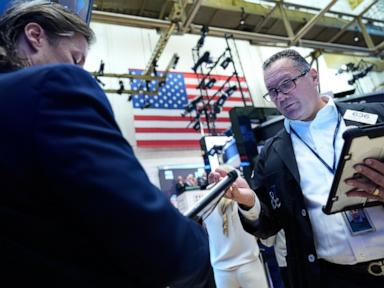
Selling begat selling. In the high-frequency plumbing of global exchanges, code does not pause to ask for context or verify sources. Code reacts. Millions of shares evaporated from portfolios in the space of three heartbeats. Stop-losses triggered like falling dominoes. Down on the floor, traders watched their screens paint themselves in a violent, bleeding crimson. The illusion of steady ground dissolved instantly. Wealth vanished not because a factory burned down or a harvest failed, but because a collective hallucination rippled through the fiber-optic cables faster than reason could chase it.
This is the baseline reality of modern commerce. We have engineered an environment where panic travels at the speed of light, while wisdom still walks on crutches.
And right at the center of this swirling vortex sits a very specific kind of human agony: the policymaker’s dilemma.
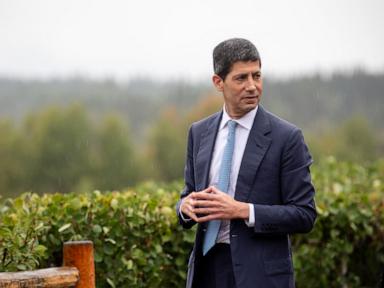
Enter Kevin Warsh.
To understand Warsh is to understand a mind forged in the crucible of elite monetary orthodoxy and political ambition. He is not merely an administrator; he is a man accustomed to standing in rooms where multi-trillion-dollar decisions are whispered over cold coffee. He knows the levers of power. He knows how fragile confidence is, because he watched the scaffolding of the global financial system buckle during the great fractures of the past.
Yet, standing at this particular juncture, Warsh faces a trap that no amount of pedigree or pedigree-honed intuition can easily dismantle.
When the market convulses from a hoax, when the digital mob panics and asset prices plummet, the historical reflex of Washington and Wall Street is simple: demand a rescue. Cry out for the central banker or the incoming economic czar to step into the breach, to issue a soothing communiqué, to inject liquidity, to promise that the safety net is infinite. The market has been trained like a Pavlovian hound to expect a rescue hatch every time the floor drops out.
Herein lies the trap.
If Warsh leans into the traditional playbook—if he rushes out to comfort the jittery crowd with soft words and engineered reassurance—he validates the panic. He signals that a clever lie or a sudden algorithmic shudder is enough to bend state power to its will. He creates a moral hazard so vast it threatens to swallow the next decade of fiscal discipline.
Conversely, if he stands back, if he insists on the cold medicine of market discipline and lets the artificial froth wash out in a brutal, cleansing sell-off, he invites the wrath of millions whose retirements, pensions, and livelihoods are tethered to the casino floor. He risks being cast as the architect of an unnecessary contraction, a cold technocrat indifferent to the immediate, visceral terror of crashing portfolios.
There is no comfortable middle ground here. There is only the jagged edge of a razor.
To feel the weight of this position, one must step away from the macroeconomic abstractions and look at what happens in the life of a single, hypothetical investor caught in the downdraft.
Meet Arthur. Arthur is fifty-eight years old. He is a mid-level logistics manager in Ohio who has spent thirty years quietly tucking away a portion of every paycheck into an index fund. He does not trade derivatives. He does not read algorithmic chat rooms or chase viral market rumors. He simply believed the foundational premise of the American economy: that steady labor, compounded over decades, would purchase a dignified exit from the workforce.
When the hoax hits the wire and the automated sell-off begins, Arthur does not understand the technicalities of high-frequency feedback loops. He only opens his brokerage app on his phone while sitting in his driveway before a dawn shift, watching his retirement balance shrink by twenty percent in a single morning.
The numbers on the screen are just pixels. But the terror in Arthur’s chest is entirely physical. It is the sudden, sickening realization that the security he spent three decades building can be vaporized before he even finishes his morning coffee, driven by invisible actors whispering lies into the digital wind.
This is the human cost of the modern market structure. The distance between a fabricated rumor on a server farm and a man sitting numbly in his car in the Midwest has collapsed to zero.
When commentators analyze Warsh’s dilemma, they often speak in the bloodless vocabulary of policy options. They talk about yield curves, liquidity channels, regulatory posture, and signaling mechanisms. They treat the economy as a complex machine that simply needs the right calibration.
They are wrong. The economy is not a machine. It is a psychological ecosystem. It is sustained entirely by trust, and trust is an intensely human emotion. It is built slowly, drop by drop, over years of stability, and it is drained away in a single catastrophic hour by fear.
Warsh’s true challenge is not managing the mathematics of the debt or appeasing the factions within the political machinery. His challenge is restoring belief when the congregation has just witnessed an idol turn to dust.
If he speaks, every word will be weighed on goldsmiths' scales. Investors will parse his syntax for signs of weakness or resolve. Wall Street bankers will lobby him for backstops. Political adversaries will watch for any misstep to weaponize against his future. He must navigate a theater of mirrors where perception is frequently more potent than reality.
Consider what happens when a leader attempts to stare down a panicking market. In previous decades, a strong voice and a steady hand were enough to calm the room. But today's market is decentralized, hyper-connected, and chronically over-leveraged. It is fueled by attention economy incentives where outrage and panic generate immediate digital engagement. The hoax that triggered this particular sell-off wasn't just an accident of bad data; it was a symptom of an information ecosystem that rewards chaos.
How do you govern a system that treats truth as a secondary feature?
This is the question that haunts the desk where Warsh must make his calculations. Every choice carries an asymmetric penalty. Act too soon, and you encourage recklessness. Act too late, and you allow a phantom rumor to become a self-fulfilling economic depression.
The hours tick forward. The morning session gives way to the afternoon bell. The frantic volume on the exchange floor subsides slightly, replaced by the exhausted hum of computers cooling down in chilled server rooms. The immediate panic has plateaued, but the underlying wound remains open. The hoax has been debunked, yes. The fake news has been retracted. But the capital is still gone, the losses are real, and the invisible anxiety has settled into the bones of the system.
Back in Ohio, Arthur puts his phone back in his pocket, starts the ignition, and drives to work. He has not withdrawn his funds. He has nowhere else to put them. He has simply absorbed the shock, carrying a new, quiet layer of cynicism that he didn't possess twenty-four hours prior. That erosion of faith—multiplied by millions of retail investors, institutional managers, and global trading desks—is the real legacy of the morning’s volatility.
Up in the corridors of power, the decisions are being drafted. Memos are circulated. Advisers whisper warnings and projections. But the fundamental friction of our era remains unresolvable by simple decree.
We have built a civilization capable of transmitting information instantly across the globe, yet we remain utterly vulnerable to the oldest human weaknesses: greed, credulity, and blind terror. The wires are faster than ever, the algorithms sharper, the stakes infinitely higher.
Yet, as the office lights in the capital begin to flicker on against the gathering dusk, the core reality persists. Behind every ticker symbol is a human life holding its breath. Behind every policy dilemma is a leader staring into the dark, wondering if the next whisper will be the one that finally brings the house down. And the silence that follows the closing bell is never truly peaceful. It is simply the pause before the world wakes up to try again.