The water out there does not remember you.
When a gale builds over Lake Michigan, rolling slate-grey and heavy enough to crack the spine of a two-hundred-foot vessel, it behaves with a terrifying indifference. It is cold. It is vast. And if you slip beneath its surface, it will swallow your history whole, folding over your absence without a ripple. In similar developments, read about: Why Buenaventura is Left to Pick Up the Pieces Alone After Colombia’s Massive Earthquake.
For nearly a century and a half, the luxury steamship Lac La Belle sat quietly in that watery twilight. She rested twenty miles off the Wisconsin coast, upright in the dark, her majestic oak timbers locked in a silent vigil. Above her, generations of humans built highways, stared at glowing screens, and forgot that a floating palace of the Victorian age had simply vanished into the abyss.
To understand why she stayed hidden for so long, you have to understand the sheer scale of the inland seas. People often imagine shipwrecks as things easily found, illuminated by dramatic lights in blue water. The reality is an expanse of black, silt-choked mud where a sonar screen reveals only ghosts, and where a search grid can stretch across hundreds of square miles of trackless waves. Reuters has analyzed this fascinating subject in extensive detail.
The story began on a violent October night in 1872. The Lac La Belle had pulled away from the docks of Milwaukee, her holds heavy with 19,000 bushels of barley, barrels of salted pork, flour, and whiskey. Fifty-three souls—passengers seeking a fresh start and crew members tending the massive fires—trusted their lives to her twin-screw iron heart. She was a grand ship, sleek and innovative, a proud symbol of midwestern expansion.
But lakes do not care about human pride.
About two hours into the crossing toward Grand Haven, a quiet panic took hold below decks. Water began to pool where it shouldn't. It rose sluggishly at first, then with terrifying speed, creeping toward the engine room. Imagine standing in the deafening roar of machinery while the floor beneath your boots turns slick, and the dark water climbs higher than your ankles. Imagine the sudden, sickening realization that the pumps are losing the war.
The captain spun the wheel, turning the ship back toward Milwaukee. It was a desperate race against physics. The gale met them head-on, towering waves crashing over the decks with enough force to strip away her upper cabins. Around midnight, the rising flood reached the boiler fires.
Hiss.
The steam died. The ship went blind and paralyzed, a helpless toy at the mercy of the wind. For hours, the crippled steamer drifted south through the pitch-black storm, battered by seas that would not relent. By five in the morning, the order finally came to clear the lifeboats. In the chaos of the freezing dawn, one boat capsized, dragging eight people into the icy lake. The rest clawed their way to survival, but the Lac La Belle herself tilted, slid backward into the depths, and vanished.
And there she stayed. Decades bled into one another.
Enter Paul Ehorn.
Ehorn was fifteen years old when he caught an obsession that would define his life. He became a shipwreck hunter—not for gold or glory, but for the profound human need to close an open loop of history. While most people move on when a search turns up empty, Ehorn spent decades chasing the ghost of the Lac La Belle, starting his quest in 1965.
Think about what a fifty-year search actually looks like. It is not a movie montage. It is winter after winter spent pouring over brittle archival records in dimly lit libraries. It is squinting at microfiche until your eyes burn. It is buying expensive equipment, burning fuel on choppy water, dropping side-scan sonar into the abyss, and hauling it back up over and over again to find nothing but an empty, muddy bottom. It is a masterclass in stubborn hope.
The breakthrough came from a patchwork of modern detective work and old-school neighborhood lore. A commercial fisherman snagged something heavy in his nets miles out from Racine—an artifact specific to nineteenth-century steamships. Maritime historian Ross Richardson passed the crucial lead to Ehorn.
The search grid shrank from an ocean to a needlepoint.
In October 2022, nearly a century and a half to the day since she went down, Ehorn lowered his sonar fish into the depths of Lake Michigan. For two hours, the screen showed standard lakebed topography. Then, a shadow broke the monotony.
It rose from the silt with unmistakable geometry. Long, sweeping longitudinal hogging arches—the structural signatures of a grand 1860s steamer—loomed out of the digital haze.
Ehorn stared at the monitor. The silence on the boat must have been absolute, heavy with the weight of half a century of looking. They had found her.
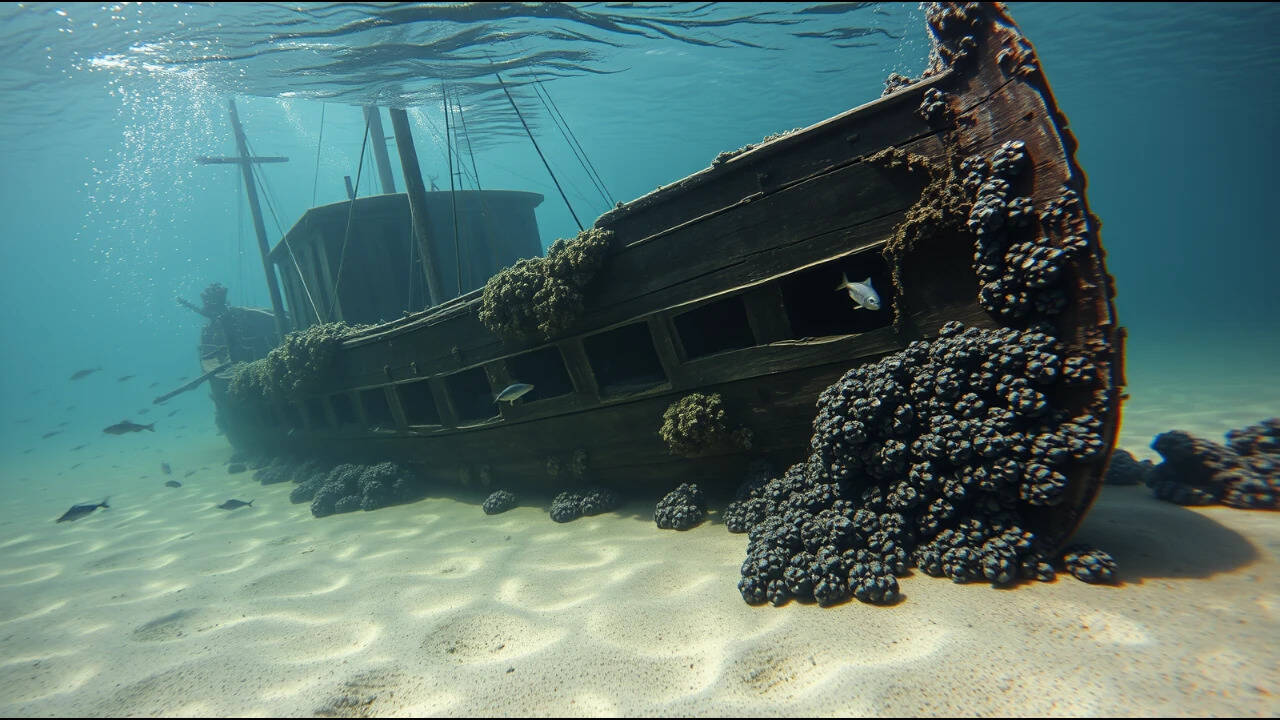
When diving teams finally descended to the wreck years later, they found a vessel suspended in time. The upper cabins were long gone, sheared away by the fury of that night, and invasive quagga mussels have draped the hull in a ghostly, alien shroud. Yet the core of her remains intact. Her oak beams are still strong. Her long hull sits upright in the mud, pointing toward a shore she never reached.
History is rarely lost forever; it is merely waiting for someone stubborn enough to care. Beneath the slate-grey waves of the Great Lakes, thousands of similar stories rest in the quiet dark. They are waiting for their own quiet reckonings, holding fast to the human memories of those who dared to cross the water long before us.



:max_bytes(150000):strip_icc():focal(599x0:601x2)/jake-romy-reiner-dodgers-080326-14058af2500249a2afdfd69ef3af9f09.jpg)