The modern corridor of power does not smell like cigar smoke and heavy mahogany anymore. It smells like industrial carpet, recycled air, and the faint, metallic tang of overheating servers. It is quiet. The most consequential decisions of our era do not echo through grand marble halls. They vibrate silently inside a lithium-ion battery gripped in a politician’s palm.
Every citizen understands the basic contract of democracy. We vote, they govern, and in return, we get to see the receipts. But what happens when the receipts are deleted? What happens when the defining crisis of a generation is managed not through official state papers, but through a series of fleeting, encrypted bubbles on a private smartphone screen?
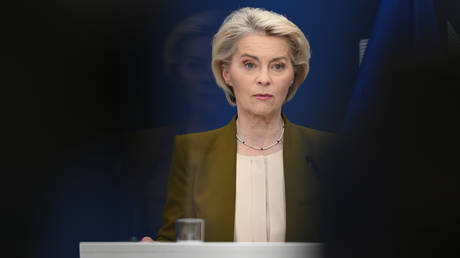
This is not a theoretical exercise in political philosophy. It is the reality currently fracturing the highest echelons of the European Union. At the center of the storm stands Ursula von der Leyen, the President of the European Commission, and a ghost. Specifically, a ghost of a text message.
The Vanishing Trail
To understand how a continent's faith can hang on a few megabytes of data, you have to look back to the spring of 2021. The world was desperate. Lockdowns had stretched thin the fabric of mental health and global economies. Vaccines were the only exit ramp from a collective nightmare. It was during this period of intense pressure that von der Leyen engaged in a personal exchange of text messages and calls with Albert Bourla, the Chief Executive of Pfizer.
The result of that intense, private dialogue was a staggering contract. The European Union locked in up to 1.8 billion doses of the Pfizer-BioNTech vaccine. The deal was valued at an estimated thirty-five billion euros.
When journalists asked to see the text messages that paved the way for this astronomical expenditure of public funds, the European Commission blinked. Then, they stonewalled. They claimed that short-lived, ephemeral messages do not fall under the EU rules on access to documents. They suggested that these texts were too fleeting, too casual to be archived. They were, in essence, digital whispers.
But thirty-five billion euros is not a whisper. It is a roar.
Consider a small business owner in Brussels or a taxpayer in Munich. If either of them undergoes a government audit, they cannot simply wave their hands and declare their financial correspondence too temporary to preserve. The state demands records. The law requires transparency. Yet, at the apex of European governance, a different set of rules seemed to apply.
The pushback was inevitable. Independent journalists fought. Watchdogs barked. Eventually, the New York Times sued the Commission to force the disclosure of those messages. The case became a symbol of a much larger ailment: the growing chasm between the governing elite and the people they represent.
A Devastating Opinion from Luxembourg
The legal machinery of Europe moves slowly, but when it turns, it crushes. Recently, the debate arrived at the European Court of Justice in Luxembourg. An Advocate General of the court delivered a legal opinion that cut through years of bureaucratic obfuscation like a scalpel.
While these opinions are not technically binding, they are highly influential. They serve as the philosophical and legal blueprint for the final rulings. The verdict from the Advocate General was unsparing. The Commission’s refusal to search for, let alone disclose, those text messages was a profound misstep.
The legal argument presented by the court's adviser dismantled the Commission’s defense piece by piece. The law does not care about the medium; it cares about the content. If a public official uses a carrier pigeon, a wax seal, or an encrypted messaging app to negotiate a multi-billion-euro deal using taxpayer money, that communication belongs to the public archive. Period.
This development is more than a minor administrative headache for von der Leyen. It is a reputational body blow. It shatters the narrative that the "Pfizergate" controversy was merely a partisan distraction cooked up by political opponents. Instead, the highest legal minds in Europe are now confirming what citizens felt instinctively: something fundamental was broken in the way the public’s business was conducted.
The Psychology of the Closed Door
Why does this matter so deeply? Why should a teenager or a busy parent care about archived text messages from years ago?
Trust is a non-renewable resource. Once a government burns through it, you cannot simply mine more. When leaders operate in total secrecy, it creates a vacuum. Human nature abhors a vacuum, especially a political one. In the absence of clear, transparent facts, conspiracy theories take root. Skepticism turns into cynicism, and cynicism turns into outright hostility toward democratic institutions.
Imagine a relationship where one partner insists on hiding their phone, deleting messages, and demanding absolute trust while refusing to show any vulnerability or accountability. The relationship collapses. That is the exact dynamic currently playing out between the European Commission and the European public.
The tragedy of the situation is that the vaccine procurement, in many ways, was a logistical triumph. It saved lives. It brought a chaotic pandemic under some semblance of control. But by wrapping the negotiations in a shroud of secrecy, the leadership tainted their own achievement. They fed the very forces of distrust that they claimed to be fighting against.
The Illusion of Efficiency
There is a seductive argument often whispered in the backrooms of government. It suggests that transparency is a luxury for peaceful times. In a crisis, the argument goes, leaders need the flexibility to move fast, break protocols, and cut deals without the paralyzing fear of public scrutiny. They need to be able to text a CEO at midnight to save lives.
It is a false choice.
True efficiency does not require darkness. In fact, history shows that decisions made in the dark are far more likely to be flawed, expensive, and unsustainable. When the spotlight is turned off, mistakes are buried rather than corrected.
The Advocate General’s opinion is a sharp reminder that the rules of democracy are not optional guidelines to be discarded when the weather gets rough. They are the anchor. If you throw the anchor overboard during a storm to make the ship lighter, you will simply drift into the rocks.
The Moving Finger Writes
The final ruling from the European Court of Justice looms on the horizon. The judges are not forced to follow the Advocate General's advice, but they rarely deviate far from it. The pressure on the Commission presidency is mounting, creating a palpable tension in the offices of Brussels.
This is no longer just about vaccines or Pfizer. This is about setting a precedent for the digital age. If the court rules against the Commission, it will fundamentally redefine how modern leaders are allowed to communicate. It will signal the end of the private-text diplomacy era for public servants.
Every deleted message, every refused freedom of information request, leaves a scar on the body politic. The public is watching, waiting to see if the law applies equally to the president of a superpower and the citizens who fund it.
The glowing screen in a leader's hand can no longer be a black box where public accountability goes to die. The light from that screen must shine both ways. If democracy is to survive its current crisis of faith, the digital whispers must finally be brought into the light of day.


