For three winters, Sarah watched the world through a glass rectangle in her living room. She knew the exact curvature of the fictional continents, the cadence of medieval kings, and the sharp, rapid-fire wit of schoolgirls growing up in nineties Derry. She knew them better than she knew her neighbors.
One evening, while the rain smeared the windows of her apartment, she looked down at her hands. They were smooth, pale, and entirely untouched by adventure. On the television, a character was standing on a precipice of black basalt, the Atlantic ocean crashing against the stones below with a ferocity that seemed to rattle the speakers. Sarah looked at her screen, then at her boots in the hallway. In related developments, read about: The Valley That Swallowed Time And The Road That Brought It Back.
She booked a flight to Belfast that night.
Sarah is not alone. She is part of a massive, quiet migration that has reshaped global tourism. Over eighty percent of younger travelers now admit that their itineraries are dictated not by traditional travel brochures or travel agencies, but by the backgrounds of their favorite television shows and movies. They call it set-jetting. It is an eight-billion-dollar phenomenon, but to talk about it in billions is to miss the point entirely. The Points Guy has provided coverage on this important issue in great detail.
People are not traveling to see film sets. They are traveling to find the boundary where their imagination ends and the physical world begins.
The Geography of Fiction
When you step off the plane in Northern Ireland, the air hits you first. It smells of peat smoke, saltwater, and a ancient wetness that feels older than language.
For decades, this part of the world was defined by a different kind of narrative. The news reports of the late twentieth century painted a picture of concrete, metal barriers, and political strife. But a strange thing happened when the cameras of major television networks arrived. They did not look at the tarmac; they looked at the hills. They looked at the dark hedges of Stranocum and the jagged teeth of the Antrim coast.
Consider what happens when a place becomes a backdrop for myth. The real location does not disappear, but it gains a shadow.
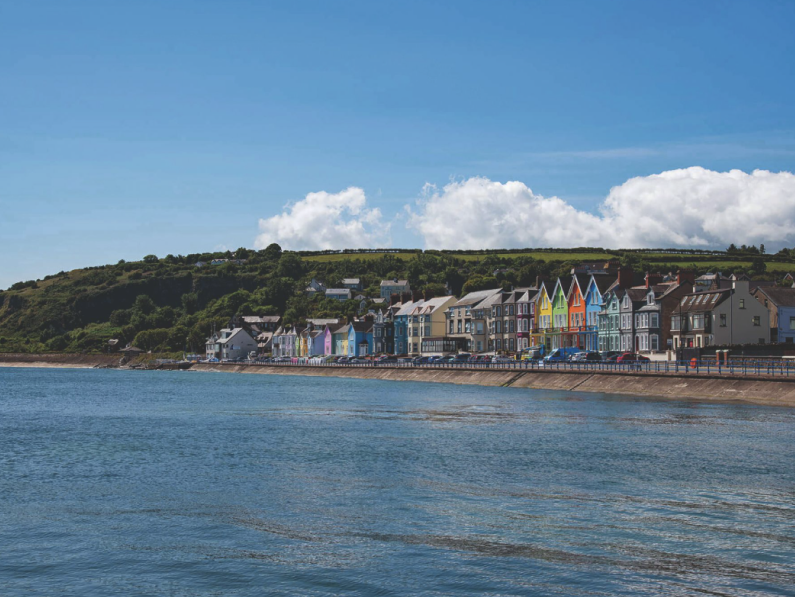
Sarah found herself driving a small rental car along the Antrim Coast Road, a ribbon of asphalt squeezed between towering limestone cliffs and an emerald sea. The road forces a driver to be present. You cannot look at a phone when a sharp curve reveals an isolated harbor that looks exactly like the fictional iron islands where television lords plotted their wars.
The first stop for many who follow this impulse is Tollymore Forest Park. To the casual hiker, it is a magnificent expanse of old oak and Douglas fir at the foot of the Mourne Mountains. But to anyone who has spent years immersed in modern fantasy epics, it is something else entirely. It is the place where the story began.
Walking down the damp paths of Tollymore, Sarah noticed that the silence here is heavy. The moss grows thick over the stone bridges. When she stopped by the Shimna River, she saw a family from Toronto standing near the spot where a fictional family discovered a litter of mythical wolves in the pilot episode of a global television phenomenon.
The father was trying to explain the camera angles to his teenage son. But the son was not looking for a camera. He was touching the cold, gray bark of an ancient tree, his fingers sinking into the moss.
That is the transition. The screen is flat. The bark is rough. The set-jetter is someone who needs to verify that the beauty they saw on a screen was not just pixels and digital manipulation. They need to know that the wildness exists.
The Walls That Speak in Two Voices
An hour and a half northwest of the forest lies Londonderry, or Derry, depending on which history you lean into. It is a city defined by its stone walls, built between 1613 and 1618. They are thick, dark, and unbroken.
For a long time, those walls were a symbol of division. Today, they are walked by thousands of visitors who came because of five teenage characters who made the world laugh.
The television series Derry Girls did something remarkable. It took a period of intense historical trauma and viewed it through the irreverent, chaotic lens of adolescence. It showed that even when armored vehicles are on the street, teenagers are still worried about exams, prom dresses, and unrequited love.
In the Tower Museum, located within the city walls, Sarah stood before a glass case housing the actual school uniforms worn by the actors in the show. A group of three women in their late twenties stood beside her. One of them was crying softly.
It seemed absurd at first. Why cry over a polyester school uniform?
But the woman, whose name was Maya, explained it. She had grown up in a fractured town in another part of the world. Watching the show had been the first time she saw her own complicated, anxious childhood reflected with warmth rather than tragedy. Seeing the uniform in the real world made her own survival feel real.
The museum exhibition brings together props, furniture, and original scripts. It sits just feet away from historical artifacts detailing the Siege of Derry in 1689. The history and the comedy live in the same room, leaning against one another.
When you walk out of the museum and onto Market Street, you can see the massive mural painted on the side of the Badgers Bar. The faces of the five main characters look out over the city, smiling, skeptical, and permanent. Visitors stand below them, mimicking their expressions for photographs.
But the real magic happens when you cross the Peace Bridge, a graceful structure that curves across the River Foyle. It was built to connect two communities that had been separated by generations of violence. Today, people walk across it because they saw it on television, but as they walk, they look down at the gray water and realize the weight of the ground they are standing on.
The Mechanics of the Pilgrimage
Planning a journey into this dual reality requires a shift in how one thinks about travel. It is not about checking off monuments. It is about understanding the logistics of light and weather.
Northern Ireland is small. You can drive from the east coast to the west coast in less than three hours. But to rush through it is to miss the very essence of why these places were chosen by filmmakers in the first place. They were chosen because the weather changes every twenty minutes. A beach can look like a sunny paradise at noon and a desolate, apocalyptic wasteland by two in the afternoon.
If you are planning to follow this trend in 2026, the car is your most important tool. Do not rely on large tour buses if you can avoid it. The buses arrive at the Game of Thrones Studio Tour in Banbridge or the Carrickfergus Castle with mechanical precision, unloading hundreds of people at once.
Instead, arrive early. Stand in the courtyard of Carrickfergus, an 800-year-old Norman fortress that has survived sieges, shore bombardments, and modern film crews, before the gates officially open to the masses. Look out over Belfast Lough when the mist is still rising.
The studio tour in Banbridge is a different kind of experience. It is not an ancient ruin; it is a massive warehouse where the internal world of the Seven Kingdoms was built. You walk through the Great Hall of Winterfell and stand beneath the dragon skulls of King's Landing.
The danger of these spaces is that they can feel like a theme park. The antidote is to pair them with the natural world.
After spending a morning surrounded by plastic props and green screens in the studio, Sarah drove back toward the coast, toward the Walled Garden at Glenarm Castle. The castle estate has stood for four centuries. Its walls were built to keep out the harsh sea winds so that rare flowers could grow. Filmmakers have used it for everything from historical dramas to fantasy films.
Inside the garden, the air was warm and smelled of damp earth and lavender. Sarah sat on a wooden bench. A local gardener was pruning a rose bush nearby.
"They come for the stories," the gardener said, not looking up from his shears. "They think they're looking for a castle. But then they sit down here and they realize they just wanted a place where the world feels quiet for an hour."
The Invisible Stakes
There is a risk to set-jetting. Local economies can be overwhelmed by the sudden influx of thousands of people seeking a specific camera angle. The Dark Hedges, an avenue of ancient beech trees planted by the Stuart family in the eighteenth century, suffered damage because too many cars drove over the fragile roots that lay just beneath the dirt road.
The trees are dying now, some of them victims of old age, others of their own fame. The road is now closed to traffic, a necessary boundary erected to protect the physical world from the digital one.
This is the tension at the heart of the trend. When we turn a real place into a symbol, we risk forgetting that it is a real place. The people who live along the Causeway Coast still have to buy groceries, go to work, and live lives that have nothing to do with dragons or teenage comedy.
The best travelers are those who understand this boundary. They use the fiction as an invitation, but once they arrive, they accept the reality.
On her final night, Sarah stayed at a small guest house near Ballintoy Harbour. The harbor is small, a crescent of dark stone tucked away at the end of a steep, winding road. On screen, it was a place of gray skies, cruelty, and cold water.
In reality, the sun was setting, casting a long, amber glow across the pools of salt water left behind by the tide. A few local children were jumping off the pier into the cold Atlantic, their shouts echoing off the limestone cliffs.
Sarah walked down to the water's edge. She was wearing her old boots, now scuffed by the gravel of Derry and darkened by the mud of Tollymore. She didn't take out her phone to compare the view to a screenshot.
She simply stood there, feeling the wind against her face, watching the water turn from orange to gray as the light failed, entirely satisfied that the world was larger than the glass rectangle she had left at home.