The coffee machine in the third-floor breakroom still gurgles at six in the morning, a reliable, mechanical heartbeat in a building that has forgotten how to sleep. For fifteen years, Marcus has walked past it at precisely this hour. He carries a stained ceramic mug, a badge that stopped opening the side doors months ago, and a quiet, persistent dread.
He is a senior copywriter at a mid-sized marketing firm in Chicago. Or at least, he was until the algorithms started writing the first drafts.
Now, his job title remains on his email signature, but the texture of his days has entirely dissolved. The screen in front of him no longer blinks with the raw, chaotic terror of a blank page. Instead, it populates itself with mathematically probable sentences in milliseconds. Clean. Correct. Soulless.
Marcus is not alone in his quiet panic. Across the globe, millions of workers stare at similar screens, bracing for the axe. We have been told a simple, terrifying story about automation: the machines arrive, the humans leave, and the office lights go out permanently. We picture empty desks, tumbleweeds of printer paper, and a society rendered obsolete by silicon.
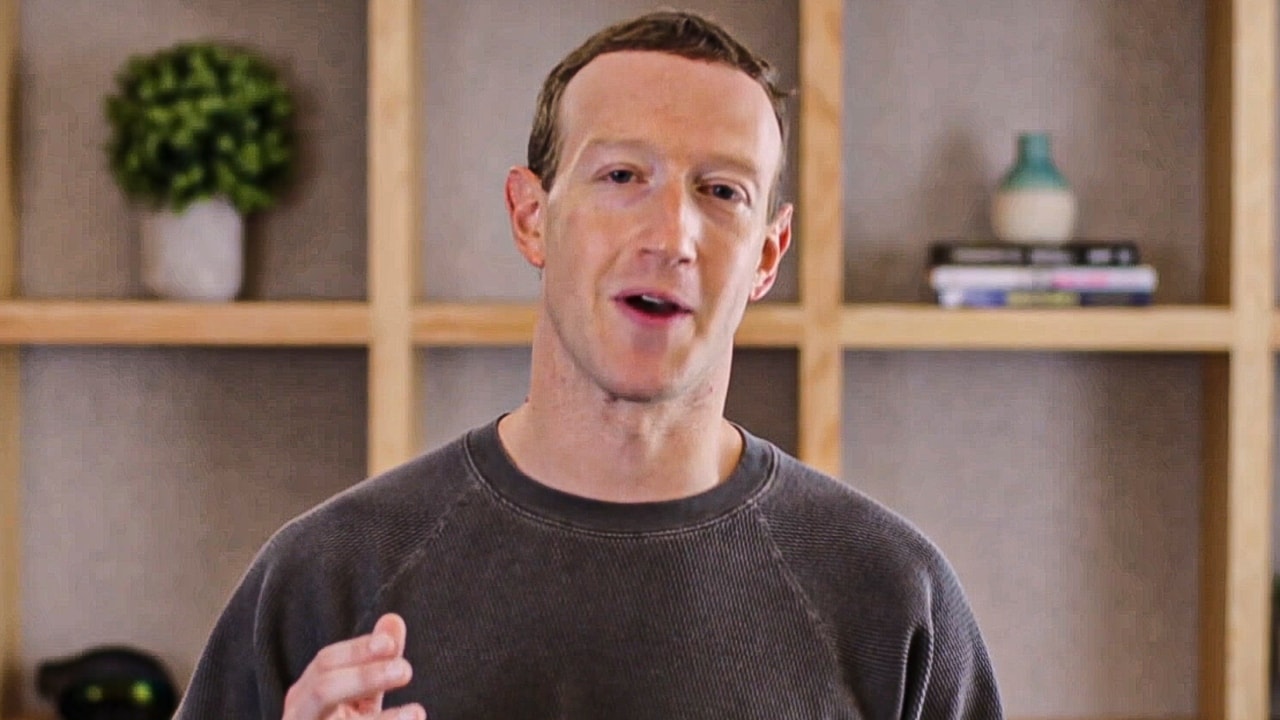
Mark Zuckerberg looks at this exact anxiety and offers a radically different prophecy. In recent public discussions, the Meta chief executive has pushed back against the widespread narrative of mass displacement. His thesis is deceptively simple. Artificial intelligence will not destroy employment. It will multiply it.
To understand why, we have to look past the Silicon Valley gloss and examine how human labor actually evolves. But first, let us clear away the comfortable lies we tell ourselves about the past.
The Myth of the Final Job
Every major technological shift triggers a collective panic attack.
When the power loom arrived in the nineteenth century, textile workers in England did not send thank-you notes to the inventors. They smashed the machines with hammers. They were known as Luddites, a term we now use as a lazy insult for anyone skeptical of progress, but their terror was entirely rational. They could see their livelihoods evaporating into steam and iron.
They were right about the disruption. They were wrong about the destination.
The loom destroyed specific tasks, but it unlocked an entirely new economy of clothing production, distribution, retail, and advertising that employed vastly more people than the old cottage industries ever could. The typewriter did not eliminate writers; it created the vast administrative class of the twentieth century. The spreadsheet did not make accountants obsolete; it elevated them from human calculators to financial strategists.
History repeats itself, yet we refuse to learn its rhythm. We mistake the automation of tasks for the eradication of labor.
Zuckerberg’s argument rests on this historical pivot. When tools become exponentially cheaper and more capable, the cost of creation plummets. When the cost of creation plummets, demand explodes.
Consider what happens next: If a small business owner can suddenly generate marketing campaigns, legal drafts, and software prototypes for pennies, that business owner does not simply pocket the savings and fire everyone. They expand. They build three more products. They enter new markets. They hire more people to manage the unexpected complexity of growth.
The bottleneck shifts. It moves away from execution and toward imagination.
The Weight of the Invisible Stakes
Numbers on a spreadsheet rarely capture the human cost of transition.
Let us introduce Elena. She is a hypothetical graphic designer based in Austin, Texas, whose daily reality mirrors thousands of real professionals today. Elena spent a decade mastering the intricate mechanics of vector manipulation, color grading, and layout composition. She knows the subtle emotional weight of a serif versus a sans-serif font.
When text-to-image generators and automated design suites arrived, Elena felt the floor drop out from under her feet. Clients who once paid thousands of dollars for brand kits suddenly began bringing their own AI-generated drafts to meetings, asking her to just "touch it up."
She faced a choice that millions are confronting right now. She could dig her heels into the sand, declare her craft sacred, and watch her client roster dry up. Or she could cross the chasm.
Elena chose the latter, though not without bitterness. She stopped spending her days pushing pixels around a screen. Instead, she became an editor of possibilities. She learned to prompt, to curate, to steer the raw, chaotic output of machine intelligence toward genuine human resonance. Her workload did not shrink. It shifted upward. She now manages ten projects simultaneously, serving as a creative director for clients who have no idea how to shape a cohesive brand identity on their own.
This is the nuance missing from doomsday prophecies. The jobs of tomorrow will not require less human effort; they will require a different kind of human effort.
Yet, we must be brutally honest about the friction. Not everyone is Elena. Not every displaced administrative assistant, factory worker, or copywriter has the luxury of time, money, or emotional bandwidth to reinvent their skill set overnight. The transition period is where human lives get chewed up.
When Zuckerberg predicts more jobs, he is looking at the macro-economic horizon—the ten-year view where equilibrium returns. But economies do not live in the long run; people live in the immediate, painful present. In the short run, the friction is real, heavy, and deeply unfair.
The Architecture of the Next Economy
To see where the labor market is actually heading, we must look at how value is created when intelligence becomes practically free.
Think of electricity. In the early days of the electrical grid, factories had to be entirely redesigned. Before the unit motor, a single massive steam engine in the basement drove a labyrinth of leather belts and pulleys that turned every machine on the floor. When electrical engineers suggested putting a tiny electric motor on every single machine, skeptics asked why waste so much money on redundant tech.
The answer was transformation. Once every machine had its own independent power source, factory layouts could be optimized for workflow rather than shaft alignment. Productivity skyrocketed, and entire new manufacturing sectors were born.
Artificial intelligence is our new electrical grid.
Right now, we are treating it like a fancy typewriter—clamping it onto old workflows, expecting it to do the exact same jobs humans used to do, just a bit faster. This is a profound miscalculation.
When intelligence becomes a cheap, ubiquitous utility, the economic value of raw analysis drops to near zero. But the value of intent skyrockets. Knowing what problem to solve becomes infinitely more important than knowing how to solve it.
This is why predictions of total job annihilation miss the mark. The world is not running out of problems. If anything, we are about to unlock a golden age of complexity. As AI automates routine problem-solving, humans will be forced to confront larger, messier, higher-order challenges—ethics, governance, curation, emotional connection, and strategic direction.
Marcus, sitting at his desk with his cold coffee, realizes this not through a corporate memo, but through a recent interaction with a client.
The client did not want the AI-generated copy. The client wanted Marcus to look him in the eye and tell him whether the campaign’s core message was authentic. The machine could generate a thousand persuasive paragraphs, but it could not sit across a conference table, read the subtle shift in a human partner's posture, and whisper, This isn't who we are.
That is the space where the future of work is being written. It is a space of discernment.
The Quiet Resolution
The office is waking up now. Other employees are trickling in, clutching their own cups of coffee, carrying their own quiet uncertainties.
The technological revolution is not a distant storm on the horizon. It is here, humming quietly in the server racks and glowing softly against our retinas. It is displacing routines, rewriting job descriptions, and forcing us to ask uncomfortable questions about what makes our labor uniquely human.
Zuckerberg is likely right about the macro math. More tools create more leverage; more leverage creates more economic activity; more economic activity creates more jobs.
But numbers do not heal the anxiety of the transition. They do not comfort the worker whose daily routine has been hollowed out by an algorithm.
The story of the coming decade is not about humans versus machines. It is about the agonizing, beautiful, and necessary evolution of what we bring to the table when the machine has finished its work.
Marcus closes his laptop's automated draft window, opens a blank document, and starts typing his own sentence, letter by human letter.