Silence.
That is the first thing you notice when you walk onto a high-security server floor at three in the morning, listening to the low, liquid-cooled hum of ten thousand graphics processing units thinking in unison while the rest of the world sleeps through the quiet birth of a new geopolitical order.
For years, those of us who spent our careers wiring together the physical nervous system of the modern internet treated hardware like plumbing. You bought the fastest pipe, you bolted it into the rack, and you prayed the cooling pumps held out through July. We did not ask about the citizenship of the silicon, nor did we lose sleep over the dinner guests of the men who designed the chips.
Then the rules changed overnight.
Now, a resurrected joke from Elon Musk—a throwaway "If she's a 10..." meme posted into the digital ether years ago—has suddenly become the improbable soundtrack to one of the fiercest national security tremors in modern tech history. Across social feeds, millions of users are sharing Musk's old punchline like a digital talisman, pairing it with breaking headlines scrutinizing Nvidia chief executive Jensen Huang and allegations surrounding historical links to Chinese intelligence circles.
To understand why a recycled internet gag is colliding with a multi-trillion-dollar semiconductor empire, you have to look past the noise of the timeline. You have to look at the invisible wires connecting a leather-jacketed billionaire in Santa Clara to the quiet, high-stakes shadow war unfolding between Washington and Beijing.
The Anatomy of a Digital Boomerang
Internet culture has a long memory and zero patience for nuance.
When Elon Musk originally typed out his "If she's a 10..." riff on X, formerly Twitter, it was classic Silicon Valley shitposting—a playful, slightly juvenile nod to red flags hidden beneath an attractive exterior. In the economy of online attention, memes operate like dormant seeds. They sit buried in the algorithm for months or years until an unexpected storm waters the soil, causing them to bloom into something the original author never intended.
That storm arrived the moment rumors, leaked dossiers, and investigative whispers began circulating about Nvidia's historical footprints in China and alleged peripheral connections to state-linked operatives. Suddenly, the internet had a vessel for a complex, terrifying anxiety it didn't quite know how to articulate.
Think of the meme as a pressure valve. Most people do not read fifty-page congressional briefings on export controls, dual-use lithography, or H100 tensor core architecture. They do not track shell companies in Shenzhen or parse the subtle diplomatic choreography of a CEO visiting Beijing while American export bans tighten around his company's throat.
They do, however, understand a simple, visceral warning: Look closer at the thing everyone is obsessed with.
And right now, the entire global economy is obsessed with Nvidia.
The Man in the Leather Jacket
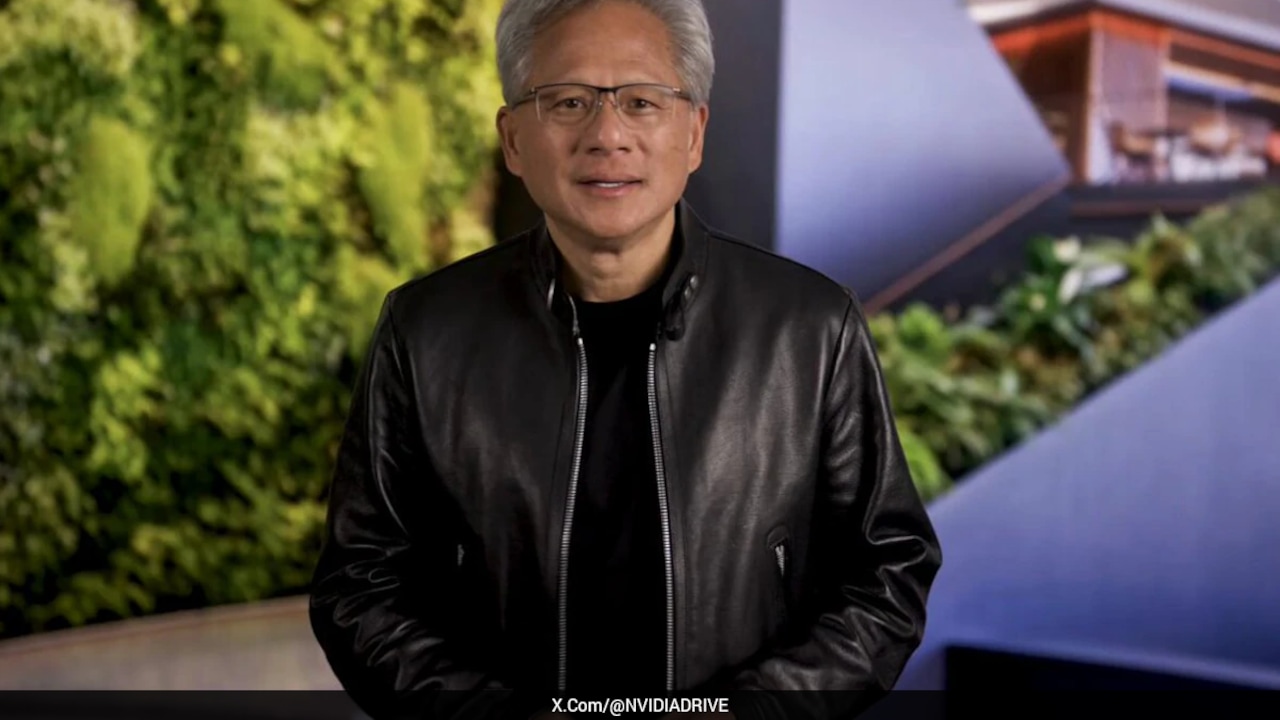
Walk into any tech conference from San Jose to Taipei, and you will feel the gravitational pull of Jensen Huang before you even see him. He carries himself with the easy, theatrical warmth of a rock star who happens to hold a master's degree in electrical engineering from Stanford. He signs autographs on people's chests. He jokes about eating ramen. He presents himself as the ultimate American immigrant success story—a boy born in Tainan, raised in Thailand and rural Kentucky, who washed dishes at Denny's before co-founding a company in 1993 that would eventually become the sole gatekeeper of the artificial intelligence boom.
I remember watching Huang keynote a crowded auditorium nearly a decade ago, long before Wall Street knew how to spell "transformer model." Back then, Nvidia was a video game company trying to convince skeptical bankers that parallel computing would eventually swallow the world. He stood under the stage lights, sweating slightly beneath that signature black leather jacket, speaking with a missionary fervor that felt equal parts brilliant and desperate.
He won. He won so completely that Nvidia is no longer just a vendor; it is the tollbooth on the highway to the future. Every major lab, every defense contractor, every sovereign wealth fund trying to build an artificial brain has to pay rent to Jensen Huang.
When one company holds that kind of monopoly over the foundational tools of twenty-first-century power, neutrality becomes a luxury you can no longer afford.
Consider a hypothetical scenario to see why Washington's nerves are frayed to the breaking point. Imagine a small team of engineers working inside a state-backed research institute in Beijing. Their goal isn't to build a better chatbot to write poetry or summarize emails; their goal is to simulate hypersonic missile trajectories or crack encrypted naval communications in real time. To run those simulations, they need massive clusters of high-end chips. On paper, Washington has slammed the door shut, banning Nvidia from selling its most advanced processors to Chinese buyers.
Yet those chips keep showing up. They travel through gray-market distributors in Singapore, tucked inside third-party server racks, routed through shell firms that exist for six weeks before vanishing into thin air.
Now ask yourself: how do you police a supply chain when the company making the hardware also relies on the Chinese market for billions of dollars in revenue, maintains deep research partnerships across Asia, and employs thousands of engineers whose professional networks span both sides of the Pacific?
When Paranoia Meets Proof
This is where the story gets uncomfortable, and where honest observers have to admit how murky the water truly is.
When allegations surface linking a top tech executive's orbit to Chinese intelligence—often referred to in security circles by the clinical, bureaucratic shorthand of "united front" influence or espionage networks—the public tends to split into two predictable camps. One side cries McCarthyism, arguing that any prominent Asian-American executive who does business in China is automatically treated as a fifth-column suspect. The other side cries treason, convinced that every corporate trip to Shanghai is a covert handover of the crown jewels.
Both reactions miss the real mechanism of modern intelligence gathering.
Espionage in the age of silicon rarely looks like a trench-coated spy photographing blueprints with a miniature camera. As historical counterintelligence cases across Silicon Valley have repeatedly shown, state intelligence agencies play a patient, institutional game. They fund joint academic labs. They sponsor talent-recruitment programs that offer lucrative grants to mid-level engineers. They cultivate relationships with senior executives not by asking them to betray their country, but by aligning their financial incentives with the host nation's strategic goals.
It is an invisible tether. You don't feel the pull until someone yanks on it.
For Nvidia, navigating this terrain has required walking a razor's edge for years. Huang has publicly walked a careful line—praising the ingenuity of Chinese engineers and warning that cutting off access to the Chinese market will only force domestic rivals like Huawei to accelerate their own chip designs, while simultaneously assuring American lawmakers that Nvidia complies strictly with every letter of U.S. export law.
To critics in Washington, however, compliance on paper feels dangerously thin when the stakes involve artificial general intelligence. And to Elon Musk—whose own companies, from Tesla's massive Gigafactory in Shanghai to xAI's colossal Colossus supercomputer cluster in Memphis, are deeply entangled in the same geopolitical web—watching a rival titan face scrutiny offers irresistible narrative fuel.
The Rivalry Beneath the Meme
You cannot separate the viral resurgence of Musk's post from the quiet, high-stakes tension between the two men who currently control the physical bottlenecks of AI.
Musk needs Huang. Right now, xAI is burning through billions of dollars to hoard hundreds of thousands of Nvidia H100 and Blackwell chips, racing to catch up with OpenAI and Google. At the same time, Musk hates depending on anyone he cannot control. He has spent the last three years complaining privately—and occasionally publicly—about Nvidia's pricing power, allocation priorities, and stranglehold on the market, pouring fortune after fortune into Tesla's custom Dojo supercomputer in a bid to break free.
In Silicon Valley, memes are rarely just jokes. They are soft power.
When a post from Musk's past resurfaces at the exact moment Nvidia's geopolitical vulnerabilities hit the front page, it taps into a broader shift in how the tech elite view one another. The era of boundless globalism—when founders boasted about building "borderless" companies and wore diplomatic ambiguity as a badge of sophistication—is dead. In its place stands a stark, unforgiving binary: whose side are you on when the servers go to war?
I felt that shift firsthand a few months ago during a late-night dinner in San Francisco with a former hardware architect who had just left one of the major chipmakers. Halfway through the meal, he glanced down at his phone, read a news alert about new Department of Commerce restrictions, and rubbed his temples like a man nursing a permanent migraine.
"Ten years ago," he told me quietly, "my biggest worry was thermal throttling on a new board design. Last week, I had to sit through a three-hour briefing with federal investigators asking me who I shared a cab with at a conference in Shenzhen in 2018."
He wasn't angry. He just looked exhausted. The innocence had been scrubbed out of the wires.
The Cost of Looking Away
What makes this moment so disorienting for everyday observers is that the threat isn't visible to the naked eye.
When a bridge collapses or a refinery catches fire, the crisis has a clear shape. You can point at the smoke. You can measure the damage in concrete and steel. When the crisis lives inside the microscopic architecture of a silicon wafer—etched at three nanometers, invisible even under a standard optical microscope—the danger feels abstract until the moment it isn't.
Think about what a modern GPU actually does. It is not merely a fast calculator. In large clusters, these chips become synthetic factories for insight, capable of designing novel pathogens, orchestrating autonomous drone swarms, or running automated cyberattacks against power grids at speeds no human defender can match. Whoever controls the manufacturing, distribution, and security of those chips holds the ultimate asymmetric advantage of the twenty-first century.
That is why a stray allegation about intelligence links around Nvidia's leadership lands like a match dropped into dry brush. Even if every single claim turns out to be exaggerated, misconstrued, or rooted in decades-old peripheral associations, the sheer fragility of the trust holding our digital infrastructure together has been exposed.
We built our future on a single point of failure. We handed the keys to the kingdom to a handful of companies operating across the most volatile geopolitical fault line on earth, and we assumed that market incentives would keep everyone honest.
The Hum in the Dark
Late at night, when the social media outrage cycles move on to the next celebrity scandal or political gaffe, those server racks keep humming.
Somewhere in a windowless facility outside Memphis, or inside a guarded data center in northern Virginia, or behind concrete walls in an undisclosed province outside Beijing, millions of tiny silicon gates are flipping open and closed billions of times per second. They do not care about viral memes. They do not read congressional subpoenas. They do not know the names of the men who stand on stage in leather jackets or post jokes from private jets.
They simply execute the instructions fed into them, indifferent to whose hands wired the board, and silent about who might be listening on the other end of the line.