The smell of an ice rink at five in the morning never changes, no matter which side of a border you stand on. It is a sharp, metallic cocktail of frozen water, stale sweat, wet wool, and the faint, sweet exhaust of a Zamboni warming up in the dark.
For four years, a nineteen-year-old winger—let us call him Andrei, a composite of the thousands of junior players caught in the gears of international geopolitics—laced up his skates in that exact sensory vacuum. He taped his stick with black friction tape. He practiced his one-timer from the left circle until his wrists ached. And every single day, he stared at a ceiling where a national crest used to hang, wondering if he would ever be allowed to wear it on his chest against the best in the world.
Then, a legal gavel fell in Lausanne, Switzerland.
When news broke that Russia was returning to the Ice Hockey World Championships following a sport court ruling, the headlines were predictably dry. Reporters summarized the Court of Arbitration for Sport decision in sterile, legalistic prose. They cited International Ice Hockey Federation statutes, neutrality clauses, and tournament seeding adjustments. They treated the return of the Red Machine like a software update—a patch applied to a bracket that had been missing a file since February 2022.
They missed the point entirely.
A hockey tournament is not a spreadsheet, and a Court of Arbitration for Sport ruling is not merely a legal footnote. Beneath the cold ink of that decision lies a collision of athletic dreams, moral outrage, locker-room dread, and the uncomfortable truth that sports have never actually been separate from the wars we fight.
The Illusion of the White Line
To understand why this ruling feels like an earthquake in the hockey world, you have to understand what the ice represents to the people who live on it.
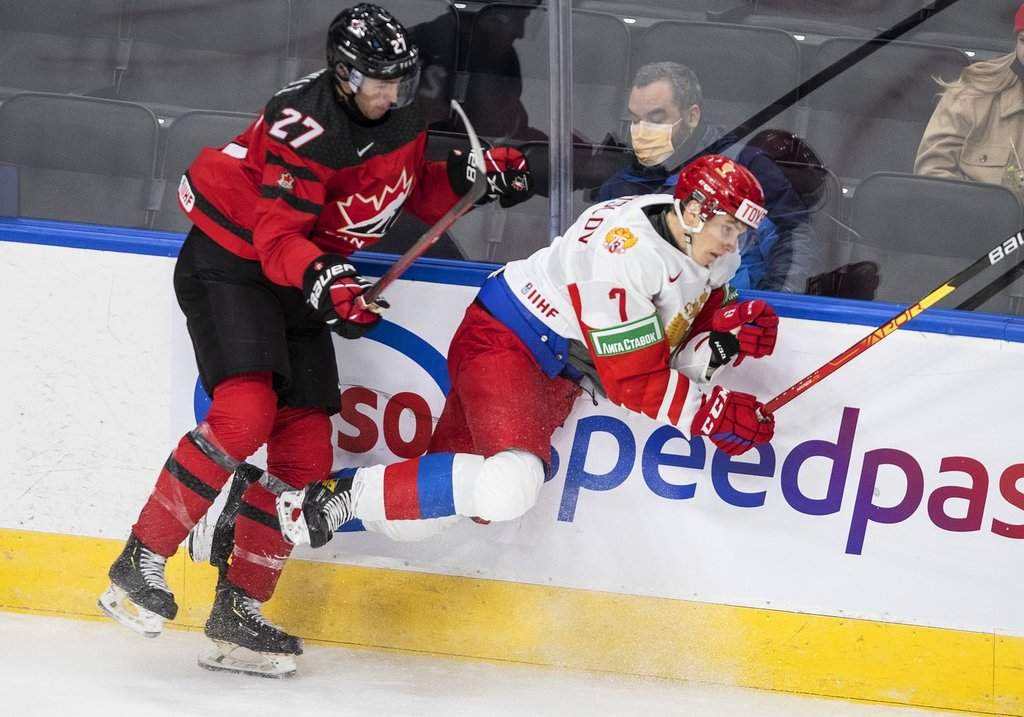
I remember standing on the glass at a World Junior tournament years ago, watching the warmups before a rivalry game. The air vibrated with a low, tribal hum. For sixty minutes, the boards act as a sealed container where history, grievance, and national pride are converted into kinetic energy. Every body check carries the weight of a century. Every goal is a referendum on national character.
For decades, sports administrators sold us a comforting myth. They told us that the white lines of the rink—or the pitch, or the track—formed a sacred boundary where politics stopped. When the International Ice Hockey Federation originally suspended Russia and Belarus in early 2022 following the invasion of Ukraine, the governing body actually tried to preserve that myth. They did not frame the ban primarily as a moral punishment. They framed it as a safety issue. They argued they could not guarantee the security of players, officials, or fans if Russian teams took the ice.
Safety. It was a bureaucratic shield designed to keep the federation out of court.
And for a while, it worked. The hockey world adjusted to the absence of one of its founding superpowers. Canada, Finland, Sweden, the United States, and Czechia fought for gold in arenas that felt strangely incomplete—like a heavyweight boxing division where the fiercest contender had been locked outside the building.
What Happens Inside a Legal Vacuum
You cannot keep a superpower locked outside forever without lawyers eventually picking the lock.
Think of international sports governance like a giant, creaking suspension bridge. On one tower sits the Olympic Charter and the principle of non-discrimination—the idea that an athlete should not be punished solely for the passport they hold. On the other tower sits the autonomous right of sports federations to protect the integrity and safety of their competitions. When a war breaks out, the cables between those two towers stretch until they snap.
The Court of Arbitration for Sport exists in that tension. When arbitrators in Switzerland examine a ban, they do not ask who is right or wrong in a geopolitical conflict. They ask a much narrower, colder question. Did the federation follow its own rulebook? Was the punishment proportionate? Was a temporary "safety" measure quietly converted into a permanent political exile without due process?
Once the immediate logistical panic of 2022 faded into the grinding reality of a multi-year war, the safety argument began to rot from the inside. How could the federation claim it was unsafe to host Russian athletes when Russian NHL stars were playing eighty-two games a year in packed arenas across North America without incident? How could a safety ban remain indefinite without a clear roadmap for reinstatement?
The court ruling forced the door back open. It stripped away the federation’s administrative cover and left the sport staring at a reality nobody was emotionally prepared to handle.
The Locker Room Nobody Wants to Enter
Consider what happens next.
Forget the diplomats in suits. Picture a twenty-four-year-old defenseman from Prague, or Helsinki, or Riga—let us call him Lukas, another hypothetical stand-in for the European players who will actually have to take the opening faceoff.
Lukas grew up idolizing the artistry of Russian hockey. He watched clips of Sergei Fedorov gliding effortlessly through the neutral zone and Alexander Ovechkin firing missiles from the office. Hockey was his religion.
Now, Lukas lives in a country that borders the conflict, or one that has absorbed hundreds of thousands of refugees fleeing the bombs that Russia continues to drop on Ukrainian cities. His cousin might be volunteering on a border supply run. His neighbors wake up every morning checking news feeds for air raid sirens.
Next spring, Lukas will skate to the center dot. Across from him will stand a player wearing the colors—or the neutral-flagged equivalent—of the state currently waging that war.
No court ruling can tell Lukas how to feel when the referee drops the puck.
This is the invisible stake that box scores will never capture. When you force athletes to share a sheet of ice while an active war rages just a few hundred miles away, you are asking twenty-somethings to absorb moral and psychological friction that seasoned diplomats fail to resolve in Geneva. You are turning a game into an emotional minefield.
Will players refuse to shake hands in the post-game line? Almost certainly. Will fans turn the stands into a cacophony of political protest, forcing security to confiscate flags and drown out anthems? Without question. Will host cities—already straining under the cost of staging massive international tournaments—face boycotts from sponsors terrified of being photographed next to a controversial crest?
Yes.
The Kid Who Only Wanted to Skate
Yet if you walk out of Lukas’s locker room and cross the hallway, you run straight into a completely different kind of tragedy.
Go back to Andrei, our nineteen-year-old winger.
When the tanks rolled across the border in 2022, Andrei was fifteen. He had no vote. He had no voice in the Kremlin. He had no influence over foreign policy, military strategy, or state propaganda. His entire universe consisted of a frozen pond, a beat-up pair of skates, and a mother working two shifts so he could afford travel hockey fees.
Athletic careers are brutally short. A software engineer can hit their peak at forty-five. A writer can find their voice at sixty. A hockey player’s prime window opens at twenty and begins closing before thirty. Four years in the wilderness is not a pause for an elite athlete; it is an amputation. An entire generation of Russian junior players lost their chance to test themselves at the World Juniors, to be scouted in high-pressure international tournaments, to feel the electric shock of sudden-death overtime on a global stage.
It is easy to dismiss their loss when weighed against the literal life-and-death horror unfolding in Ukraine. Compared to a bombed-out apartment building in Kharkiv, a missed hockey tournament is nothing. Dust. Smoke.
And still, empathy is not a zero-sum currency. You can recognize the monstrous injustice of an invasion while still feeling a pang of sorrow for a teenager whose only crime was being born under the wrong flag at the wrong historical moment.
The sport court’s ruling hands Andrei his dream back. At the exact same moment, it hands that dream to him wrapped in barbed wire. He will return to the World Championships not as a celebrated young prodigy, but as a walking lightning rod. Every shift he takes will be scrutinized through a political lens. Every goal he scores will be weaponized by state television back home as proof of national triumph, whether he wants his name used that way or not.
He gets to play. He does not get to be free.
The History We Keep Forgetting
If this feels uniquely chaotic, it is only because we have short memories.
International hockey has always been a proxy war with better cardio. In 1956, just weeks after Soviet tanks crushed the Hungarian Uprising in Budapest, the Soviet Union and Hungary met in the Olympic water polo pool in Melbourne—a match so violent it became known as the "Blood in the Water" game. Thirteen years later, at the 1969 World Ice Hockey Championships in Stockholm, the Czechoslovak team defeated the Soviet Union twice just months after Warsaw Pact troops invaded Prague. Hundreds of thousands of Czechs poured into the streets of Prague to celebrate, smashing the windows of the Soviet airline Aeroflot in a cathartic explosion of national defiance.
The Miracle on Ice in 1980 was never really about a group of American college kids beating a team of Soviet professionals. It was about Cold War anxiety, stagflation, and the Iranian hostage crisis finding release on a sheet of ice in Lake Placid.
We pretend we want politics out of sports, yet the greatest, most unforgettable moments in sports history only burn so brightly because politics poured gasoline on the ice first.
What makes this current return different—and infinitely more precarious—is the speed of our modern world. In 1969, fans read about a game in the morning newspaper or watched a grainy broadcast. Today, every missed slash, every refusal to shake hands, every fan holding a sign in the third row is clipped, looped, and weaponized on social media within four seconds. The pressure on the International Ice Hockey Federation will not come in polite diplomatic cables; it will arrive as a relentless digital firestorm.
The Empty Seat at the Table
I will admit something that most sports commentators prefer to hide behind confident hot takes: I do not know what the right answer is here.
When you sit with the reality of this ruling, certainty evaporates. If you bar Russian athletes indefinitely, you abandon the foundational ideal of international sport—that individuals should be judged by their character and skill on the field, not the sins of their government. You turn sports federations into miniature branches of the United Nations Security Council, a role they are wildly unqualified to play.
Yet if you let them back in while the war still rages, you ask Ukrainian athletes—whose rinks have been turned into rubble and whose teammates have died in trenches—to watch the world normalize their aggressor’s presence on a global stage. You reward a state apparatus that has historically used athletic gold medals to launder its global reputation.
There is no clean exit from this maze. Every path leaves scars.
The Court of Arbitration for Sport made a legal decision, because that is what courts do. They measure statutes against procedures and issue rulings on paper. They do not have to step onto the ice in May. They do not have to stand in the tunnel listening to the muffled roar of twenty thousand fans who came for a hockey game and walked into a geopolitical referendum.
Next spring, the arena lights will dim. The spotlights will sweep across the fresh, glassy surface of the ice, catching the tiny shavings left behind by the Zamboni. The public address announcer will call the starting lineups, his voice echoing off the rafters where the championship banners hang in quiet rows.
And down at center ice, two young men will tap their sticks on the frozen water, lean forward over the red dot, and wait for a piece of vulcanized rubber to drop—carrying the weight of a world neither of them built.