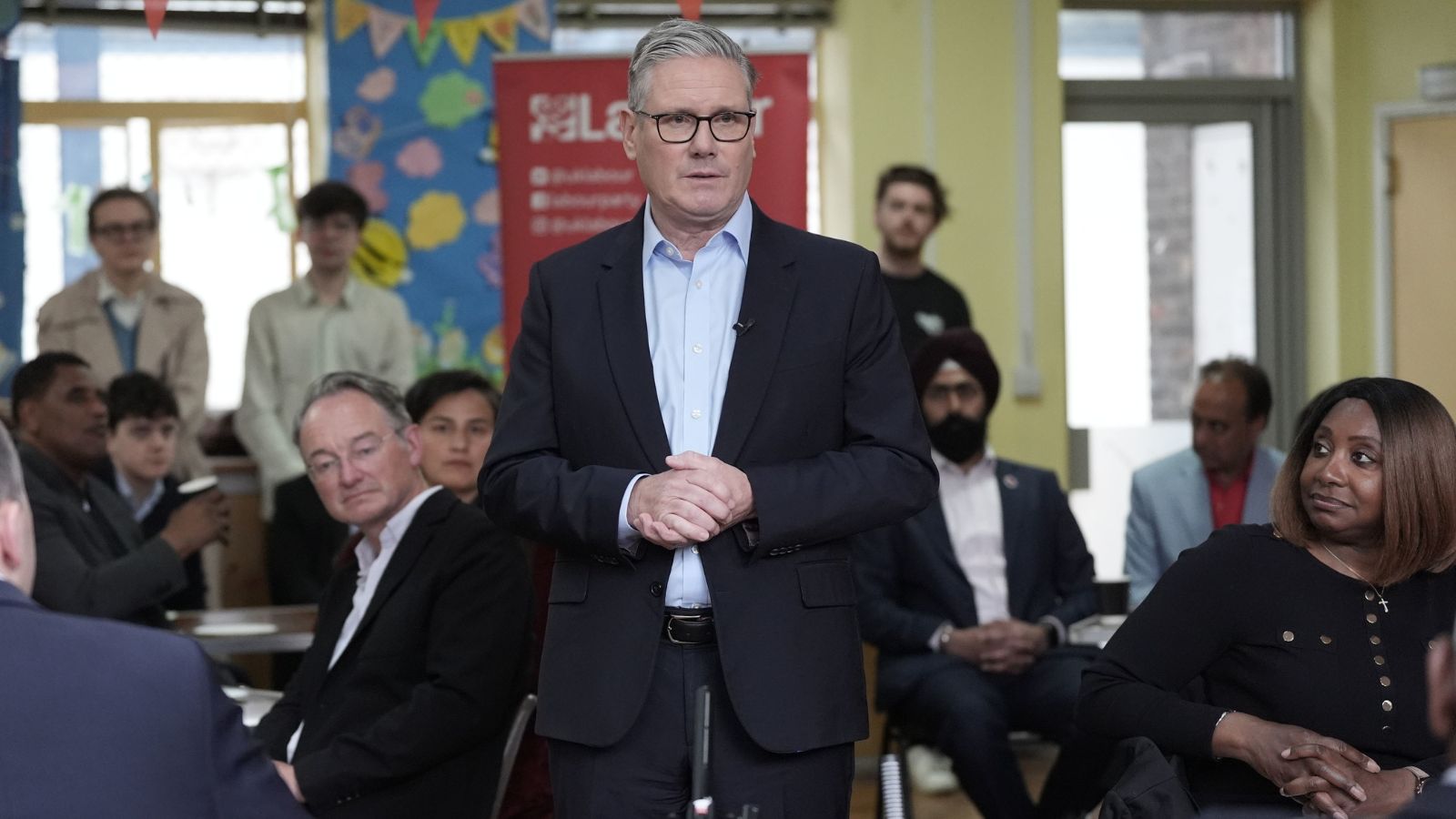
The air in Westminster does not move; it stagnates. It carries the faint, metallic scent of old coins and damp stone. On the morning after a local election defeat, that air turns heavy. It presses against the windows of 10 Downing Street and the wood-paneled offices of the Labour Party headquarters, carrying the unspoken verdict of millions of people who decided, quite simply, to stay home.
Keir Starmer is a man built on the architecture of rules. He is a former Director of Public Prosecutions, a man who believes in the weight of evidence and the clarity of a well-written brief. But politics is not a courtroom. In a courtroom, the facts are enough. In the town squares of the West Midlands or the terrace streets of the North, facts are just cold things that don't pay the heating bill.
The recent local election results were supposed to be a coronation. Instead, they felt like a long, awkward silence at a dinner party. While the Conservative Party suffered its own predictable bruising, the expected surge for Labour didn't hit the high-water mark required to signal a change in the national soul. The numbers told one story, but the faces in the hallways told another.
The Weight of the Unseen
To understand why a few lost council seats in the periphery of England matter, you have to look at the anatomy of a political coup. It rarely starts with a shout. It starts with a whisper in a tea room. It starts with a shadow crossing a face during a televised interview.
Consider a hypothetical voter named Elias. He lives in a town where the high street is a graveyard of shuttered shops and "To Let" signs. Elias doesn't care about Starmer’s five missions or his meticulously curated shadow cabinet. He cares that the bus doesn't run after seven o'clock and that his son can’t afford a flat in the town where he was born. When Elias looks at the television and sees a leader who looks like he’s perpetually preparing for a cross-examination, Elias feels nothing.
That "nothing" is the most dangerous emotion in British politics.
The local polls revealed a jagged truth: Labour is winning by default, not by desire. When the results trickled in—lost seats in the heartlands, a stagnant vote share in key battlegrounds—the internal machinery of the party began to grind. The rivals, those who have been tucked away in the shadows of the backbenches, began to check their phones more frequently.
The Predators in the Tall Grass
Politics is an ecosystem of calculated patience. Within the Labour Party, there are factions that have never quite made peace with the shift away from the firebrand radicalism of the previous era. They see the current leadership as a vacuum. They see a man who has successfully purged the party of its ghosts but has forgotten to invite any new spirits in.
The rivals aren't making their moves in the open yet. That would be messy. Instead, they are the architects of the "briefing." A stray comment to a journalist here, a lukewarm defense of a policy there. They point to the "setback" not as a statistical anomaly, but as a symptom of a deeper malaise. They argue that if you stand for everything, you stand for nothing.
The pressure on a leader in this position is immense. It is the pressure of being watched by people who are waiting for you to trip. Every stutter in a speech, every hesitant answer on a Sunday morning talk show, becomes evidence in the case against your survival. The setback in the local polls wasn't just a loss of councillors; it was a loss of the "inevitability" shield. Once people believe you can lose, you have already started losing.
The Language of the Disconnected
There is a specific kind of silence that follows a campaign trail. It’s the silence of a leader realizing that the slogans aren't landing. Starmer’s team has focused on "stability" and "competence." These are fine words for a bank manager. They are devastatingly boring for a nation that feels like it’s being held together by duct tape and hope.
The invisible stakes are found in the gap between the spreadsheet and the kitchen table. When the Labour leadership talks about "fiscal responsibility," the voter hears "more of the same." When they talk about "incremental change," the voter feels the walls closing in. The local election results were a scream from the provinces, muffled but distinct: Give us a reason to believe.
The tragedy of the "Rules Man" is that he believes the truth will set him free. He believes that if he can just prove the other side is incompetent enough, the keys to the kingdom will be handed over by a grateful public. But the public isn't grateful. The public is exhausted. They don't want a prosecutor; they want a prophet.
The Mechanics of the Internal Circle
Behind the closed doors of the Shadow Cabinet, the atmosphere has shifted from a march to a huddle. When the polls were twenty points clear, everyone was a loyalist. Now that the gap is narrowing and the local results have shown cracks in the foundation, the loyalty is becoming transactional.
"Is he the one?"
That is the question being asked in the bars around Westminster. It’s a question that doesn't require an answer to be damaging. The mere existence of the question is a poison.
The rivals within the party—the soft left, the unrepentant Blairites, the remaining Corbynites—all have different visions of what the party should be. But they are united by a singular, predatory instinct: they can smell a wound. They see the local poll setback as the first drop of blood in the water.
They point to the regions where the Green Party or independent candidates snatched away Labour votes. These weren't just protest votes; they were desertions. They were people saying that the "safe" option felt a lot like a "hollow" option. For a leader whose entire brand is built on being the only adult in the room, being ignored by the children is the ultimate insult.
The Ghost of the Future
If you walk through a council estate in the North of England on an overcast Tuesday, you will see the reality that the polls try to quantify. You will see the peeling paint on the community centers and the weeds growing through the cracks in the playground. These are the places where Labour was born. These are the places that are currently looking at Keir Starmer and seeing a stranger.
The setback isn't about the number of seats lost. It’s about the soul of the movement. A political party is not a corporate entity; it is a story that a country tells about itself. Currently, the story Labour is telling is a technical manual. It is precise, it is logical, and it is utterly devoid of magic.
The rivals understand this. They are preparing their own stories. They are waiting for the moment when the "sensible" path leads into a dead end. They are counting on the fact that, in the end, people don't vote for the man with the best plan. They vote for the man who makes them feel like the sun might actually come out tomorrow.
The Breaking Point of Logic
We often assume that political power is a solid thing, like a fortress. In reality, it is more like a sandcastle. It looks imposing until the tide comes in. The local election results were the first wave hitting the base of the tower.
Starmer now faces the most difficult task of his career. He cannot simply "lawyer" his way out of this. He cannot produce a document that proves he is inspiring. He has to find a way to speak a language that doesn't exist in the legal textbooks. He has to find a way to be human in a system that rewards the mechanical.
The knives are out, but they are still hidden under the cloaks. The rivals are circling, but they are doing so with smiles and "constructive feedback." They are waiting for the next poll, the next gaffe, the next sign that the leader’s grip is slipping.
In the quiet hours of the night, when the advisors have gone home and the red boxes are finally closed, the leader must look at the map of a country that is moving away from him. He must wonder if his meticulous adherence to the rules has made him a master of a game that no one else wants to play anymore.
The tragedy isn't that he might fail. The tragedy is that he might succeed in winning the office while losing the people. A victory without a mandate for change is just a different kind of defeat. It is a haunting.
The ghost in the garden party isn't a rival or a scandal. It is the growing suspicion that the man at the head of the table is just a placeholder for a future that refuses to arrive. The air remains still. The metallic scent of the stone lingers. And somewhere in a town that the pollsters forgot, Elias is turning off his television, wondering when someone is going to say something that actually matters.