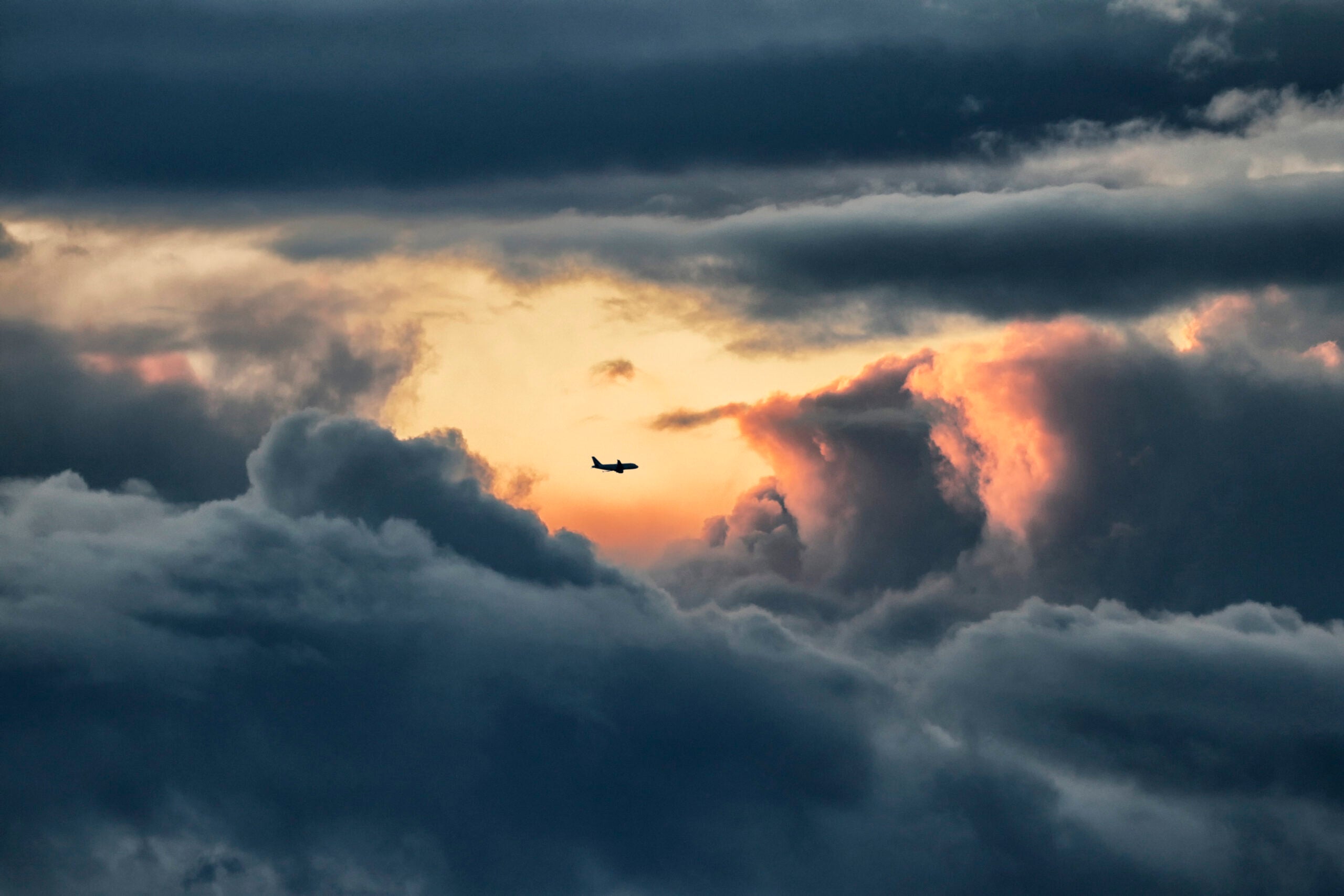
The rain in Shannon has a way of blurring the horizon until the grey of the Atlantic meets the grey of the tarmac. On the surface, Ireland is a land defined by its vocal, almost fierce, solidarity with the Palestinian people. From the murals in Belfast to the flags fluttering over Dublin city halls, the sentiment is consistent. Irish history, etched with the scars of colonization and hunger, hums in a natural frequency with the plight of those in Gaza. But at night, or in the sterile, digital logs of air traffic control, that frequency starts to crack.
High above the green fields, tucked away in the pressurized holds of civil aircraft, something else is moving. It isn't medical supplies or tech components for Irish startups. It is the cold, heavy machinery of modern warfare.
Ireland has a problem with its ghosts. Specifically, the ghost flights that carry military cargo and dual-use technology to Israel while the nation publicly mourns the casualties of the conflict. This isn't just a lapse in paperwork. It is a fundamental fracture in the soul of a country that prides itself on being the moral conscience of Europe.
The Invisible Ledger
Consider a hypothetical controller named Liam. He sits in a dim room, watching a blip cross his screen. To the world, this is a commercial transit. The flight plan says civilian. The carrier is a private entity. But under the wings of these "civil" planes lies a loophole wide enough to fly a Boeing 747 through.
Current Irish law prohibits the carriage of "munitions of war" through its sovereign airspace or via its airports without an explicit exemption from the Minister for Transport. In theory, this is a robust shield. In practice, it is a sieve. Since the escalation of the conflict in Gaza, the number of exemptions granted has remained suspiciously low, while the volume of military-grade hardware moving from the United States to Israel has surged.
The math doesn't add up.
The discrepancy lives in the definition of "civil" versus "military." If a private shipping giant carries components for a missile guidance system, is it a munition of war? If a plane carries parts for an F-35 fighter jet but lands at a commercial hub, does the Irish government look the other way? For months, investigative reports and whistleblowers have suggested that the answer is a quiet, bureaucratic yes.
The Weight of a Signature
The tension isn't just in the air; it’s in the Dáil. When activists and independent TDs (Teachta Dála) point to flight tracking data, they are met with a wall of administrative shrugs. The government insists that no such flights have been authorized. Yet, the data—raw, cold, and indisputable—shows planes departing from U.S. airbases, stopping at or passing through Irish territory, and ending their journey at Nevatim Airbase in Israel.
This isn't a conspiracy theory. It's a logistics reality.
Logistics is a dispassionate business. It cares about fuel efficiency, flight paths, and turnaround times. Ireland sits in a prime geographic spot, a gateway between the American arsenal and the Middle Eastern theater. For a shipping company, bypassing Ireland adds hours and thousands of euros in fuel costs. For a politician, enforcing the ban means risking the ire of the United States—Ireland’s most significant economic partner and the home of the "Big Tech" giants that keep the Irish economy afloat.
So, the signatures stay off the page. The inspections don't happen. The planes keep flying.
The Tech Gap and the Dual-Use Trap
We often think of weapons as bullets and bombs. But in 2026, the most lethal parts of a weapon are often the ones that look like a motherboard. This is where the "dual-use" loophole becomes a chasm.
A sensor designed for a high-end autonomous car can, with a slight tweak in software, become the eyes of a loitering munition. A processor made in a Dublin business park can end up in a drone hovering over a civilian neighborhood in Rafah. When these components are shipped, they aren't labeled as "munitions." They are labeled as "electronics."
Ireland’s neutrality is a point of immense national pride. It’s a policy that allowed the country to act as a peacekeeper in Lebanon and a mediator in global disputes. But neutrality is not a passive state. It is an active, exhausting labor. It requires the courage to say "no" to your friends when they are carrying a box of matches into a dry forest.
Right now, that labor is being neglected. The Irish government finds itself in a defensive crouch, arguing that they have no "legal basis" to search every plane. It is a classic bureaucratic retreat: claiming a lack of power to avoid the responsibility of using it.
The Human Toll of Bureaucracy
To understand why this matters, we have to look away from the flight paths and toward the ground.
Imagine a family in Gaza. They don't know the names of the Irish ministers. They don't know the intricacies of the Air Navigation (Carriage of Munitions of War, Weapons and Dangerous Goods) Order. They only know the sound of the sky.
When a nation claims to be an ally of the oppressed while providing the logistics for the oppressor, it loses its moral authority. It’s a slow erosion. It starts with one flight. Then ten. Then a hundred. Eventually, the murals of Belfast start to look like hollow branding rather than a statement of principle.
The Irish people feel this dissonance. It is why thousands have marched through the streets of Cork and Galway. They aren't just protesting a foreign war; they are protesting the quiet complicity of their own infrastructure. They are demanding that their sovereignty not be sold for the sake of "seamless" diplomatic relations.
A Choice Between Two Irelands
The argument from the state is often one of pragmatism. They say we are a small nation. They say we cannot police the world. They say we must protect our trade lanes.
But Ireland has never been "just" a small nation in the eyes of the world. It has been a symbol of what happens when a people refuses to be forgotten. By allowing these transfers to continue under a cloak of administrative ambiguity, the state is trading that symbol for a temporary reprieve from American pressure.
This is a dangerous game. Once you allow your airspace to be used as a conduit for a conflict you publicly condemn, your voice at the UN Table becomes a whisper. You cannot be the world’s referee if you are secretly sharpening the players' spikes.
The ghosts in the Shannon sky aren't going away. Every flight tracked by a teenager on a laptop, every manifest leaked by a disgruntled worker, and every silence from a government spokesperson adds to the weight.
Ireland is currently at a crossroads that isn't marked on any map. Down one path lies the continued comfort of the "quiet life"—keeping the peace with Washington, ignoring the holds of the 747s, and issuing the occasional, toothless statement of concern. Down the other path lies the difficult, messy, and necessary work of being what Ireland claims to be: a neutral, sovereign nation that refuses to be a silent partner in the destruction of a people.
The rain continues to fall over the Shannon estuary. Somewhere, ten thousand feet up, a pilot checks his instruments and prepares to cross the Irish coast. He isn't thinking about Irish history or Palestinian futures. He is just making a delivery.
The question is no longer about what is in the hold of that plane. The question is what is left of the Irish conscience if we keep pretending we don't know.
The planes are still landing. The manifests are still empty. The sky is still watching.