Look at your hand. Specifically, look at the ring finger or the skin catching the afternoon light. Every ounce of gold, platinum, and heavy metal that anchors human civilization, every atom of value we have ever fought over or cherished, was born from a murder. Not a terrestrial murder, but a violent, celestial execution that happened long before our species had names for the stars.
For decades, astronomers have chased a singular ghost: the origin point of the universe's heaviest elements. We knew they came from kilonovae, those unimaginably violent smashups of dead stars known as neutron stars. But finding the physical wreckage of one of these atomic foundries parked quietly inside our own cosmic neighborhood—our own Milky Way—felt like looking for a single needle lost in a continent-sized haystack.
Until now.
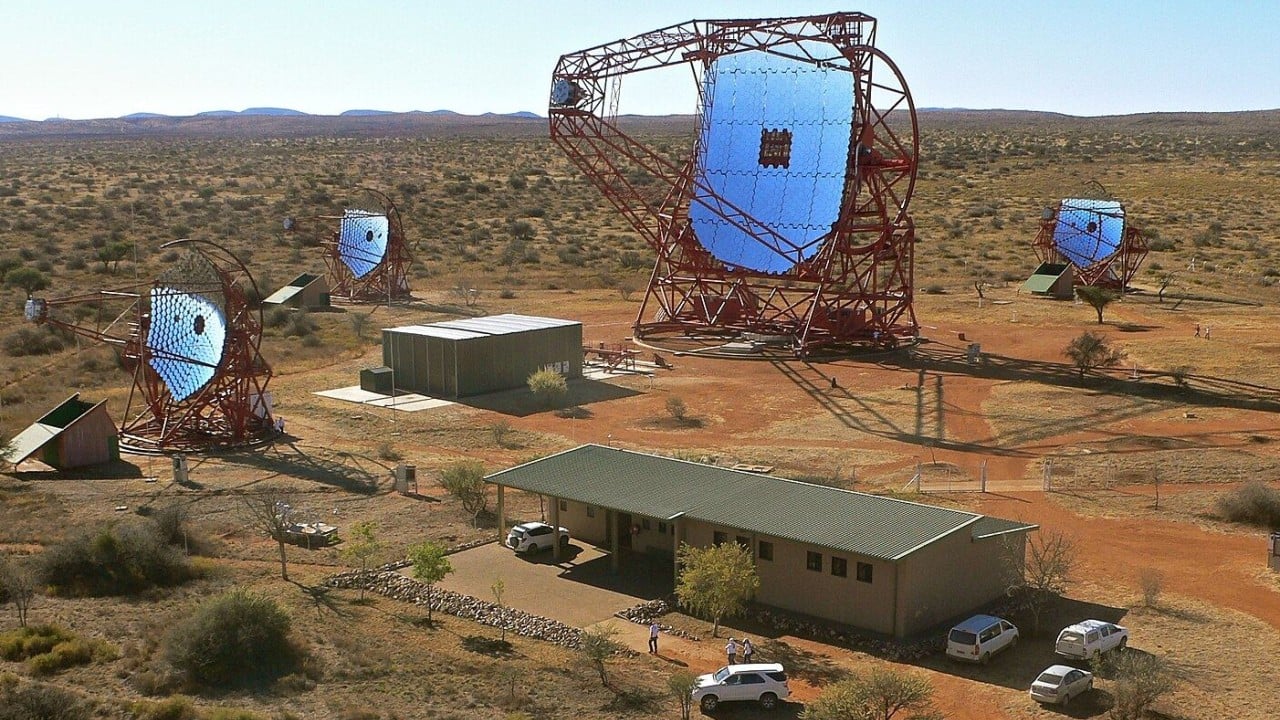
A collaborative team of researchers from China and the United States has turned their instruments toward an unexplained high-energy gamma-ray source burning in our galactic backyard. Their analysis points toward something extraordinary: the surviving, cooling remnant of a kilonova explosion that detonated less than a thousand years ago.
To understand why this matters, you have to throw away everything you think you know about how space works. We tend to view space as a quiet museum of distant lights. It is not. It is a slaughterhouse and a nursery all at once.
Consider what a neutron star actually is. Take the entire mass of our sun—a blazing, gargantuan engine of fire—and crush it down until it fits inside the boundaries of a medium-sized city. Strip away the outer layers, leaving only degenerate matter so dense that a single teaspoon of it weighs as much as a mountain, or roughly a billion tons. Now, imagine two of these dead, city-sized anchors of pure gravity trapped in a decaying orbital dance. They circle each other faster and faster, screaming through spacetime, kicking up gravitational waves until they finally smash together at a fraction of the speed of light.
When they collide, normal physics breaks down. The sheer kinetic and thermal violence creates an environment where free neutrons smash into atomic nuclei at blinding speeds, sticking together through what physicists call the r-process. Platinum forms. Uranium forms. Gold forms. Tons of it, sprayed out across the dark in a radioactive flash that outshines entire galaxies.
The explosion fades, leaving behind a remnant. A ghostly footprint.
And that is what the Sino-American team found hiding in our own galaxy. By analyzing the peculiar gamma-ray emission signatures that had baffled astrophysicists for years, the researchers mapped out a kilonova-remnant model. The math checked out. The radiation profile matched up. Every indicator pointed to a cataclysm that occurred less than a millennium ago.
Think about the timeline. While human beings were building medieval castles, fighting localized wars, and looking up at the night sky with naked eyes dotted with wonder, a silent atomic forge went off in our cosmic suburb. It threw heavy metals across the galactic disk, seeding the gas clouds from which future worlds, asteroids, and perhaps even minor dust grains might one day form.
This is the first time a neutron star collision has been strongly identified right here in the Milky Way. Previously, our greatest insights came from billions of light-years away, faint blips caught by multi-million-dollar detectors like LIGO and Virgo. Finding one close to home changes the resolution of the picture. It turns a blurry photograph into a high-definition map.
The researchers didn't just stumble upon this by luck. It took meticulous cross-border collaboration, combining vast sets of high-energy astronomical data with rigorous theoretical modeling. In an era where international scientific partnerships often face political headwinds, this discovery serves as a reminder of what happens when human curiosity transcends borders. The universe does not care about passports. It only cares about the laws of physics.
We are left with a sobering, poetic truth. The gold sitting in a safety deposit box or resting on a finger is not native to Earth. It is alien wreckage. It is the literal ashes of a stellar collision that happened in deep space, drifted through the dark, and eventually coalesced into the rock we call home.
And somewhere out there in the quiet dark, another pair of dead stars is spiraling inward right now. Their dance is slow. Inexorable. Inevitable. They are winding down their clock, moving closer with every orbit, destined to crash together and forge something rare and precious in the cold.
We just happen to know where to look for the smoke now.
Science For Sleep | We Found a New Cosmic Gold Factory
This video provides a deep-dive exploration into how extreme cosmic events forge heavy elements like gold, complementing the article's narrative on neutron star collisions.