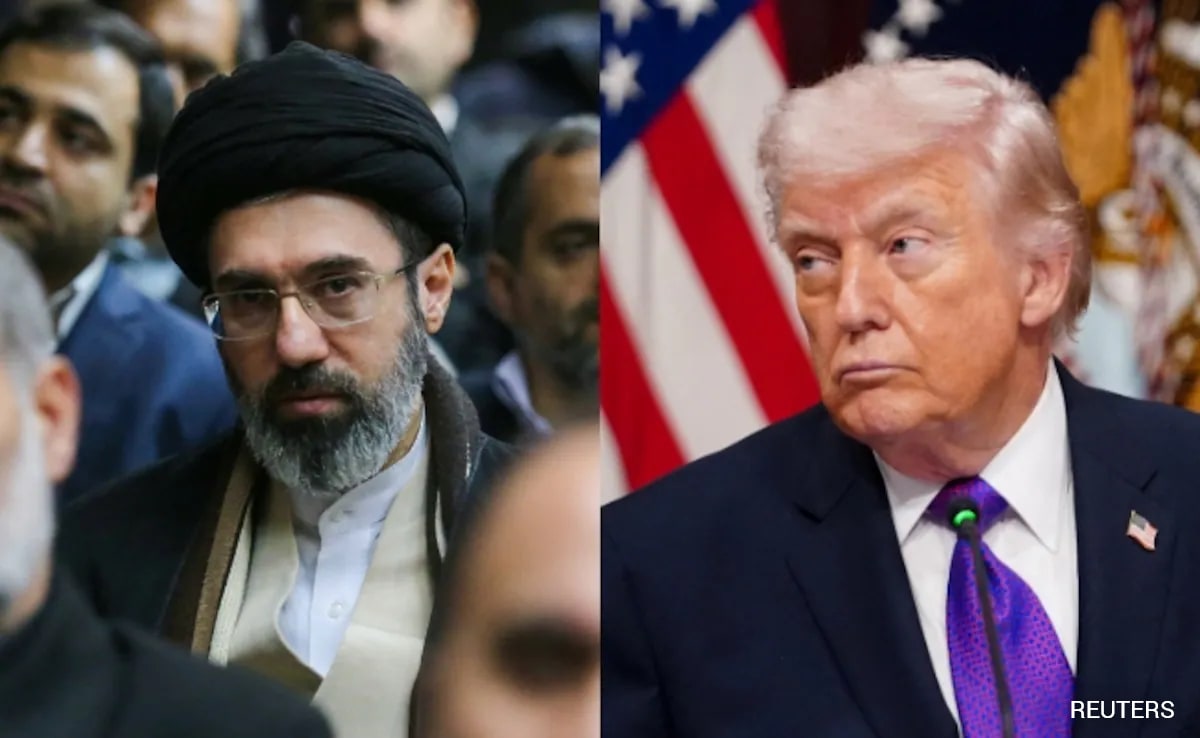
The framework agreement between the United States and the Islamic Republic of Iran, slated for formal signature in Geneva on June 19, 2026, does not represent a transformative geopolitical shift. Instead, it is a textbook exercise in mutual asset liquidation driven by structural exhaustion. Labeling this memorandum of understanding (MOU) a "peace deal" misinterprets the strategic mechanics at play. The text establishes a temporary transaction: Washington buys an end to the global energy shock caused by the closure of the Strait of Hormuz, while Tehran trades its near-term maritime leverage for regime survival and immediate economic relief following the destruction of its core leadership structures in February.
The transaction relies on an fragile 60-day stabilization window. By deconstructing the deal through quantitative variables, state payoff matrices, and regional enforcement bottlenecks, it becomes clear that the framework is highly vulnerable to disruption. Rather than solving the structural antagonism between Washington and Tehran, it merely defers the risk of a high-intensity conflict.
The Payoff Matrix of Restricted Capitulation
To understand why the Trump administration and the interim leadership in Tehran arrived at this juncture, the conflict must be analyzed as a two-player non-zero-sum game under extreme resource constraints. The 100-day war, initiated on February 28, 2026, altered the strategic calculus of both states by shifting their baseline minimum acceptable positions.
                  United States: End Blockade / Lift Sanctions

                  LIFT SANCTIONS                  MAINTAIN PRESSURE
                +-------------------------------+-------------------------------+
                | (US: High, IR: High)          | (US: Low, IR: Critical)       |
REOPEN HORMUZ   | - Global oil shock abates     | - Blockade remains active     |
                | - Domestic inflation drops    | - Escapes domestic pressure   |
                | - Iran accesses frozen cash   | - Iran economy collapses      |
                +-------------------------------+-------------------------------+
Iran:           | (US: Critical, IR: Moderate)  | (US: Zero, IR: Zero)          |
CLOSE HORMUZ    | - Energy trade remains dead   | - High-intensity escalation   |
                | - US suffers political cost   | - Complete regime collapse    |
                | - Iran faces direct strikes   | - Regional systemic breakdown |
                +-------------------------------+-------------------------------+
For the United States, the primary cost function of the conflict was domestic and economic. The closure of the Strait of Hormuz—the transit route for roughly 20% of global petroleum and liquefied natural gas—triggered a severe oil supply shock, disrupting global growth projections and driving domestic political liability. The Trump administration’s strategic objective was never a total land invasion or long-term state-building in Persia. The goal was cost minimization: restoring maritime flow without dedicating sustained military capital to a multi-theater war.
For Iran, the cost function was existential. The joint US-Israeli strikes on February 28 decapitated the regime's senior leadership structure, including the Supreme Leader. Combined with a total US naval blockade of Iranian ports and the enforcement of secondary sanctions, the state faced systemic economic insolvency and domestic instability. The interim authority in Tehran, operating under the oversight of Mojtaba Khamenei, realized that holding the Strait of Hormuz was an unsustainable defensive strategy. The economic costs of the blockade were outstripping the strategic value of blocking global commerce.
This asymmetry created a narrow zone of possible agreement. Both sides have chosen to liquidate their frontline leverage—the US naval blockade and the Iranian anti-shipping threat—to return to their pre-February baseline positions.
The Three Pillars of the Geneva Memorandum
The text of the framework, mediated primarily by Pakistan and Qatar, relies on three interconnected, time-bound operational mechanics.
1. The 60-Day Enforcement Window
The agreement does not establish a permanent peace; it enforces a 60-day pause on all military fronts. This period serves as a verification phase. Iran’s Deputy Foreign Minister, Kazem Gharibabadi, stated that entering deeper diplomatic tracks remains conditional upon verified American compliance. This operational pause allows both militaries to reposition forces without declaring a formal defeat.
2. Symmetrical Leverage Liquidation
The core of the deal is an immediate, simultaneous reduction in pressure:
- The Maritime Variable: Iran reopens the Strait of Hormuz to commercial traffic with a zero-toll mandate. Transit capacity must return to pre-conflict baselines within 30 days.
- The Blockade Variable: The United States removes its naval blockade from Iranian commercial hubs, allowing immediate imports of humanitarian goods and restricted consumer commodities.
- The Capital Variable: The United States grants limited sanctions relief, allowing Iran to access specified tranches of frozen foreign exchange assets held in third-country banking institutions.
3. Separation of Nuclear Liabilities
The most critical structural choice in this framework is the decision to leave Iran's nuclear enrichment infrastructure completely outside the primary text. The MOU treats the nuclear issue as a secondary variable to be resolved during the 60-day window. This separation allows for an immediate drop in oil prices, but it creates a dangerous logical flaw in the long-term stability of the agreement.
Structural Fault Lines and Disruption Triggers
The simplicity of the framework is a deliberate design choice meant to secure a fast diplomatic signature, but it introduces three major structural bottlenecks that threaten to derail the agreement before the 60-day window closes.
The Problem of Verification Asymmetry
The removal of a naval blockade is visible, immediate, and easily verified through maritime transponder data. Conversely, verifying Iran’s compliance across its regional network is slow and ambiguous. While Iran’s Supreme National Security Council announced an end to military operations on all fronts, the command-and-control links between Tehran’s interim leadership and local actors in Lebanon, Syria, and Yemen have been degraded by recent leadership losses.
If a local commander fires an anti-ship missile or a drone during the verification window, the agreement lacks a clear mechanism to determine if the act was directed by Tehran or carried out by an independent faction. The US administration will face intense domestic pressure to treat any local violation as a systemic breach by Iran, which could trigger a return to the naval blockade.
The Iranian Pricing Loophole
Under the draft terms, Iran cannot charge formal transit tolls for ships moving through the Strait of Hormuz. However, Iranian negotiators have already introduced the concept of "maritime service and safety fees." This distinction creates an immediate economic dispute.
If Tehran sets these service fees at a level that acts as a de facto tariff on global shipping, the economic relief sought by Western markets will be minimized. Washington will view these fees as a violation of the "toll-free" clause, while Tehran will defend them as a legitimate exercise of its maritime jurisdiction.
The Nuclear Settlement Paradox
The framework's largest flaw is the illusion that maritime security can be separated from nuclear non-proliferation. The Trump administration has explicitly linked long-term sanctions relief and protection from future military strikes to a new nuclear accord. The White House has demanded that Iran dismantle its highly enriched uranium stockpiles and accept intrusive International Atomic Energy Agency (IAEA) inspections under the Additional Protocol.
The strategic dilemma is clear:
[Tehran retains enriched uranium] ---> [US restarts military strikes & reinstates maximum pressure]

[Tehran dismantles nuclear assets] --> [Tehran surrenders its ultimate deterrent without permanent security guarantees]
Tehran views its enriched uranium as its final defense against foreign-led regime change. Surrendering this leverage during a time of internal leadership transition introduces existential vulnerabilities that the interim council may refuse to accept. However, if Iran refuses to dismantle these assets within the 60-day window, the United States has stated it will resume military operations or demand a 20% revenue-share from regional states to fund a permanent Western military presence in the Middle East. This core disagreement makes the transition from a temporary truce to a permanent treaty highly unlikely.
The Extraterritorial Wildcard: Israel’s Strategic Isolation
The Geneva framework was negotiated through indirect channels involving Islamabad, Doha, and Muscat. Israel was excluded from the formal talks. This exclusion creates an independent risk factor that operates outside the US-Iran payoff matrix.
The Israeli leadership maintains that any agreement failing to eliminate Iran’s nuclear infrastructure is an existential threat. A ceasefire that stops US military operations gives Iran room to rebuild its domestic chain of command and stabilize its economy. Consequently, Israel retains the motive and the military capability to launch unilateral strikes against Iranian nuclear enrichment sites in Natanz and Fordow during the 60-day window.
Such an action would break the framework. Tehran would be forced to respond to an Israeli strike, likely by closing the Strait of Hormuz again or striking regional infrastructure. This would drag the United States back into active military operations and void the Geneva agreement, regardless of Washington's official stance.
The Strategic Path Forward
The Geneva framework should not be evaluated as a comprehensive peace plan, but rather as an operational pause that allows both sides to reset their positions. For corporate planners, energy markets, and sovereign risk analysts, long-term strategy must assume a return to high-risk conditions once the 60-day window expires.
The immediate drop in oil prices reflects short-term relief over the reopening of the Strait of Hormuz, but this value is volatile. The fundamental structural disputes between the US and Iran—centered on nuclear enrichment limits and regional alliance networks—remain unresolved. Navigating this environment requires avoiding long-term investment commitments based on the assumption of regional stability. Instead, organizations should prioritize logistics flexibility, build redundant energy supply lines, and maintain active risk management plans for a potential return to maritime conflict by late August 2026.