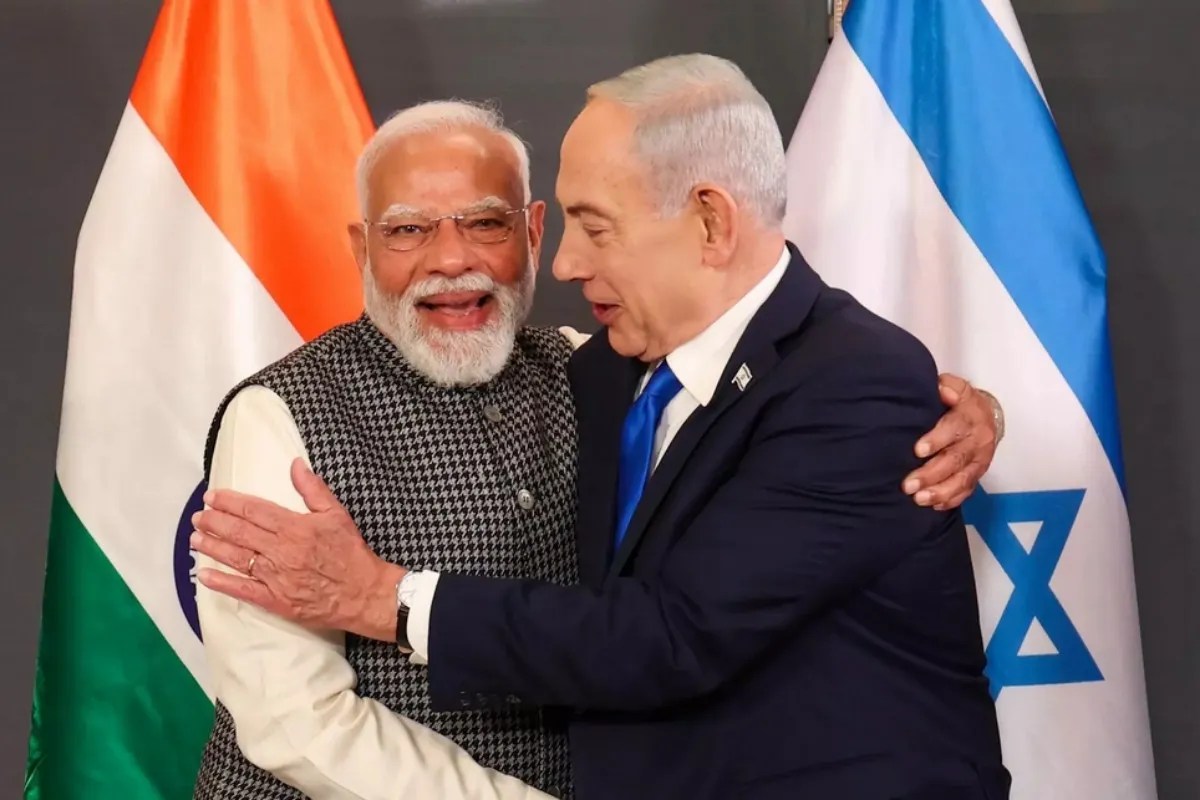
Diplomats love a good photo-op. They love empty rhetoric even more. When Israeli Prime Minister Benjamin Netanyahu eagerly echoed US Vice President JD Vance’s assertions that "India is with us," the media fell into its usual trap. Headlines painted a picture of a seamless, unshakeable geopolitical triad mapping out the future of global security.
It is a comforting narrative for talking heads. It is also entirely wrong.
The lazy consensus dominating international relations reporting right now assumes that shared anxieties over extremist threats and regional hegemony automatically equal a unified military and strategic alliance. This is a fundamental misunderstanding of how modern states operate. India is not a junior partner waiting for instructions from Washington or Tel Aviv. New Delhi’s foreign policy does not operate on emotional solidarity; it runs on cold, hard transactionality.
The Myth of the Monolithic Alliance
Let us dismantle the core premise of Netanyahu’s statement. To claim India is unconditionally "with" any single side in a complex Middle Eastern conflict ignores decades of carefully calculated strategic autonomy.
I have watched analysts sit in think-tank offices for years, spinning theories about global power blocs while ignoring how actual policy is executed on the ground. True strategic analysis requires looking at structural realities, not press releases.
India’s relationship with Israel is robust, particularly regarding defense procurement and technology transfers. But look at the ledger.
- Energy Security: India imports the vast majority of its crude oil from the Middle East. Its primary suppliers are Iraq, Saudi Arabia, and the UAE—not Israel.
- The Diaspora Factor: Over eight million Indian citizens live and work in the Gulf nations, sending back billions of dollars in remittances annually. The safety and economic stability of this population are paramount to New Delhi's domestic politics.
- Chabahar Port: India has invested heavily in Iran’s Chabahar port to bypass Pakistan and open a trade route to Central Asia.
To suggest that India would jeopardize these massive economic and demographic pillars to blindly back a US-Israeli military agenda is historically illiterate. New Delhi is not building a permanent alliance; it is running a masterclass in multi-alignment.
The Flawed Premise of "With Us or Against Us"
Western commentators constantly try to force Asian powers into binary boxes. They ask the wrong questions entirely. The media wants to know: "Will India join the Western-led security framework in the Middle East?"
The premise itself is flawed. The real question is: "Why would India incur the massive liabilities of a formal alliance when it already reaps the benefits of strategic ambiguity?"
Consider the structural mechanics of India's defense architecture. Forging an explicit ideological axis with Washington and Tel Aviv creates immediate, unnecessary friction with major energy providers and regional powers.
[Western Expectation: Binary Alliance] -> Delivers: Strategic Vulnerability & Friction
[Indian Reality: Multi-Alignment]     -> Delivers: Energy Security & Balanced Leverage
When JD Vance talks about India being aligned with US interests, he is speaking to a domestic American audience that craves clear-cut alliances. But New Delhi’s actions consistently prove that its loyalty is strictly to its own national interest. India bought Russian oil despite intense Western pressure. It maintains ties with Tehran while expanding trade with Israel. It engages with the Quad while remaining a core member of BRICS.
This is not a contradiction; it is sophisticated diplomacy.
The Cost of the Contrarian Reality
This pragmatic approach is not without its downsides. Multi-alignment means you are never fully trusted by anyone.
If a major regional crisis erupts, India's refusal to take a definitive side can alienate its closest partners. Washington grows frustrated with New Delhi’s independent stance on Russia and Iran. Tel Aviv wishes for more overt diplomatic backing in international forums.
But the alternative—becoming a cog in someone else's security apparatus—is far more dangerous. Formal alliances drag nations into conflicts where they have no direct stakes. India understands that in the modern multi-polar world, flexibility is a weapon. Commitment is a liability.
Stop reading the headlines that treat international diplomacy like a high school clique. Netanyahu’s validation of Vance's rhetoric is a public relations exercise, not a shift in global architecture. New Delhi will continue to buy Israeli tech, source American weapons, purchase Russian energy, and maintain Gulf relations.
The triad does not exist. It never did. Expecting India to pick a side is a fundamental misunderstanding of the country's rise.