Structural Mechanics of Sino-Iranian Engagement
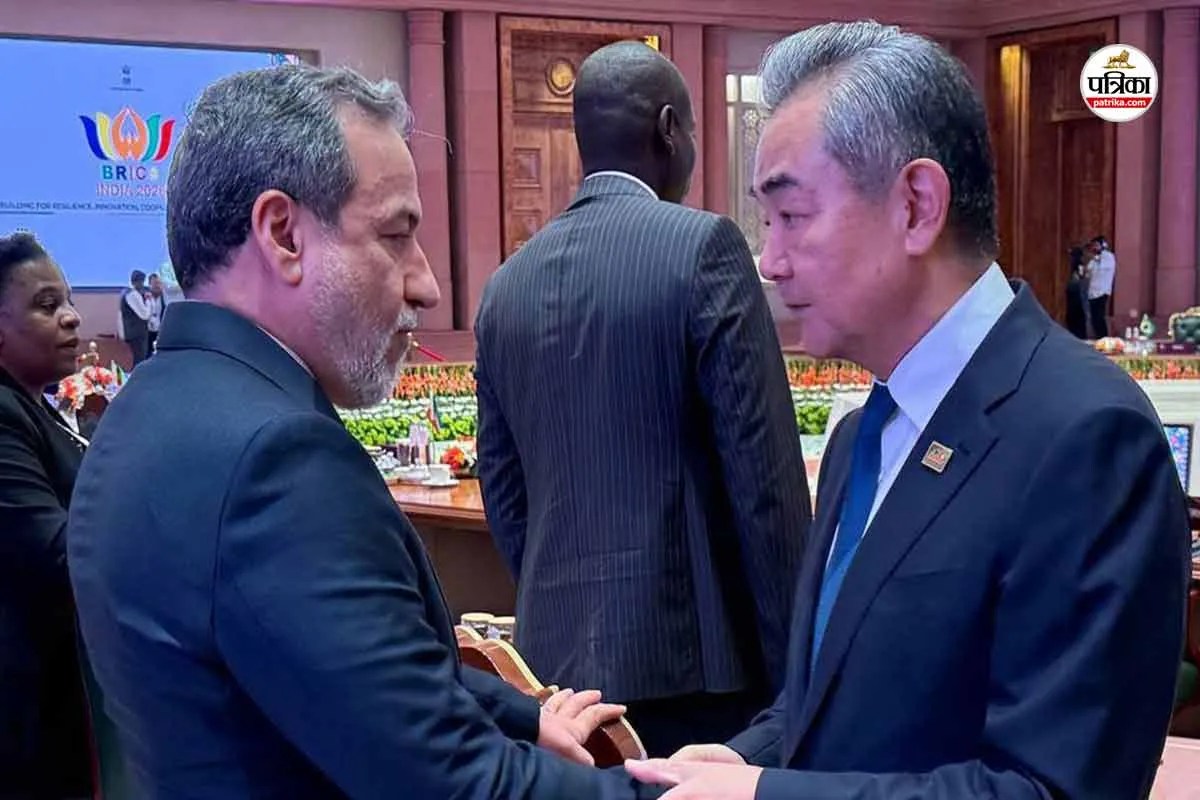
International diplomacy during active military conflict follows rigorous economic and strategic utility functions rather than superficial political gestures. When Iranian Deputy Foreign Minister Abbas Araghchi traveled to Beijing amid escalating Middle Eastern military engagements, standard commentary framed the movement through obsolete diplomatic lexicons such as bilateral friendship or diplomatic solidarity. That framing misses the structural transformation occurring within the Eurasian security architecture. The interaction between Tehran and Beijing represents an optimization problem driven by resource security, sanctions arbitrage, and asymmetric deterrence against Western maritime hegemony.
To deconstruct this alignment, one must examine the variables governing China-Iran relations: crude oil discount capture, maritime choke-point vulnerability, and the institutionalization of non-dollar settlement channels. Beijing does not engage Tehran out of ideological alignment; it engages because Iranian energy resources provide a strategic hedge against prospective naval blockades in the Malacca Strait, while Tehran requires a permanent sovereign patron capable of absorbing sanctioned commodities and supplying critical dual-use technology.
The Energy Arbitrage Matrix
The core economic mechanism governing the relationship is deeply quantitative. Iranian heavy crude, historically marketed under designations like Iranian Light and Heavy, trades at substantial discounts relative to Brent or Dubai benchmarks due to secondary sanctions imposed by the United States Office of Foreign Assets Control. Independent Chinese refiners, commonly referred to as teapot refineries operating primarily in Shandong province, absorb the vast majority of this discounted throughput.
This transaction flow operates through specialized financial networks designed to bypass the Society for Worldwide Interbank Financial Telecommunication network. Transactions utilize small regional financial institutions, renminbi-denominated clearing mechanisms, and intermediary shell companies operating across jurisdictions in the Middle East and Southeast Asia.
[Iranian Production] -> [Sanction-Resistant Intermediaries] -> [Shandong Teapot Refineries] -> [Renminbi Settlement]
This pipeline provides two distinct advantages for the Chinese industrial economy:
- Input cost reduction for independent refiners, enhancing export competitiveness for refined petroleum products.
- Gradual internationalization of the renminbi through bilateral commodity trade, reducing exposure to dollar-denominated financial sanctions.
For Tehran, this mechanism acts as a macroeconomic stabilizer. Without this continuous revenue stream, domestic fiscal deficits would trigger rapid currency depreciation and severe inflation shocks. The geopolitical leverage Beijing holds over Tehran is therefore proportional to its share of Iran's total export market. When military conflict escalates in the Persian Gulf, the price elasticity of this oil supply becomes a primary variable in global energy markets.
Diplomatic Mediation and Asymmetric Deterrence
Beijing's diplomatic interventions, such as the 2023 normalization agreement brokered between Saudi Arabia and Iran, illustrate a pragmatic shift toward regional stability protection. China sources nearly half of its crude oil imports from the Middle East. Any sustained military escalation that interrupts maritime traffic through the Strait of Hormuz directly threatens Chinese industrial output and energy security.
Tehran utilizes its relationship with Beijing to construct a layer of diplomatic insulation within the United Nations Security Council, where China holds veto power. In exchange, Beijing expects Tehran to manage proxy networks with calculated restraint to prevent total regional conflagration that would permanently sever supply chains.
The structural limits of this relationship are frequently misunderstood by external analysts. Beijing avoids entering into a formal mutual defense treaty with Tehran. A mutual defense pact would impose unwanted strategic liabilities on China, drawing it into localized conflicts where it holds no direct territorial interest. Instead, Beijing prefers a transactional, multi-layered partnership that maximizes resource extraction and geopolitical leverage while minimizing direct military entanglement.
Strategic Forecast and Systemic Vulnerabilities
The durability of this diplomatic and economic corridor depends on three volatile variables:
- The enforcement rigor of Western secondary sanctions targeting maritime shipping intermediaries and insurance providers.
- The capacity of regional intermediaries to maintain unmonitored financial clearing channels.
- The threshold at which military escalation in the Middle East forces Beijing to prioritize its trade relationships with Western economies over discounted hydrocarbon imports.
As long as the cost of Western sanctions enforcement remains lower than the economic benefit of discounted energy imports, the Beijing-Tehran axis will deepen. The recent diplomatic movements signify not a sudden alliance, but a calculated recalibration of risk management by two states facing mounting systemic friction with the global liberal order.