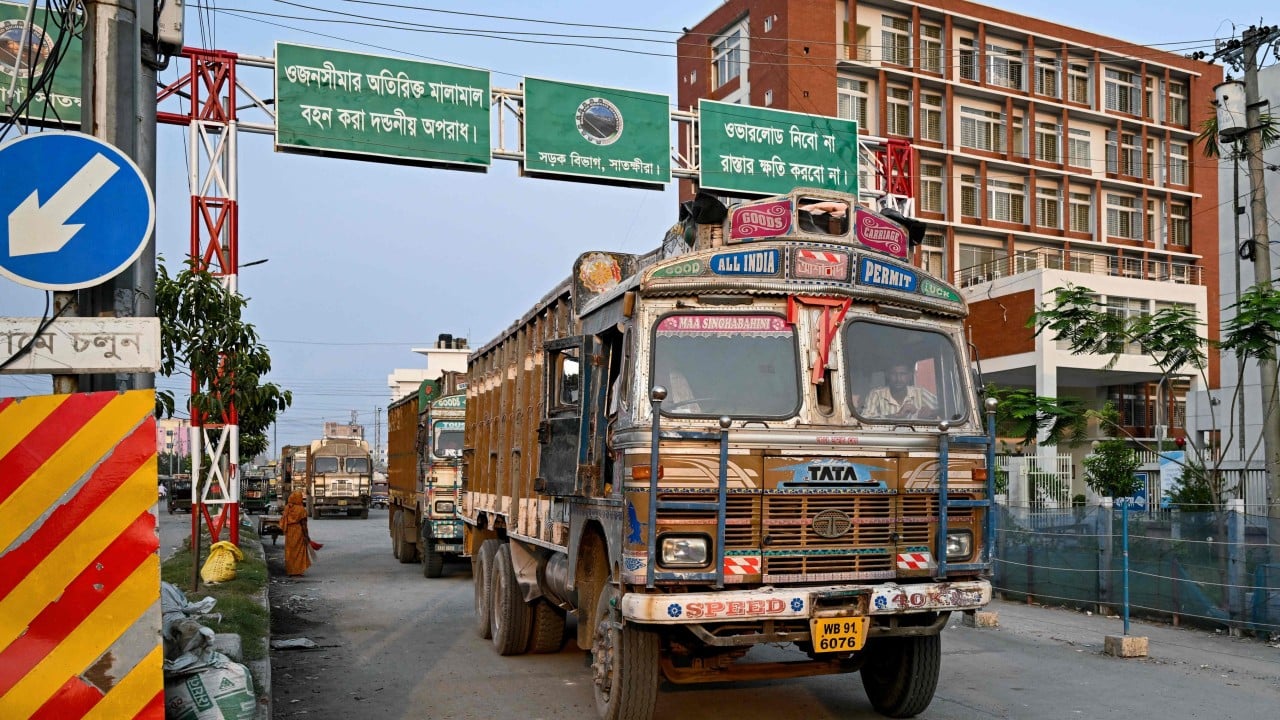
Bilateral normalization between asymmetric neighboring states is never a product of sudden diplomatic goodwill; it is an optimization strategy driven by structural vulnerabilities and competing external alignments. The decision by New Delhi to resume processing general tourist visas across five regional centers in Bangladesh—Dhaka, Rajshahi, Chittagong, Sylhet, and Khulna—after a protracted near-two-year suspension is a calculated deployment of soft-power infrastructure. This administrative pivot coincided precisely with Bangladesh Prime Minister Tarique Rahman’s maiden state visit to Beijing to meet Premier Li Keqiang and President Xi Jinping. This timing reveals the underlying mechanism of the move: India is leveraging civilian access corridors to counteract a rapid shift in Dhaka’s strategic alignment toward China.
The breakdown in relations that followed the August 2024 ouster of the Awami League administration exposed the fragility of an interdependence that relied exclusively on regime-level alignment. By treating people-to-people mobility as a discretionary diplomatic lever, New Delhi inadvertently compressed its own regional influence, creating a strategic vacuum that Beijing moved to exploit. To systematically evaluate this transition, the bilateral architecture must be parsed into its primary operational components: macro-economic asymmetries, transboundary resource competition, and soft-power infrastructure dependencies.
The Macro-Economic Equilibrium and the Cost of Isolation
The economic baseline between New Delhi and Dhaka is structurally asymmetric, functioning to the distinct advantage of the Indian export market. In fiscal year 2025, total bilateral trade contractually settled at $11.24 billion, reflecting a sharp contraction from the historic peak of $15.68 billion in fiscal year 2022. The internal balance within this trade volume illustrates a stark disparity:
| Trade Parameter | Absolute Value (FY2025) |
|---|---|
| Indian Exports to Bangladesh | $9.44 billion |
| Bangladeshi Exports to India | $1.77 billion |
| Net Trade Surplus (India) | $7.67 billion |
This structural imbalance underscores a fundamental reality: Bangladesh relies on India for industrial inputs, refined petroleum via the Numaligarh-to-Parbatipur Friendship Pipeline, and essential commodities, whereas India views Bangladesh as a captive market for capital goods and consumer surpluses.
When political volatility prompted New Delhi to restrict cross-border mobility and trade flows, the cost function did not fall evenly. Dhaka faced immediate supply-side shocks, forcing the administration to seek alternative capital allocations and infrastructure financing. The primary alternative is China, which operates with immense capital reserves and a stated intent to deepen regional integration through the Belt and Road Initiative. The Rahman administration’s willingness to discuss expanded strategic cooperation with Beijing—including the potential procurement of specialized defense assets like J-10 fighter aircraft—proves that when traditional regional supply chains become restrictive, the smaller state will incur the premium of diversifying its geopolitical alignment to mitigate systemic vulnerability.
Soft-Power Infrastructure as a Strategic Governor
The restriction of visa processing from thousands of applications daily to a negligible three-digit baseline represented a catastrophic failure in soft-power optimization. Cross-border mobility between these two nations is not a luxury; it is a critical economic engine for specific domestic sectors within India, particularly tertiary healthcare and regional retail commerce.
- The Healthcare Dependency Vector: Historically, Bangladeshi nationals accounted for roughly 70% to 75% of all medical visas issued by India. This sustained influx generated predictable liquidity for healthcare clusters in West Bengal, Tripura, and Delhi.
- The Mobility Collapse: Total annual visitor volume fell precipitously from more than 2.1 million individuals in the period preceding the August 2024 transition to an estimated 470,000 by 2025.
By applying a blunt administrative brake to the visa infrastructure, India penalized its own domestic service economy while alienating the Bangladeshi middle class.
The mechanism of this alienation operates on basic substitution logic. When access to Indian medical facilities and educational institutions was restricted due to consular staffing drawdowns and heightened security screenings, it created a demand shift. China rapidly moved to capitalize on this bottleneck by expanding its own institutional footprints and proposing localized infrastructure, such as dedicated medical facilities within Bangladesh. The resumption of tourist visa processing via five foundational missions is an explicit recognition by New Delhi that soft-power infrastructure cannot function as an elastic punitive measure without permanently degrading the underlying consumer base and yielding market share to a systemic competitor.
The Teesta Basin and Critical Geopolitical Bottlenecks
The geographical realities of the eastern subcontinent dictate that transboundary water management is directly tethered to hard security calculations. The long-unresolved Teesta River water-sharing agreement remains a critical point of friction. The Siliguri Corridor—a narrow, 22-kilometer geopolitical bottleneck connecting mainland India to its northeastern states—lies in close proximity to the Teesta basin. Consequently, any foreign infrastructure development within this zone introduces immediate defense calculations for the Indian state.
Dhaka’s strategic engagement with China regarding the Teesta River management project represents an existential challenge to India's regional security doctrine. Beijing, via state-backed enterprises like PowerChina, has systematically conducted technical surveys over multiple years, positioning itself to provide the comprehensive financing and engineering expertise required for large-scale river engineering. For Bangladesh, securing external capital to manage seasonal deluges and agricultural water scarcity is a sovereign economic mandate. For India, the physical presence of Chinese engineering personnel and surveillance-capable infrastructure near the Siliguri Corridor is an unacceptable security exposure.
The sudden elevation of Indian diplomat Dinesh Trivedi to a rank equivalent to a Union Cabinet Minister upon his deployment as High Commissioner to Dhaka underscores the gravity of this bottleneck. This highly irregular diplomatic modification signals that New Delhi is shifting away from standard bureaucratic management toward high-stakes crisis diplomacy. Trivedi’s immediate mandate is to execute a classic defensive counter-gambit: offer a rapid normalization of bilateral friction points—such as the visa bottleneck and energy supply guarantees—to disincentivize Dhaka from ceding operational control of the Teesta project to Chinese state enterprises.
Strategic Boundaries of the Re-Engagement Matrix
The operational reality of the current diplomatic reset is strictly bounded by structural constraints on both sides. A return to the absolute alignment seen prior to 2024 is structurally impossible due to shifting domestic incentives within Bangladesh and long-term security recalibrations in India.
- The Domestic Rhetoric Trap: Both administrations are constrained by internal political dynamics. The rise of nationalist and hardline sentiment within Bangladesh creates an environment where any overt concession to New Delhi is viewed as a compromise of sovereignty. Conversely, domestic political incentives in India favor a rigid stance on border management and minority protection, frequently resulting in friction at the border that contradicts the stated goals of high-level diplomacy.
- The Institutional Vacuum: The transition to the current governance model in Dhaka removed the institutional predictability that New Delhi relied upon for over a decade. Without deep-seated institutional ties between the security apparatuses of both nations, bilateral communication remains transactional and highly sensitive to minor border provocations.
- Capital Availability Disparities: While India can offer structural integration, transit corridors, and specialized commodities like electricity and refined diesel, it cannot match the sheer volume of liquid capital that China can deploy for mega-infrastructure projects. Dhaka will continue to use this capital disparity to play both regional powers off one another.
The Operational Playbook for Regional Stabilization
To prevent the permanent integration of Bangladesh into Beijing’s security architecture, New Delhi must transition its foreign policy from a reactive posture to a predictable, framework-driven strategy. The initial restoration of visa processing across five regional hubs is an effective tactical opening, but it must be scaled rapidly to the baseline of 16 functional application centers to eliminate the administrative backlogs that generate public friction.
The ultimate strategic play requires India to formally decouple civilian infrastructure and economic access from regime-level political preferences. If cross-border supply chains and mobility corridors remain subject to arbitrary suspension whenever a political transition occurs in Dhaka, Bangladesh will inevitably accelerate its diversification toward Chinese infrastructure, defense systems, and capital markets. Stabilization will not be achieved through rhetorical appeals to shared history, but through the calculated maintenance of an economic and logistical dependence that Dhaka cannot afford to dismantle.


