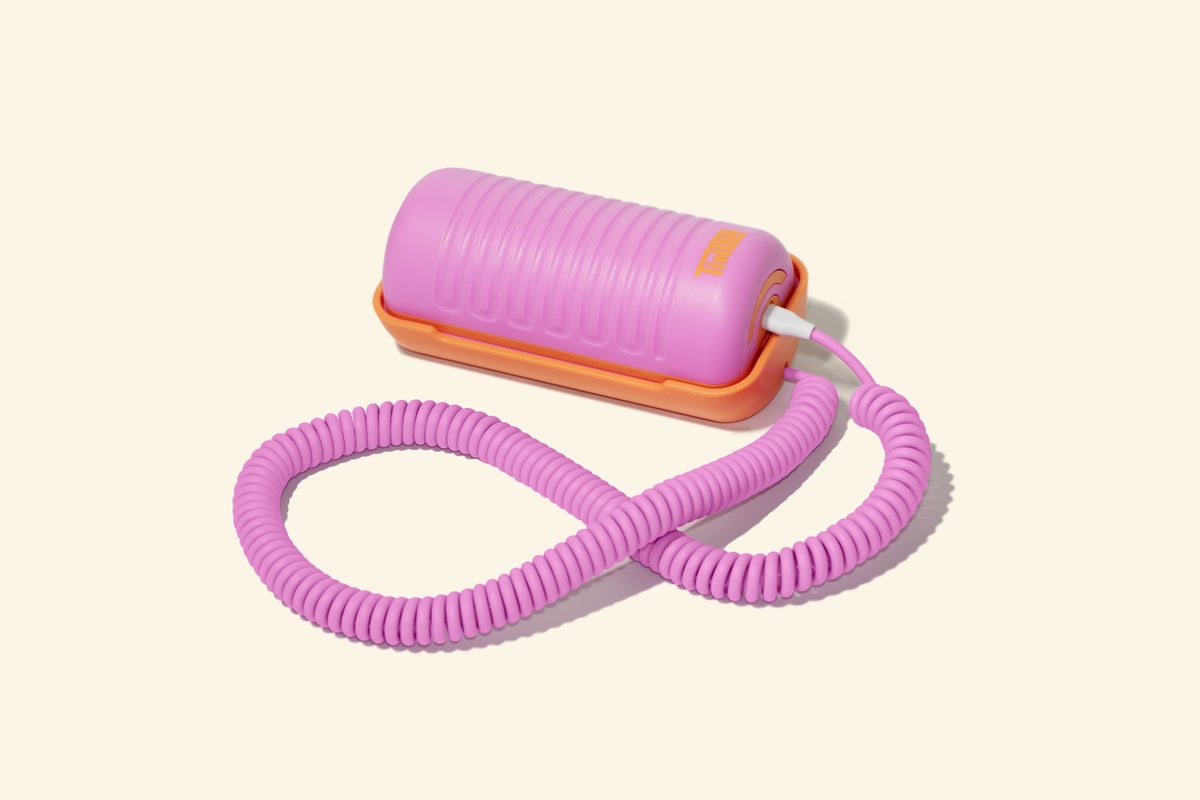
The tech press is currently obsessed with the "retro-chic" revival of the landline. They see a Gen Alpha kid holding a $100 plastic handset and scream "nostalgia."
They are dead wrong. Read more on a connected subject: this related article.
Nostalgia requires a memory of the past. You cannot be nostalgic for a technology that died five years before you were born. When a twelve-year-old buys a "landline-inspired" device, they aren't trying to act like a Gen X protagonist in a Spielberg movie. They are performing a desperate, tactical retreat from a digital environment that has become biologically unsustainable.
The "lazy consensus" says this is a fashion statement. The reality is much darker: it is a hardware-level hack for a generation whose dopamine receptors are being fried by the slot-machine mechanics of the modern smartphone. Further reporting by The Verge delves into related perspectives on this issue.
The $100 Dumbphone Scam
Let’s address the elephant in the room. Paying $100 for a device that does less than a 1998 Nokia is, on paper, an economic absurdity. But the "value" isn't in the hardware specs. You aren't paying for the copper wires or the tactile buttons.
You are paying for the removal of features.
In the industry, we call this "subtractive design." For a decade, I watched product managers at major hardware firms lose their minds trying to cram more "engagement" into every square inch of screen real estate. We built notification systems designed to bypass the prefrontal cortex. We created an ecosystem where "quiet time" is a paid subscription service.
Gen Alpha isn't "going nuts" for the landline because it's cool. They are buying it because it is the only device that doesn't demand their undivided attention every forty-five seconds. It is a one-function tool in a world of infinite-function distractions.
The Myth of the Analog Revival
The media loves the narrative that "Analog is Back." They point to vinyl records and film cameras. They miss the nuance. Vinyl succeeded because it offered a superior physical experience. The landline revival is succeeding because the digital alternative has become predatory.
When you use a smartphone, you are the product. When you use a landline, you are just a person talking.
Why the Smartphone Failed the Phone Call
The primary function of a "phone" is now its least optimized feature.
- Latency: Modern VoIP and cellular calls have more lag than the analog circuits of the 1970s.
- Complexity: Taking a call on a smartphone requires navigating a UI, avoiding accidental mutes with your cheek, and ignoring the "Low Battery" or "Instagram Notification" banners popping up inches from your eyes.
- Privacy: Every call on a modern device is a data point for an LLM or an ad-targeting engine.
The landline-inspired device isn't a step backward. It’s an attempt to restore the integrity of the conversation.
The Biology of the Tether
Think about the psychological weight of a device that is physically tethered to a wall or a base station.
The smartphone killed the "place." You are everywhere and nowhere at once. You are at dinner, but you are also in your work Slack. You are in bed, but you are also on Twitter. This "collapse of context" is the primary driver of the current adolescent mental health crisis.
A landline-inspired device re-establishes contextual boundaries. If the phone is in the kitchen, you are only "available" when you are in the kitchen. This isn't a limitation; it's a sanctuary.
I’ve seen venture capital firms pour millions into "mindfulness apps" that try to solve the distraction problem through the very screen causing the distraction. It’s like trying to extinguish a fire with a squirt gun filled with gasoline. A $100 plastic handset does more for "digital wellness" than every meditation app on the App Store combined because it uses physics, not willpower, to set a boundary.
The Intentional Friction Strategy
We have been sold the lie that "frictionless" is always better. We want 1-click ordering, instant streaming, and seamless connectivity.
But humans need friction to process emotion.
A landline provides intentional friction.
- You have to remember a number (Cognitive engagement).
- You have to stay in one spot (Physical grounding).
- You cannot multitask (Focused presence).
Gen Alpha is the first generation to grow up in a world of zero friction, and they are discovering that it feels like sliding off a cliff. They are reaching for the landline because they want something to hold onto.
The People Also Ask Fallacy
If you search for why kids are using landlines, you’ll find "experts" claiming it’s about "aesthetic" or "Tumblr-core vibes." This is a surface-level observation.
The real question should be: Why have we made our primary communication tools so hostile that children are fleeing to 50-year-old tech to find peace?
The answer is that the "Landline Trend" is actually a silent protest. It is a refusal to participate in the attention economy. By choosing a device that can't run TikTok, they are opting out of a race they know they can't win.
The Hidden Cost of the $100 "Toy"
Is it overpriced? Absolutely.
Is it a cynical cash grab by companies tapping into a trend? Yes.
But for the parent or the teenager, that $100 is a "Freedom Tax." It is the price of buying back your own focus.
The downside of this contrarian approach is obvious: you lose the utility. You can’t call an Uber from a landline. You can’t check the weather. You can't verify a fact mid-sentence. But that loss of utility is exactly the point. We have reached "Peak Utility," and it has made us miserable.
Stop Calling It Retro
Stop using the word "retro." It implies this is a fad that will pass when the next shiny object arrives.
This isn't a fad; it's a correction.
Market dynamics suggest that as the digital world becomes more immersive—with AR glasses and AI-integrated neural interfaces—the value of "dumb," "disconnected," and "tethered" hardware will skyrocket. We are moving toward a bifurcated society: the "always-on" class who are perpetually harvested for data, and the "intentional-off" class who pay a premium for devices that do exactly one thing.
Gen Alpha isn't looking back at the 1980s. They are looking at a future where the most valuable luxury item isn't a faster processor—it's a dial tone and a cord that only reaches six feet.
The landline isn't a toy. It's an escape pod.