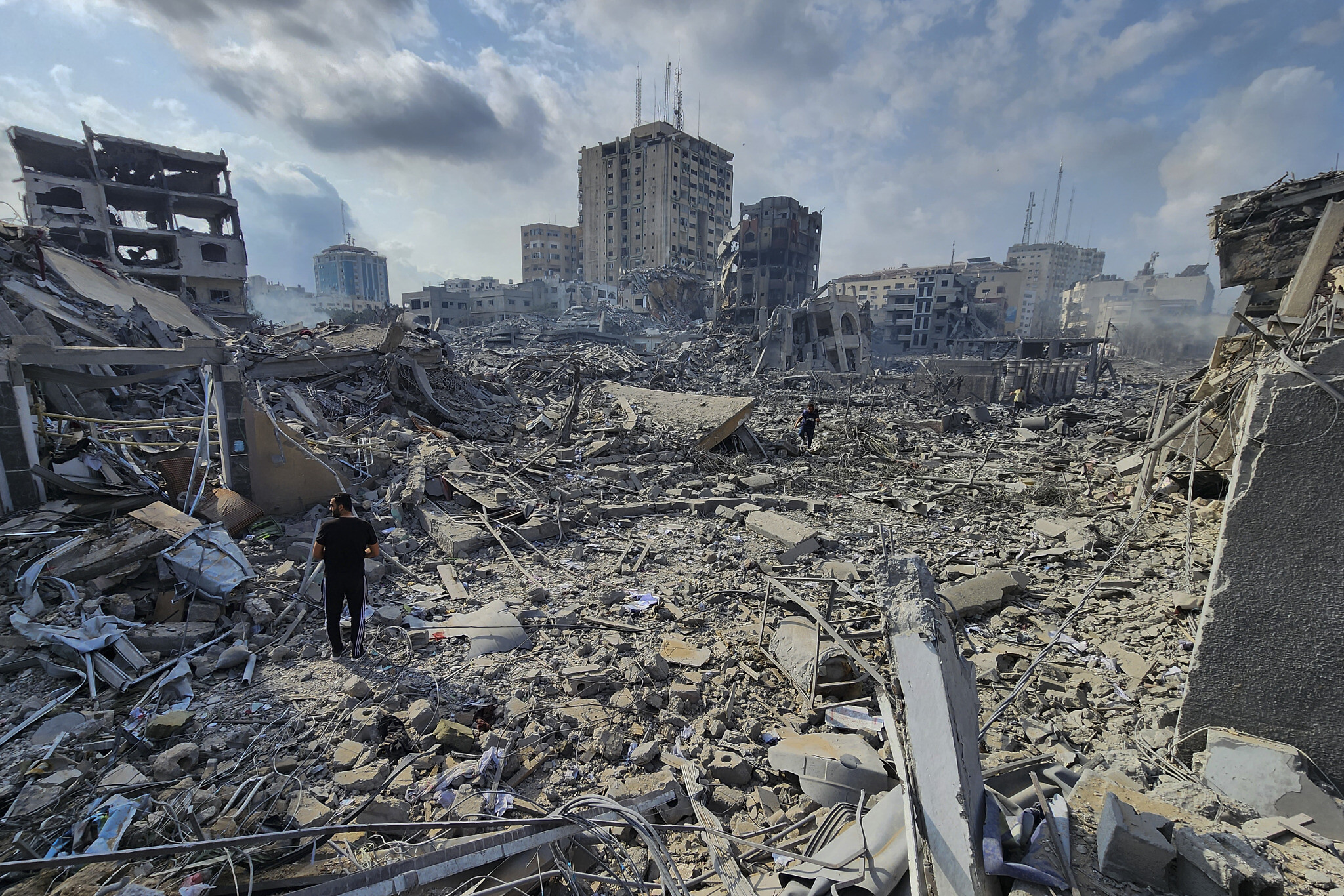
Halting commercial cargo into Gaza does more than shrink store shelves; it severs the market infrastructure that humanitarian convoys cannot replace. When private trade stops, households lose access to varied calories, fresh produce, and basic household items while aid agencies face surging demand against fixed budgets and uneven access. Understanding why commercial goods are blocked requires separating three overlapping layers: border security and dual-use controls, administrative and tax friction inside the territory, and the physical hazards of wartime logistics.
Coverage of commercial restrictions in Gaza often treats a truck stoppage as a single switch flipped at a crossing. That framing misses how border inspections, merchant coordination, local levies, security clearances, and aid capacity interact over time. A rigorous breakdown maps those mechanics directly so policymakers, logisticians, and readers can separate verified facts from contested claims.
Deconstructing Standard Coverage of Gaza Trade Halts
Standard news reports on commercial entry into Gaza usually follow a predictable sequence: an official announcement or merchant pause occurs, aid groups warn of worsening shortages, and officials trade competing explanations for the halt. This format captures immediacy but flattens cause and effect into a binary story of "open" versus "closed."
The first flaw in conventional reporting is treating commercial trade and humanitarian aid as interchangeable pipelines. Humanitarian shipments typically target specific nutritional baskets, medical supplies, or emergency shelter items for vulnerable groups, and their reach depends heavily on donor funding and safe distribution corridors. Commercial imports serve broader household consumption, price discovery, and local retail restocking. When commercial entry stops, pressure immediately transfers onto a smaller, grant-funded aid system that already struggles with bottlenecks and funding shortfalls.
The second flaw is collapsing multiple choke points into one headline cause. A shipment of commercial goods can stall at Israeli security screening or dual-use review, sit unresolved amid disputes between local authorities and merchants over duties or fees, pause when traders suspend coordination, or break down inside Gaza due to route insecurity, fuel scarcity, or looting. Reporting that names only the latest trigger obscures the structural fragility built up across months and years of restrictions.
The third flaw is blurring verified tracking with contested assertions. International agencies such as the United Nations Office for the Coordination of Humanitarian Affairs (OCHA) note that security conditions, movement denials, and limited continuous presence at entry points constrain complete private-sector data. Meanwhile, Israeli authorities and Palestinian officials or merchants frequently offer conflicting accounts of responsibility when shipments stop. A sound analysis states what is documented on the ground and flags where claims remain unverified by independent monitors.
The Four Drivers Behind Commercial Entry Restrictions
Commercial access into Gaza operates through four interlocking mechanisms rather than a single policy lever. Each mechanism alters both physical throughput and economic incentives.
Border Security and Dual-Use Screening
Israeli authorities enforce strict inspection regimes and controls on "dual-use" items—goods deemed to have both civilian utility and potential military applications. Humanitarian organizations and legal advocates have repeatedly documented that broad or opaque dual-use classifications restrict items needed for shelter, water, sanitation, communications, and recovery, slowing clearances or barring entry altogether. From a security standpoint, authorities state that inspections and restrictions are meant to prevent weapons smuggling and military use of imported materials. Regardless of the stated rationale, unpredictable item lists raise transaction costs for traders because a single rejected component or ambiguous specification can immobilize an entire commercial order.
Merchant Coordination and Local Fiscal Friction
Commercial trade requires a functioning commercial intermediary layer: importers, transport contractors, payment channels, and local distributors. Reports on Gaza commercial suspensions have pointed to moments where Palestinian merchants suspended coordination or clashed with local authorities over taxes or per-truck fees, followed by Israeli authorities halting or suspending commercial processing. In high-risk environments, any sudden fee or tax demand acts like an immediate shock to working capital. If expected resale prices do not cover per-truck charges, insurance, and spoilage risk, rational merchants halt orders even before a formal border closure is announced.
Crossing Capacity and Routing Trade-Offs
Physical throughput at border crossings is finite, shaped by infrastructure damage, inspection lanes, operating hours, and security protocols. When crossing capacity is tight, authorities and agencies face allocation trade-offs between bulk humanitarian aid and commercial consignments. Restricting commercial trucks to prioritize certain aid categories—or capping total truck movements—can temporarily push specific relief items forward while starving local markets of everyday goods.
Inside-Gaza Security and Distribution Risk
Getting cargo past an inspection point does not guarantee it reaches consumers. Humanitarian monitors have highlighted that active hostilities, unexploded ordnance, damaged roads, fuel shortages, and armed looting have disrupted internal movement and prevented some collected loads from reaching intended destinations. When internal transport is unsafe or expensive, commercial actors face steep shrinkage and liability risks, reinforcing hesitancy to commit capital to cross-border trade.
How Supply Shocks Ripple Through Gaza's Economy
Blocking commercial goods triggers a chain reaction across prices, nutrition, and institutional capacity. In economic terms, removing commercial supply shifts the aggregate supply curve sharply inward in a market with low price elasticity for food and essentials.
The first link in the chain is price dispersion and scarcity. As commercial stock depletes, households that previously bought food or basic goods through local markets must compete for shrinking supplies or rely on humanitarian distributions. Where cash or vouchers exist without stocked shops, purchasing power loses real value quickly; where cash is scarce, households face acute access barriers even when items appear intermittently.
The second link is nutritional and health degradation. Aid agencies warn that when commercial supplies stop, humanitarian operations alone cannot cover full population needs, putting dietary diversity, child nutrition, and recovery efforts at heightened risk. Essential items beyond basic grain or dry rations—such as fresh produce, protein variety, hygiene supplies, and repair materials—often rely heavily on commercial channels.
The third link is aid-system overload. When commercial imports drop out, displaced and non-displaced families alike turn toward relief distributions. That surge collides with broader operational constraints, including agency funding shortfalls and movement restrictions inside the Strip. A system designed to backstop markets cannot easily substitute for them at scale over extended periods.
Consider a stylized market illustration: suppose a district of 100,000 residents relies on a mix of UN/NGO food parcels and local merchant imports for daily staples and fresh items. If merchant shipments halt for three weeks while agency budgets are already stretched, relief parcels may still reach a subset of households, but remaining families face empty stalls, higher informal prices, and fewer nutrient sources—turning a localized trade stoppage into a broad household welfare shock.
Facts Versus Educated Hypotheses in Trade Reporting
Separating verified facts from analytical hypotheses keeps risk assessments honest when information is contested or incomplete.
Known facts include the structural existence of border controls and inspection regimes on goods entering Gaza, the recurring warnings from aid organizations that humanitarian deliveries cannot fully replace commercial markets, and the documented operational challenges—such as security incidents, looting, movement denials, and incomplete private-sector tracking—affecting supply chains. It is also a known fact that disputes involving merchant coordination and local levies or taxes have been cited in connection with suspensions of commercial shipments.
Educated hypotheses involve reconstructing exact causal weights when data is incomplete or disputed. For example, analysts can reasonably hypothesize that steep per-truck levies or unpredictable dual-use rejections disproportionately squeeze smaller merchants out of the market first, concentrating remaining trade among better-capitalized actors or halting it altogether. Similarly, one can hypothesize that prolonged commercial freezes accelerate reliance on informal or high-markup channels once trade resumes. Treating such hypotheses as provisional models—rather than settled facts—prevents overstating precision where independent verification is limited.
Operational Steps for Assessing and Mitigating Supply Halts
Analysts, aid coordinators, and policy teams evaluating a commercial blockade in Gaza need a disciplined diagnostic sequence rather than reactive commentary.
- Isolate the primary choke point. Determine whether a halt stems from border crossing closures, dual-use item denials, merchant coordination pauses, local fee disputes, or internal route security. Each choke point requires a different operational response; misdiagnosing a merchant fee dispute as purely a crossing gate closure leads to ineffective interventions.
- Map commodity elasticity by category. Separate life-saving emergency items and medical or nutritional inputs from general commercial goods, identifying which specific food groups, hygiene items, or repair materials lack humanitarian substitutes.
- Audit internal transport and security conditions. Track whether goods cleared at entry points are actually being collected, moved safely along internal corridors, and distributed without diversion or looting. External truck counts alone overstate real availability on the ground.
- Cross-check claims against independent monitoring. Compare official statements from parties to the conflict and merchant groups against UN and humanitarian reporting, explicitly noting data blind spots.
Every practical mitigation measure carries real limitations and trade-offs. Expanding commercial entry without secure internal corridors and clear rule-of-law protections risks cargo loss or price gouging; relying solely on humanitarian convoys without commercial markets leaves nutritional and commodity gaps and strains donor budgets; and tightening dual-use lists to reduce security risks can simultaneously block civilian recovery and public-health essentials. No single administrative fix resolves all four pressures at once.
Strategic Action for Stabilizing Commercial Flows
Any durable effort to restore commercial supply into Gaza must pair predictable, transparent inspection and dual-use rules with verifiable safeguards against diversion, extortion, and internal transit breakdown. Negotiating clear, standardized rules for commercial clearances and predictable local fee structures—backed by independent third-party monitoring of crossing throughput and internal delivery—offers the highest-leverage path to reopening markets without forcing humanitarian agencies to carry an unsustainable share of everyday civilian provisioning.


