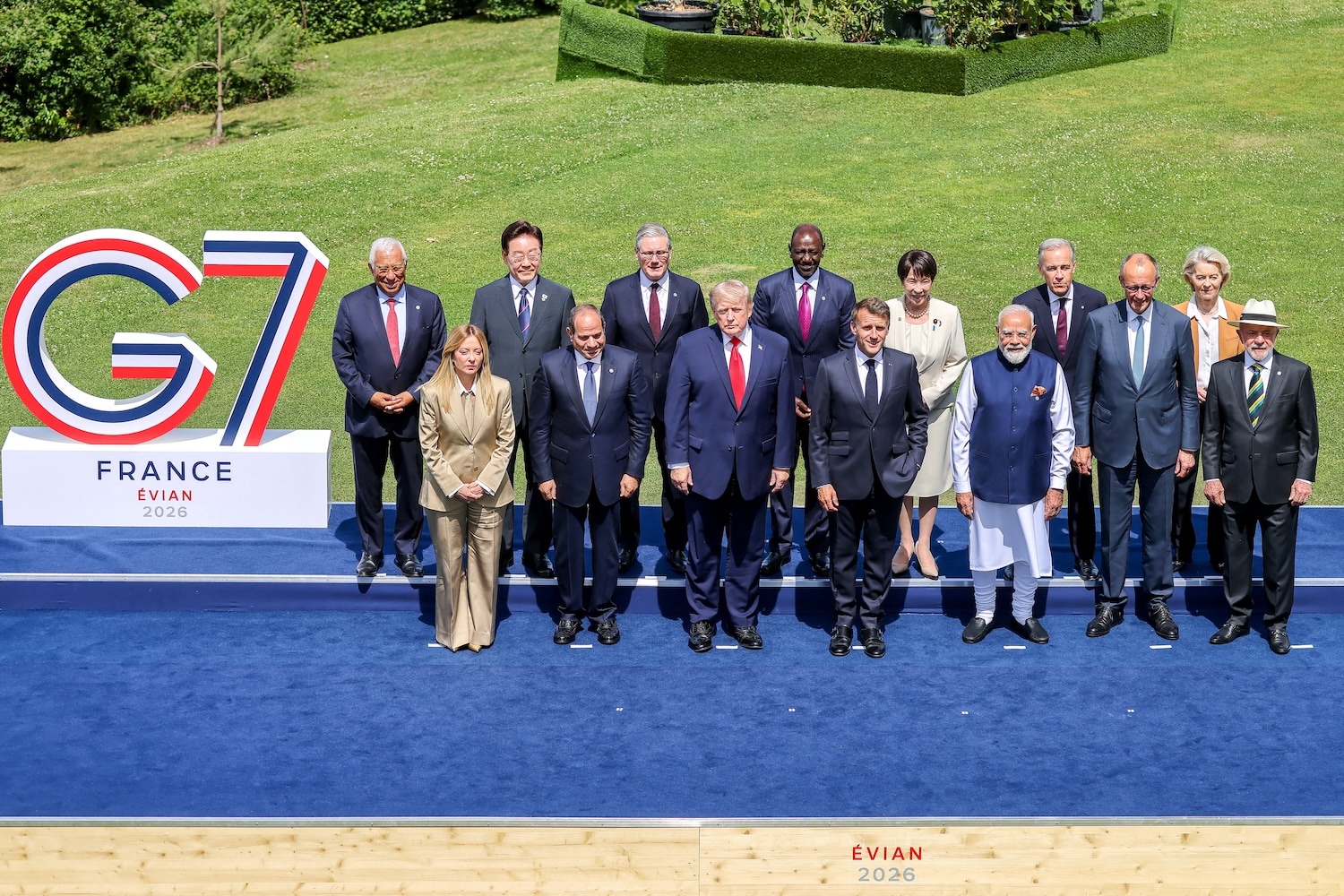
World leaders love a good photo op, especially when they can claim they just stopped a major war. That is exactly what happened at the lakeside resort of Evian-les-Bains in France. The Group of Seven concluded its latest summit with a flurry of optimistic headlines about a preliminary peace deal with Iran and a renewed promise to hammer Russia with harsher sanctions.
But if you peel back the diplomatic veneer, the reality looks messy. While the politicians pat themselves on the back for defusing a massive geopolitical crisis in the Middle East, they are quietly ducking the brutal economic fallout that normal people are dealing with every single day. They are promising to fund expensive long-term military goals while ignoring the immediate supply chain shocks, shipping tolls, and fuel price volatility that are eating away at household budgets.
Here is what really went down at the summit, what the official communiqués are trying to hide, and what it actually means for the global economy.
The Secretive Iran Deal and the Strait of Hormuz Gamble
The biggest talking point out of France was the sudden, tentative truce between the United States and Iran. It follows a chaotic three-and-a-half-month conflict that choked off global oil supplies and sent energy markets into a tailspin.
The deal is slated for an official signing ceremony in Switzerland, brokered behind the scenes by Pakistani and Qatari diplomats. The core agreement sounds simple on paper. The U.S. lifts its naval blockade, Iran reopens the Strait of Hormuz to commercial shipping without demanding hefty transit tolls, and Washington dangles financial incentives if Tehran hits specific nuclear benchmarks.
But it's a fragile peace built on shaky assumptions. Look at what happened almost immediately. Iran’s foreign ministry announced that the truce hinges on Israeli forces completely pulling out of Lebanon. Israel, which partnered with the U.S. in early strikes against Iran, immediately rejected that demand. Prime Minister Benjamin Netanyahu made it clear that Israeli troops will stay put as long as they see fit.
This massive disconnect means the entire agreement could collapse before the ink even dries. G7 leaders are publicly celebrating the breakthrough because they desperately need the Strait of Hormuz to stay open. But by backing an ambiguous, secret memorandum that leaves the region's deeper proxy conflicts completely unresolved, they are gambling with the stability of global energy markets.
Ramping Up the Fight Against Russia's Shadow Fleet
While the G7 tried to play peacemaker in the Middle East, their tone on Eastern Europe was purely aggressive. The summit produced a unified pledge to increase military pressure on Russia, specifically targeting its highly elusive oil and gas logistics network.
The focus has shifted heavily toward dismantling Russia's shadow fleet—the massive network of aging, unregistered tankers used to sneak oil past Western price caps. The UK recently ramped up the pressure by slapping sanctions on vessels trying to move liquefied natural gas from the Arctic LNG 2 project, and British forces even seized a shadow fleet vessel in the English Channel.
G7 Strategy Shift on Russia:
- Accelerating air defense hardware deliveries to Kyiv.
- Expanding licenses to jumpstart domestic military production inside Ukraine.
- Introducing a comprehensive ban on maritime services for unflagged oil tankers.
The G7 believes that choking off these maritime avenues will finally starve Moscow's war economy. It's a noble strategic goal, but it carries a steep financial penalty for the rest of the world. Forcing hundreds of transport ships out of circulation artificially shrinks global shipping capacity. When capacity drops, freight rates spike. The cost of moving everyday goods across the ocean goes up, and companies end up passing those exact costs down to consumers.
The Economic Elephant in the Room
This is where the G7’s narrative completely derails. The leaders spent days discussing how to fund air defense systems and secure trade routes, but they systematically sidestepped the domestic economic pain caused by these ongoing conflicts.
The hard truth is that the global trade system is fracturing. European leaders are frustrated that Washington drags them into volatile conflicts—like the brief war with Iran—without considering how a sudden maritime blockade impacts local energy prices and agricultural supply chains. For example, a severe shortage of imported fertilizers, triggered by shipping disruptions, is currently threatening agricultural yields across Europe and developing nations.
Instead of addressing these immediate pressures, the summit focused on long-term, abstract structural reforms:
- Reforming international development finance to pull in private capital.
- Restructuring global supply chains to source critical minerals outside of China.
- Addressing macroeconomic imbalances like American over-consumption and European under-investment.
These long-term plans might sound great in an academic policy paper. But they do absolutely nothing for the small business owner facing double-digit increases in logistics costs today, or the family watching their grocery bills climb because fertilizer costs are out of control.
By prioritizing geopolitical grandstanding over practical economic relief, the G7 is widening the gap between global governance and real-world economic survival. True economic security isn't achieved by signing secret, fragile truces or issuing broad, sweeping sanctions packages while your own domestic markets are buckling under the weight of inflation.
Real Steps for Navigating the Geopolitical Supply Shock
You can't control what happens at a lakeside summit in France, but you can protect your own operations from the fallout of their decisions. If you run a business or manage supply chains, stop waiting for global trade routes to normalize.
First, audit your logistics dependencies immediately. If your business relies on raw materials or components that transit through major maritime chokepoints like the Mediterranean or the periphery of the Middle East, you need to diversify now. Look for regional suppliers, even if the upfront unit cost is slightly higher. The predictability of nearshoring easily offsets the catastrophic cost of a sudden three-month shipping delay.
Second, lock in your energy and commodity contracts early. The tentative peace in the Middle East has created a temporary window of relative stability in energy markets. Use this dip to secure fixed-rate contracts for fuel, electricity, or freight before the next round of regional friction inevitably triggers another market spike.
Geopolitical instability is no longer a temporary hurdle. It is the baseline reality of the modern global economy, and waiting for world leaders to fix it is a losing strategy.