Arthur has lived long enough to know the weight of a rainless sky.
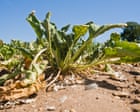
His boots, caked in the ancient silt of the East Anglian fens, tell a story of soil that has surrendered too much of its moisture to the biting summer wind. He stands at the edge of a field where green shoots should be pushing upward with aggressive, impatient life. Instead, the earth is tight, dry, and mapped with fine fissures that look like cracked porcelain.
"We used to measure the seasons by when our boots got stuck in the mud," Arthur says, running a calloused thumb over a clod of dirt that crumbles into gray dust at the slightest pressure. "Now, we measure them by how deep we have to drill to find something wet."
Arthur is a composite figure, but his dry furrows are real. Across the United Kingdom, the ground that feeds millions is thirsty. A startling reality underpins the tranquil green hills and orderly orchards of Britain: the vast majority of our essential food supply is grown in regions facing severe drought risk.
We tend to think of our food security as an anchor. We imagine island geography protected by maritime mists, blessed with temperate rains that keep the pastures emerald and the vegetable rows plump. Yet that pastoral postcard is fading. Behind the supermarket shelves stacked high with crisp carrots, tender leeks, and ruby-red strawberries lies an invisible vulnerability. Our nation’s breadbasket is sitting on a hydrological tightrope.
Consider what happens long before a single vegetable reaches a conveyor belt.
Water is the silent partner in every calorie we consume. It is hidden inside the crunch of a celery stalk, locked within the starch of a potato, and poured by the gallon into the milk we splash into our morning tea. When rain patterns shift and aquifers dip below critical thresholds, agriculture does not simply adjust. It panics.
Reports from environmental analysts and hydrological watchdogs have begun sounding alarms that sound too abstract to register. They speak of "stress coefficients," "recharge rates," and "fluvial depletion." But translation is required. What those dry terms mean for Arthur—and for the rest of us—is that the margins for error have vanished.
In the eastern counties of England, where a massive share of the country’s vegetables and cereal crops sprout, rainfall is shockingly scarce. Much of this region technically falls into categories comparable to semi-arid zones in terms of annual precipitation versus evaporation rates. Farmers there do not rely on the clouds alone. They pump. They siphon from chalk aquifers and divert from dwindling rivers, drawing down a savings account of water that took millennia to accumulate.
And the account is running low.
The vulnerability is systemic. When drought grips these critical agricultural hubs, the shockwaves do not stay in the soil. They ripple outward into supply chains, nudging price tags upward and forcing hard choices in boardrooms and kitchen alike. We treat food as a limitless given, a shelf-stable concept that appears by magic. But food is manufactured chemistry and biology, powered almost entirely by stable weather systems that are no longer stable.
Walk through a modern supermarket aisle. The illusion of abundance is total. Spanish tomatoes sit comfortably next to Kentish apples; Lincolnshire potatoes share shelf space with imported greens. Nothing looks broken. Nothing looks stressed.
That is the danger. The disconnect between the supermarket facade and the agrarian reality creates a dangerous complacency. We assume that if the shelves are full today, the system is robust.
It is not.
To understand why, we have to look closer at the geography of our sustenance. A handful of counties shoulder an extraordinary burden of national feeding. When drought bakes the soil in those specific zones simultaneously, there is no regional backup plan waiting in the wings. The entire domestic harvest wobbles.
We have built our modern diet on cheap, accessible water. For generations, irrigation was treated as an infinite tap. Turn the valve, wet the roots, harvest the yield. But climate volatility has turned that tap into a drip.
The consequences stretch far beyond empty pockets at the checkout counter. There is a psychological toll taken on the people who work the land. Farmers are eternal optimists by necessity—you have to be slightly mad to gamble your livelihood on the temperament of the sky. Yet that optimism is fraying. Watching crops wither before they can mature, knowing that the permits to abstract water from local rivers might be restricted to protect aquatic ecosystems, creates a quiet, grinding anxiety.
It is a strange sort of helplessness. You can own the land, you can possess the machinery, you can know the soil better than you know your own hands, but without water, you are merely presiding over a slow-motion failure.
So what does a society do when its foundational supply lines run dry?
The answers are complicated, uncomfortable, and expensive. They involve rethinking what we grow, where we grow it, and how we value the liquid that flows from our taps. They require moving away from water-intensive crops in bone-dry districts and investing heavily in sophisticated water retention, precision irrigation, and soil health that locks in moisture like a sponge.
Yet technological fixes alone will not solve a structural crisis.
We need a cultural shift in how we perceive our food. We must learn to respect the invisible geography of our plates. Every bite has a watershed attached to it. Every meal tells a story of weather, soil, and human sweat.
The next time you slice into a homegrown tomato or peel a local potato, pause for a moment. Think of the dust blowing across the fens in East Anglia. Think of the deep wells ticking downward. Think of the thin, precarious thread that connects the cracked earth of a drought-stressed field to the quiet comfort of a home kitchen.
The ground is speaking to us. The question is whether we are willing to listen before the silence becomes permanent.