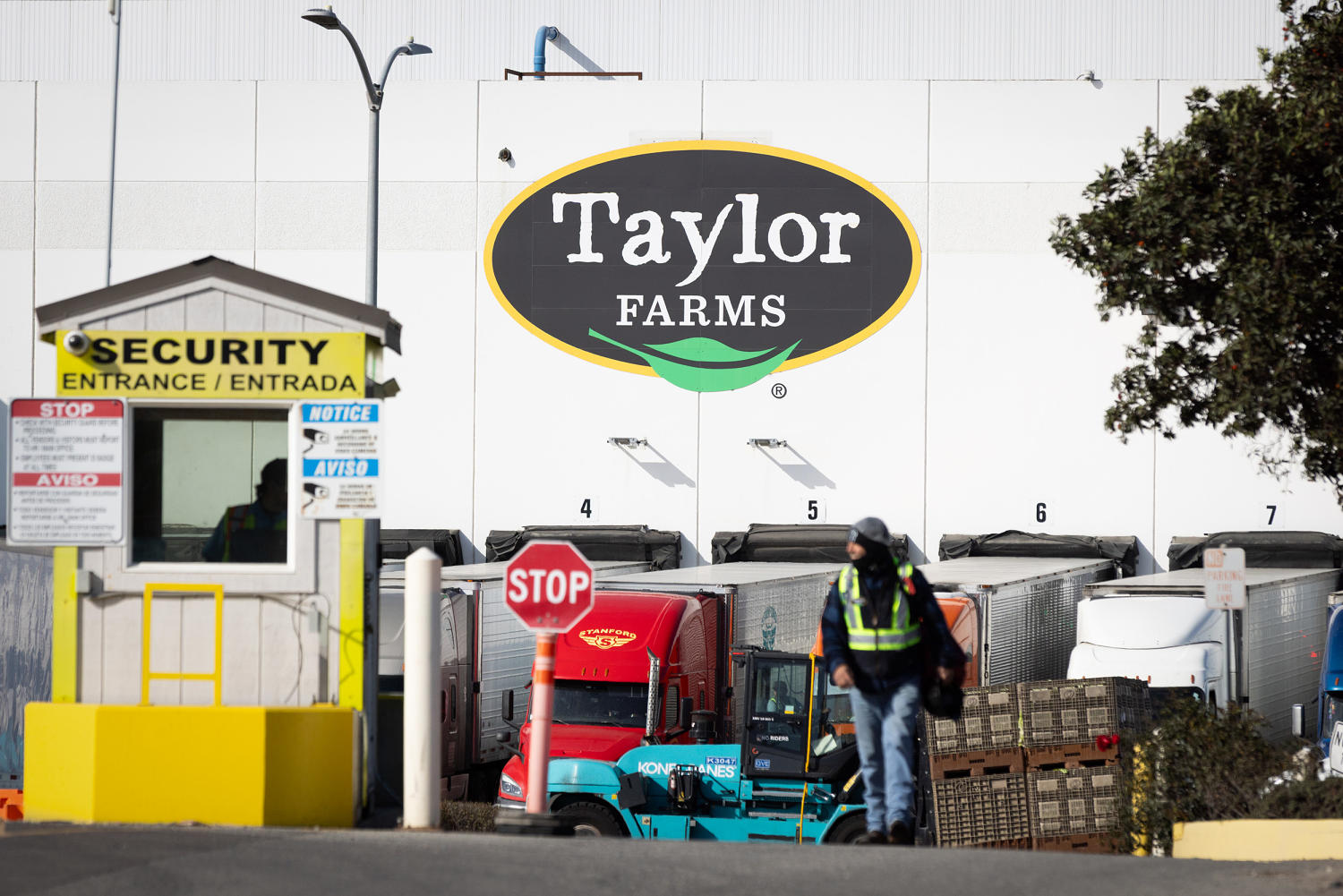
Whenever fresh produce makes people sick, the public relations ritual follows a strict script. Regulators issue vague updates, headlines highlight ongoing investigations into major suppliers like Taylor Farms, and corporate PR teams insist they take consumer health seriously. The public nods along, assuming federal oversight is methodically solving the problem.
That assumption is completely broken.
Fixating on slow-moving regulatory investigations after a Cyclospora outbreak misses the underlying reality of fresh produce supply chains. Outbreak announcements give a false sense of security while structural flaws remain untouched. The system is designed to react weeks too late, assign fractional blame, and preserve the supply chain status quo while consumers bear the actual risk.
The Lag Time Trap Makes Post-Outbreak Audits Meaningless
The standard news cycle focuses on whether agencies have pinned a specific microscopic parasite to a specific processing plant. What people fail to grasp is the math behind produce shelf life versus outbreak detection.
Fresh greens travel from field to plate in days. They spoil in weeks. Yet Cyclospora cayetanensis—the microscopic parasite responsible for recurring summer spikes in foodborne illness—has an incubation period ranging from two days to over a week. Add the lag time for a patient to visit a doctor, get a stool test ordered, have that sample sequenced, and report the results to local public health authorities, and you have a massive structural delay.
By the time a government agency publicly names a farm or processor in a Cyclospora investigation, the affected batch of leafy greens or herbs was harvested, packaged, shipped, eaten, and passed through human digestive tracts a month ago.
Investigating a processing facility four to six weeks after the contaminated batch ran through the machinery is pure theater. You are auditing a ghost.
The industry treats these late-stage probes as comprehensive safety nets. In reality, they are forensic autopsies on food that left the building long ago.
Why Cyclospora Breaks Standard Food Safety Tech
Corporate risk managers love to tout sophisticated testing protocols and sanitation standards. They want you to believe that modern processing plants are impenetrable fortresses. They are not.
Unlike common bacterial pathogens such as E. coli or Salmonella, Cyclospora is a protozoan parasite. This difference matters immensely:
- Chemical Resistance: Cyclospora oocysts are famously tough. Standard chemical sanitizers used in produce wash lines—such as chlorine or peracetic acid—do not reliably kill or deactivate them at typical processing concentrations.
- Environmental Persistence: The parasite enters the supply chain almost exclusively through water contaminated with human fecal matter. Once inside an irrigation canal or agricultural runoff system, it hangs around.
- Testing Friction: PCR testing for parasites in complex plant matrices is notoriously finicky. Visual detection requires specialized microscopy. Sampling a tiny fraction of millions of pounds of produce guarantees that low-level contamination slips right through the net.
When a wash line runs millions of pounds of greens through a recycled water system, standard chemical washes are not neutralizing the parasite. They are simply cleaning the dirt off leaves while potentially distributing contaminated water across entire production runs.
The Real Point of Failure Is Industrial Water Infrastructure
Large-scale commercial operations get blamed because their logos sit on the bags in grocery aisles. But focusing solely on single processors obscures the systemic issue: agricultural water infrastructure.
Imagine a scenario where a farm implements flawless employee hygiene, spotless packing sheds, and strict temperature controls. If the open-air canal supplying their irrigation water runs past human sewage overflow or poorly managed agricultural runoff upstream, all those downstream precautions are worthless.
- Open-air canals expose crops to uncontrollable external runoff.
- Standard wash line chemistry fails to kill parasite oocysts.
- Delayed epidemiological tracing creates zero real-time accountability.
Yet, federal oversight continues to focus heavily on facility-level documentation and reactive tracing rather than mandating real-time, treatment-at-source requirements for industrial agricultural water.
The High Cost of the "Clean Bag" Illusion
The central conflict in industrial food production is simple: consumers demand cheap, pre-washed, ready-to-eat produce year-round, while biology resists hyper-centralized distribution.
To keep prices low, millions of pounds of produce from dozens of fields are funneled through single processing hubs. One contaminated acre can contaminate an entire afternoon's production run. The industry accepts this risk calculation because the cost of total systemic redesign outweighs the periodic financial hit of a public health update or product recall.
If public health oversight meant actual accountability, the focus would shift instantly:
- Stop treating post-outbreak facility audits as proof of active protection.
- Require closed-loop or fully treated water systems for all high-risk produce irrigation.
- Acknowledge that ready-to-eat produce carries an inherent biological risk that chemical wash lines cannot wash away.
Stop waiting for a regulatory press release to tell you a specific farm is clean. By the time their name hits the news, the contaminated food was digested weeks ago, and the wash lines are already running the next batch.