The pre-dawn light over the Palos Verdes Peninsula was still gray and heavy when the Genesis GV80 hit the curb. There was no screech of brakes. Just the violent, rhythmic thud of metal meeting earth and brush as the luxury SUV somersaulted down a steep embankment. When the machine finally stopped, it lay on its side, a mangled cage of steel nestled in the California dirt. Inside, pinned and bleeding, was a man whose name had become shorthand for human perfection.
Tiger Woods did not know where he was. He did not know that his right leg had essentially been shattered into a collection of bone fragments and trauma. As the first deputy arrived at the scene, peering through the cracked windshield with a flashlight, he didn't find a defiant superstar or a panicked victim. He found a man drifting through a fractured reality.
The President is on the Line
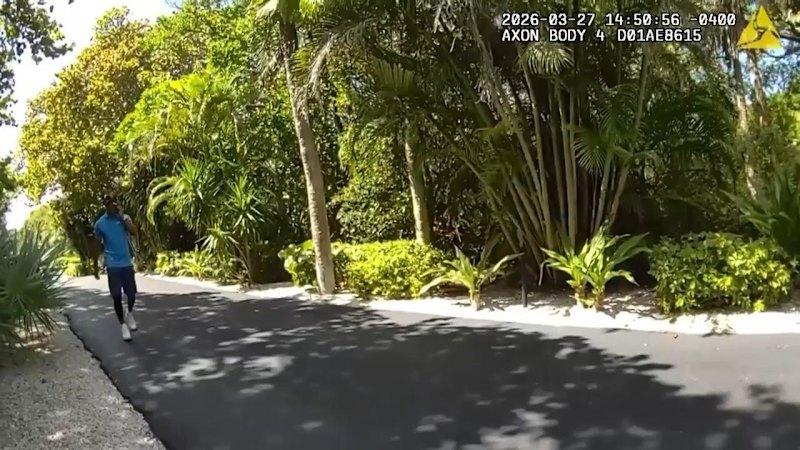
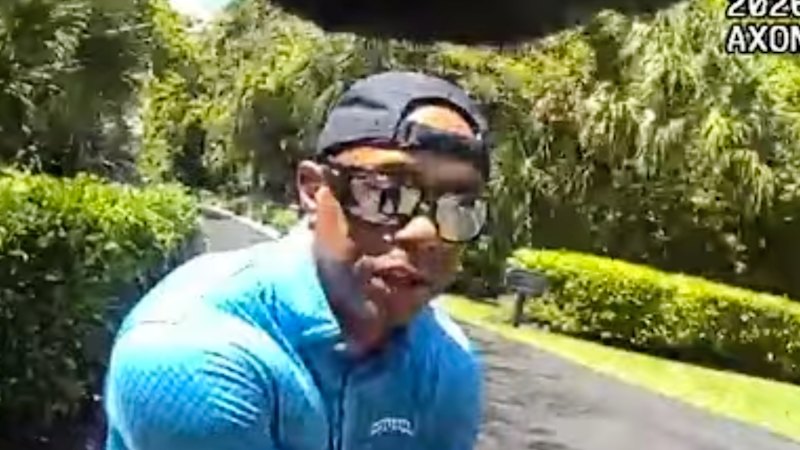
Body camera footage captured the moments that the public rarely sees: the immediate, messy aftermath of a hero coming undone. When a sheriff’s deputy leaned into the wreckage to ask the standard questions—name, date, location—the answers didn't match the world outside the car.
Woods was conscious, but he was traveling through a different timeline. At one point, as the deputy worked to keep him calm while paramedics rushed to the scene, Tiger spoke of a phone call. He wasn't calling a doctor. He wasn't calling a lawyer. He told the officer he was "talking to the president."
It was a haunting glimpse into the psyche of a man who has lived his entire adult life in the stratosphere of global power. For decades, Tiger Woods didn't just play golf; he occupied a space where presidents and kings were his peers, his fans, and his frequent dial-outs. In the grip of a massive concussion and the shock of near-fatal internal injuries, his brain retreated to the only safety it knew: the company of the powerful.
The deputy noted the confusion. He saw the blank stare. To the law, this is evidence of impairment or severe head trauma. To a storyteller, it is the sound of a legend’s internal compass spinning wildly in the dark.
The Physics of a Breakdown
We often treat our idols like machines. We expect them to perform, to break records, and then to retire quietly into the sunset. But machines don't bleed, and they certainly don't get confused.
The crash on Hawthorne Boulevard wasn't just a traffic accident; it was a physical manifestation of a body pushed past its breaking point. Years of back surgeries, knee reconstructions, and the grueling physical toll of a swing that moved faster than the human frame was designed to handle had already turned Tiger’s anatomy into a map of scars.
Consider the sheer force required to crush a modern vehicle to the point where the front end is unrecognizable. The GV80 is a tank of a car, designed with every safety feature known to modern engineering. When it rolled, the energy transferred into the cabin was immense. $F = ma$ is a simple equation on a chalkboard, but in the Rolling Hills of California, it was the sound of a tibia snapping.
While the world debated whether he was under the influence—a suspicion the sheriff eventually cleared by citing a lack of evidence of intoxication at the scene—the real story was the fragility. We want our giants to be invulnerable. We want to believe that if we had their money, their fame, and their talent, we would be untouchable.
Then we see a man in a ditch, telling a deputy he’s chatting with the leader of the free world while his leg hangs by a thread.
The Silence of the Aftermath
The body camera doesn't lie, but it also doesn't tell the whole truth. It shows the sweat on the officer's brow. It shows the dust motes dancing in the flashlight beam. It shows the heavy-duty shears used to cut the greatest golfer of a generation out of his seat.
What it misses is the internal weight.
Imagine waking up in a hospital bed days later and being told what you said. The embarrassment of the delusion. The realization that for a few minutes, your mind simply opted out of a reality that was too painful to bear. Tiger Woods has spent his life controlling every variable. He controls the flight of the ball. He controls his public image. He controls the narrative of his "comebacks."
In that wreckage, control was a ghost.
There is a specific kind of loneliness that comes with being the most famous person in the room. When the deputy asked him if he knew where he was, and Tiger couldn't answer, it stripped away the branding. It stripped away the Nike swoosh and the red Sunday polo. It left a 45-year-old father who was lucky to be alive, grappling with the fact that his body had finally issued a final, non-negotiable protest.
The Long Road to Nowhere
The report would eventually state that Woods was traveling at nearly double the speed limit—roughly 84 to 87 miles per hour in a 45-mph zone. He never hit the brakes. Data from the car’s "black box" suggested that he may have accidentally hit the accelerator instead of the brake pedal as he lost control.
It is a mistake a teenager might make. Or a man whose nervous system is firing in a thousand wrong directions at once.
But the public's hunger for a "why" often misses the "who." We looked for pills. We looked for scandals. We looked for a reason to judge or a reason to forgive. What we found instead was a man so disoriented that he was hallucinating a high-level diplomatic meeting in the middle of a brush fire.
The tragedy of the Tiger Woods story isn't that he crashed. It's that even at his lowest, most broken moment, his subconscious was still trying to maintain the stature of the man the world expects him to be. He couldn't just be a victim; he had to be the man talking to the president.
The footage eventually fades to black. The sirens grow distant. The SUV is hauled away, leaving only a scar in the dirt and some shattered glass that glints in the sun.
We are left with the image of a man who has climbed the highest mountains in sports, only to find that the air is very thin at the top, and sometimes, when you fall, you don't even know which way is down. He sits in the tall grass of his own memory, waiting for a phone call that isn't coming, while the real world waits for him to just remember his own name.