The outrage machine in Florida is running at peak capacity again.
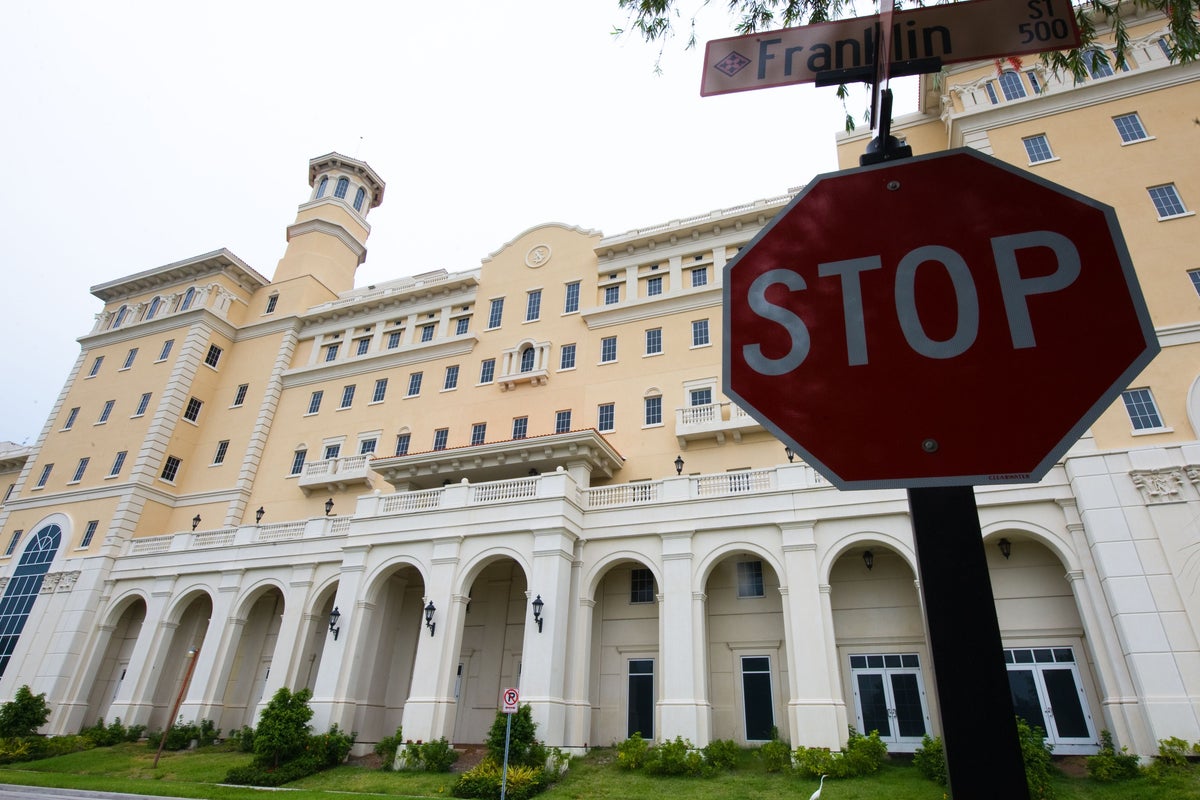
Local residents are weeping on the evening news. Activists are printing yard signs. Neighborhood associations are passing around hats to fund what they call a "historic legal defense." The target of their fury is a massive, newly approved auditorium set to be built by the Church of Scientology.
The media coverage follows a tired, predictable script. It frames the conflict as a classic David versus Goliath battle. It pits well-meaning local homeowners against a wealthy, controversial institution, implying that with enough community grit and a clever lawyer, the locals can protect the character of their neighborhood.
It is a comforting narrative. It is also a complete lie.
The harsh reality of American land-use law is that these residents have already lost. The lawsuits they are weighing are not just long shots; they are financial suicide notes for the municipalities that try to enforce them. By relying on emotional appeals and traditional zoning arguments, the community is bringing a knife to a drone fight.
The Legal Bazooka Residents Keep Ignoring
Every municipal lawyer worth their salt knows a hard truth that they rarely whisper to angry crowds at town hall meetings: federal law trumps local outrage every single time.
When residents vow to block a religious structure using local zoning ordinances, they assume the playing field is level. They believe that if they can prove a building is too big, too bright, or too disruptive to traffic, the local government can simply say no.
They are entirely unaware of a federal statute passed in 2000 called the Religious Land Use and Institutionalized Persons Act, or RLUIPA.
[Local Zoning Laws] < [Federal RLUIPA Protections] = Guaranteed Municipal Defeat
RLUIPA was specifically designed by Congress to prevent local governments from using zoning laws to push religious organizations out of their communities. It functions as a legal bazooka. The moment a city denies a land-use permit to a religious group, the burden of proof shifts instantly.
Under RLUIPA, if a zoning decision places a "substantial burden" on a religious organization's exercise of its faith, the city must prove it has a compelling governmental interest to do so. Furthermore, the city must prove it used the least restrictive means possible to achieve that interest.
In the history of zoning litigation, almost no local traffic or aesthetic argument has ever met the threshold of a "compelling governmental interest." Traffic congestion is an inconvenience; it is not a compelling state interest on par with national security or public health.
If a town allows a commercial developer to build a 500-seat movie theater or a convention hall on a piece of land, it cannot legally tell a religious organization that a 500-seat auditorium is unacceptable. Doing so violates the "Equal Terms" provision of federal law. If the city tries it anyway, the federal courts will flatten them.
The True Cost of Public Tantrums
Imagine a scenario where a small city council yields to public pressure. The council chambers are packed with furious voters demanding a denial of the building permit. To save their political careers, the council members vote down the auditorium.
What happens next is not a heroic legal defense. It is a financial slaughter.
The religious organization files a federal lawsuit under RLUIPA. The city’s insurance carrier looks at the case, realizes the city has a microscopic chance of winning, and threatens to drop coverage if the city does not settle. If the city fights anyway, discovery begins. Depositions drag on for months.
When the city inevitably loses, they do not just get ordered to allow the building to go up. Under federal civil rights statutes, the losing municipality is forced to pay the plaintiff’s attorney fees.
I have watched mid-sized municipalities blow millions of dollars in taxpayer money defending these doomed zoning fights, only to end up writing a massive check to the very organization they tried to block. The auditorium gets built anyway, and the local taxpayers are stuck with higher property taxes to cover the legal bills.
The residents shouting at city council meetings are demanding that their elected officials commit financial malpractice to make them feel better for a few months.
Why the Character of the Neighborhood Argument is Dead
The most common weapon deployed by suburban activists is the defense of "neighborhood character." They argue that a massive institutional building does not fit the historic or residential vibe of the community.
This argument died decades ago, but its ghost still haunts local civic associations.
In modern property law, aesthetic consensus is a myth. A city cannot use vague, subjective ideas about "vibe" or "character" to deny a property owner the right to build on land they legally purchased. If the land is zoned for commercial or high-density institutional use, the owner has a bundle of rights that cannot be stripped away just because the neighbors find the architecture imposing or the organization's beliefs distasteful.
- Fact: Property ownership grants specific, legally protected development rights.
- Fact: Popular disapproval does not constitute a legal basis for property restriction.
- Fact: Courts consistently rule against cities that weaponize code enforcement against specific groups.
When an organization acquires a massive real estate footprint in a concentrated area, they are playing a long-term capital game. They do not buy land on a whim. They buy land because the existing zoning code explicitly permits their intended use, or because the city has created a precedent by allowing similar structures nearby.
The time to protect the character of a neighborhood is during the drafting of the master zoning plan, twenty years before the land is sold. Once the deed is signed and the plans conform to the existing text of the code, the game is over.
The Flawed Search for a Magic Bullet
People facing these developments often flood online forums asking variations of the same question: Can we sue the city for letting this happen? Can we use environmental impact studies to stop the construction?
These questions are based on a fundamental misunderstanding of the administrative process.
An environmental impact study or a traffic study is a procedural hurdle, not a veto mechanism. If a study shows that an auditorium will increase traffic at an intersection by fifteen percent, the solution required by law is not to ban the building. The solution is to force the developer to add a turn lane or install a traffic signal.
Using environmental regulations as a proxy war to stop a project is a strategy that developers know how to defeat in their sleep. They simply hire better engineers, run their own counter-studies, and agree to whatever mitigation measures the bureaucrats demand. They absorb the cost as a minor line item in a multimillion-dollar budget, while the neighborhood association burns through its entire legal fund before the first shovel even hits the dirt.
What a Real Counter-Strategy Looks Like
If legal challenges are a guaranteed dead end, what can a community actually do?
They must stop treating a real estate problem as a moral crusade. They need to treat it as a market competition.
If residents want to prevent an institution from dominating their local landscape, they have to outbid them. They must form private investment groups, partner with commercial developers who share their vision, and buy the land before the institutional buyers get to it.
Traditional Strategy: Angry Meetings -> Lawsuits -> Federal Court Loss -> Tax Hike
Insider Strategy: Private Capital -> Land Acquisition -> Local Development -> Control
This approach requires actual capital and risk, which is why it is rarely attempted. It is much easier to hold a press conference and demand that local politicians pass an illegal ordinance than it is to raise twenty million dollars to buy a commercial parcel.
Furthermore, communities must stop relying on the illusion that local government can protect them from change. The modern municipal structure is designed to maximize property tax revenue and minimize exposure to federal civil rights litigation. When forced to choose between the emotional demands of a neighborhood group and a federal lawsuit that could bankrupt the city, the city will always choose survival.
The Florida residents holding meetings this week believe they are entering a righteous battle for the soul of their town. In reality, they are walking into a meat grinder of federal statutory law and established property rights. The auditorium will be built. The lawsuits will fail. The only remaining question is how many millions of dollars the taxpayers will waste discovering that truth.
Stop fighting the zoning boards. Stop funding the symbolic lawsuits. Either buy the dirt or accept that the dirt belongs to someone else. Everything else is just noise.