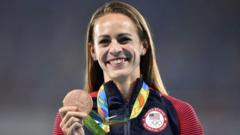
For decades, the human body was a machine Jenny Simpson understood down to its smallest, most obedient gears. She knew the precise burn of lactic acid building in her quads. She knew the exact cadence required to shave a tenth of a second off a world-class time. When you spend a life becoming the first American woman to win a world championship gold in the fifteen hundred meters, and later claim an Olympic bronze medal in Rio, your physical form becomes an instrument of absolute precision. You trust it. You push it to the edge of human capacity, and it answers.
Until it doesn't.
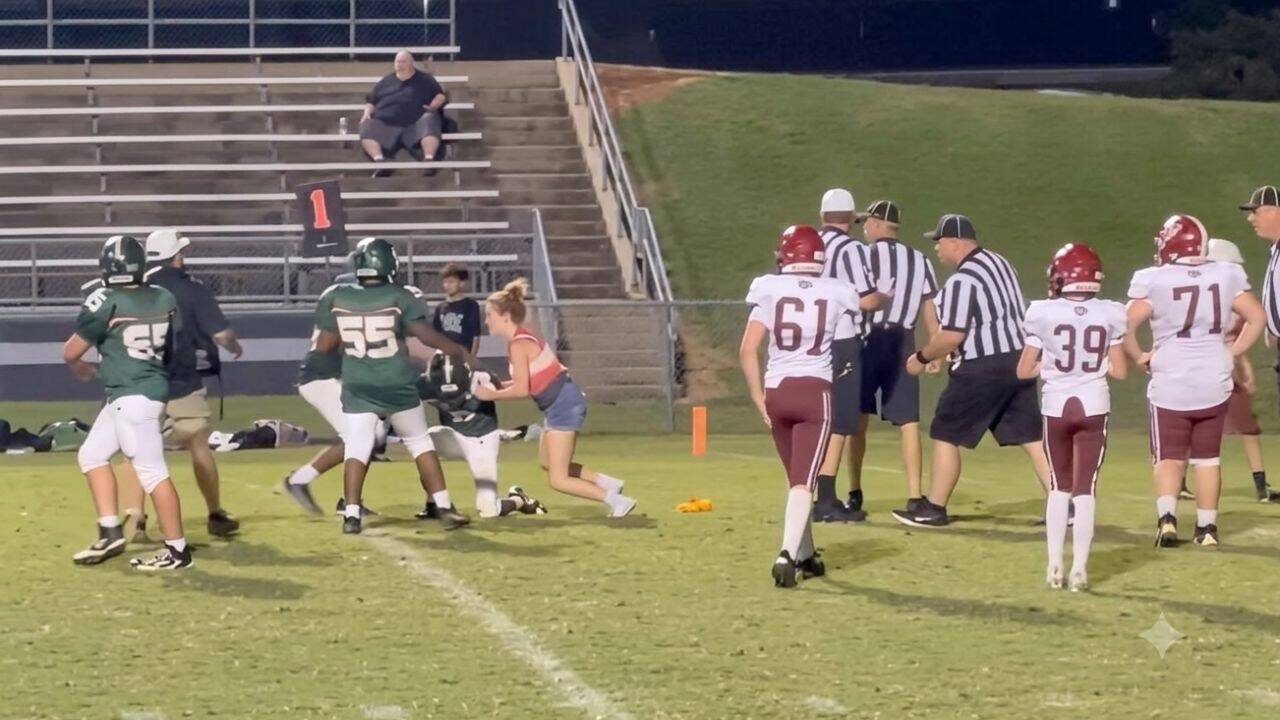
On a warm June evening in Raleigh, North Carolina, at a community track event where she was simply pacing a group of young runners, the metronome stopped. There was no buildup of competitive pressure, no tactical elbowing on the final turn, no desperate kick down the homestretch. There was only a sudden, catastrophic electrical failure inside her chest. Jenny Simpson collapsed. Her heart stopped beating.
What followed was a terrifying blur of desperate intervention. Bystanders and medical personnel rushed to the track, performing chest compressions and firing an automated external defibrillator to shock a silent heart back into rhythm. But the danger did not end at the asphalt. At the hospital, her heart arrested a second time. Days blurred together in intensive care at Duke University Hospital, a grueling nine-day crucible where life support systems fought to keep pace with a body that felt, in her own haunting words, as though it were beginning to drown.
The diagnosis arrived like a quiet verdict after the storm: arrhythmogenic right ventricular cardiomyopathy, universally known as ARVC.
To understand ARVC is to understand a cruel biological contradiction. It is a rare, inherited condition where fatty and fibrous scar tissue slowly infiltrates the muscle of the heart's right ventricle, replacing healthy tissue over time. It disrupts the delicate electrical pathways that tell the heart when to contract, setting the stage for dangerous, chaotic rhythms. In a cruel twist of physiological fate, intense endurance exercise—the very thing that forged a champion—can accelerate the scarring process.
For an elite runner, this diagnosis is more than medical news. It is an identity stripped bare.
When Simpson finally broke her silence months later, she did not offer a portrait of despair. Instead, she offered perspective. The diagnosis means a permanent farewell to running. The chapter has officially closed. Yet, her message to the world bypassed self-pity entirely. She asked her supporters not to offer condolences or sorrow, but to share in a simpler, deeper truth: she is glad she is here.
Consider what it takes to pivot away from the defining passion of a lifetime. Most of us anchor our worth to what we do, measuring our days by output, goals, and momentum. Simpson spent her entire adult life chasing finish lines, only to discover that the most profound victory of her existence was simply waking up in a hospital bed with her breath returning to her lungs.
Her journey through competitive racing is legendary, marked by eleven national titles and fierce tactical brilliance on the world stage. Yet her post-competitive path had recently taken a softer, more communal turn. After stepping away from elite competition, she spent months traveling across the country with a van and two dogs, running with local clubs and everyday neighborhoods just for the sheer joy of shared movement. She was learning what running felt like when no medals were attached to the outcome.
That radical appreciation for the simple act of moving alongside others makes the sudden halt of her heart all the more poignant.
Cardiac arrest outside of a hospital setting remains a devastating medical emergency, claiming hundreds of thousands of lives each year with narrow margins for survival. Simpson's survival is a testament to the split-second readiness of bystanders who knew how to perform CPR and deploy an AED. It is a stark reminder that beneath the glowing veneer of athletic invincibility, elite bodies are just as fragile, and just as precious, as our own.
The medals will stay in their cases. The race clips will live on in archives. But the final takeaway from a champion's brush with mortality has nothing to do with podiums or personal records. It lives in the quiet realization that every heartbeat is an unearned gift, and the finish line that matters most is simply the one where we get to stay.