The clock in Caracas read just past three in the morning when the floorboards began to scream. It was not a low rumble or a gentle warning. It was a sudden, violent convulsion of stone and steel that tore through the pre-dawn quiet, shaking concrete apartment blocks like dry leaves in a storm. Within minutes, entire neighborhoods were plunged into darkness as power lines snapped, throwing blue sparks into the night sky. In the suffocating dust that followed, the silence was louder than the tremor itself.
When the earth fractures, the world shrinks to the immediate radius of survival. You look for a flashlight. You reach for a child’s hand. You check if the walls are still holding.
But thousands of miles away, across vast oceans and multiple time zones, a different kind of vibration was felt. At Hindon Air Force Station outside New Delhi, the air was heavy with the heat of a routine evening shift. Then the phones began to ring. Orders came down with sharp, military precision. A massive earthquake had ripped through Venezuela, leaving thousands displaced, infrastructure shattered, and medical systems teetering on the edge of collapse.
The response was immediate. It did not involve long diplomatic deliberations or geopolitical posturing. It involved the heavy thud of crates being loaded onto a C-17 Globemaster transport aircraft. The mission had a name: Operation Amistad.
Consider the sheer physical reality of that name. Amistad means friendship. But true friendship between nations is rarely tested in air-conditioned summits or signed treaties. It is measured in tons of high-yield medicines, inflatable field hospitals, water purification tablets, and the exhaustion of flight crews flying halfway across the planet to deliver hope to people they will never meet.
The Geography of Empathy
Maps can be deceptive. On a flat projection, India and Venezuela appear to exist in entirely different universes, separated by the Atlantic Ocean, the African continent, and the vast expanses of the Middle East. The flight path requires navigating complex airspace, refueling logistics, and grueling hours in a pressurized cockpit.
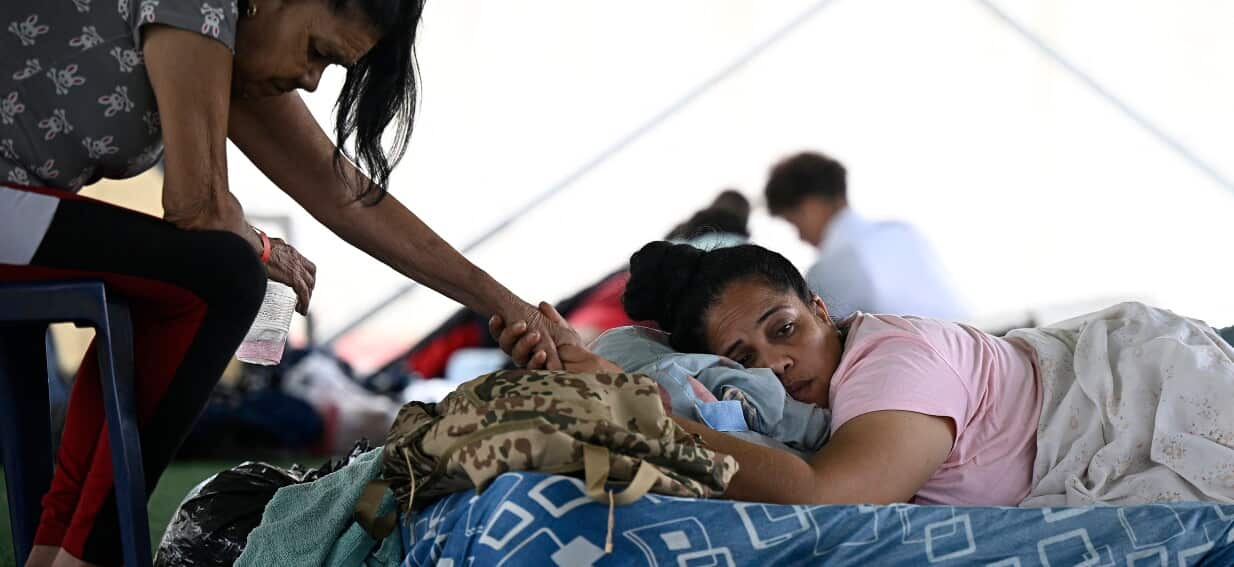
For the people waiting in the debris of Caracas or the coastal towns hardest hit by the tremor, the arrival of foreign aid can feel abstract until it lands. Imagine a local doctor, whom we can call Maria. She has been working for thirty-six hours straight in a makeshift clinic set up under a plastic tarpaulin. The hospital where she trained is compromised, its structural integrity ruined by the deep fissures splitting the walls. She is running out of basic antibiotics. She is reusing bandages. She has to choose which patient receives the last vial of pain medication.
To Maria, the high-level pronouncements of global leaders mean absolutely nothing. What matters to her is the weight of a cardboard box.
When the Indian relief flights touched down, they brought exactly what Maria needed. This was not a symbolic gesture of a few thousand blankets. The cargo manifest carried critical medical equipment, surgical supplies, and specialized disaster relief materials designed to stabilize communities when the civic grid completely fails.
The strategy behind Operation Amistad reveals a profound understanding of disaster logistics. In the immediate aftermath of a tectonic catastrophe, the secondary crisis is often more lethal than the initial shock. Contaminated water breeds cholera. Open wounds turn septic. The lack of shelter exposes the vulnerable to the elements. By prioritizing water purification systems and mobile medical units, the relief operation targeted these hidden threats before they could mutate into a second wave of casualties.
The Invisible Threads of Solidarity
Why does India step up so decisively when Latin America suffers? Critics who view international relations solely through the cold lens of transactional politics often struggle to find an explanation. Venezuela is not India’s immediate neighbor. There are no shared land borders, no immediate regional security alignments hanging in the balance, and no direct electoral benefits for the politicians authorizing the expenditure.
The answer lies in a deeper, historical identity. India has spent decades positioning itself as a reliable first responder in the Global South. It is a quiet authority earned not through military intervention, but through a consistent willingness to share resources when the night is darkest.
Think back to previous global crises. When the tsunami struck the Indian Ocean, or when earthquakes devastated Nepal, the response mechanism was the same. It is an operational philosophy rooted in the concept of Vasudhaiva Kutumbakam—the world is one family. While the phrase is frequently used in speeches, Operation Amistad translated the sentiment into aviation fuel and life-saving cargo.
The commitment reaffirmed by New Delhi during this crisis emphasizes that human suffering does not recognize ideological boundaries. When the ground opens up, political disagreements over oil markets or voting blocs in the United Nations become completely irrelevant. The only currency that matters is speed.
The Logistical Ballet
Getting an emergency payload across hemispheres is a nightmare of logistics. Every hour of delay represents lives lost to preventable infections or exposure.
Behind the dramatic images of large cargo planes lifting off into the sunset lies an army of unseen coordinators. Warehouse managers in India worked through the night to pull inventory from strategic reserves. Customs officials bypassed traditional red tape to clear shipments in record time. Diplomatic channels remained open continuously to secure overflight permissions through multiple sovereign territories.
The flight crews themselves faced a grueling test of endurance. Flying a massive cargo aircraft over such distances requires meticulous fuel management and physical stamina. The pilots and loadmasters knew that the cargo they carried was fragile and time-sensitive. Every bump in the air, every weather system avoided, was a calculated decision to protect the integrity of the medical supplies on board.
When the rear ramp of the C-17 lowered on the tarmac in Venezuela, the physical manifestation of this effort became clear. Forklifts moved with urgent efficiency. Local emergency workers, weary from days of rescue operations, greeted the Indian personnel with a quiet, profound relief that transcended language barriers.
A handshake between an Indian air force officer and a Venezuelan civil defense worker tells a story that no official press release can fully capture. It is a moment of shared humanity, an acknowledgment that when one part of the world bleeds, another part feels the pain.
Beyond the Aftershocks
The dust in Caracas will eventually settle. The broken overpasses will be rebuilt, the concrete will be poured anew, and the headlines will inevitably move on to the next global flashpoint. This is the tragic cycle of modern news consumption; our attention spans are brief, while the recovery periods for disasters span years.
But for the families who survived because a clean water system arrived just in time, the memory of Operation Amistad will remain permanent. The true impact of this relief effort cannot be quantified solely by the dollar value of the cargo or the number of flights deployed. It is found in the children who did not get sick from contaminated water. It is found in the surgeries that were successfully performed because sterile instruments were available.
India’s reiteration of its commitment to Venezuela is a reminder that true leadership is defined by reliability in moments of chaos. It shows that even in an era often defined by cynicism and fractured alliances, the instinct to help a stranger in distress remains a powerful, unifying force.
As the sun sets over the valley of Caracas, the distant hum of an departing cargo plane echoes against the damaged mountainside. The aircraft is empty now, its vital contents distributed to the clinics and camps where the real work of rebuilding lives continues. It leaves behind more than just supplies. It leaves the undeniable proof that even across fifteen thousand kilometers of deep ocean and quiet sky, no nation is ever truly alone in the dark.