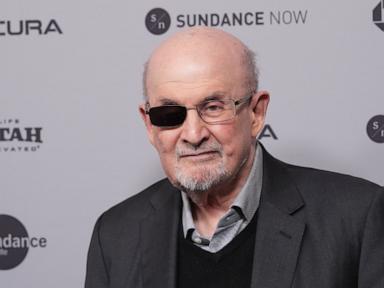
When a knife ripped through the summer air at the Chautauqua Institution in August 2022, it left author Salman Rushdie fighting for his life and permanently blinded in one eye. Earlier state criminal proceedings in New York answered the immediate tactical question of who carried out the assault. A state jury quickly convicted Hadi Matar of attempted murder, resulting in a twenty-five-year prison sentence.
Yet state murder trials rarely explore the broader geopolitical architecture behind a blade. The federal trial opening in Buffalo, New York, marks a decisive shift in how Western justice systems confront ideological violence. Federal prosecutors are not merely seeking to punish a lone assailant; they are placing foreign state-sponsored incitement itself on trial.
The Limits of Local Prosecution
State courts work under strict constraints. To secure an attempted murder conviction, Chautauqua County prosecutors needed to prove intent to kill, possession of a weapon, and the physical act of stabbing. They did not need to explain why a twenty-four-year-old from Fairview, New Jersey, boarded a bus to an idyllic retreat with a bag of knives.
The state trial intentionally bypassed the thirty-five-year history of foreign religious decrees. By focusing strictly on the physical assault, local prosecutors avoided protracted legal battles over national security evidence, classified intelligence, and digital forensic scope. That approach delivered a swift conviction, but it left the surrounding ideological network unexamined.
Federal law enforcement takes over where local jurisdiction ends. Under a federal indictment alleging transnational terrorism and material support to a foreign terrorist organization, prosecutors must expose the bridge between remote ideological commands and domestic execution.
The Digital Footprint of Radicalization
The case built by federal prosecutors rests heavily on evidence recovered from Matar's digital devices and New Jersey home. Investigators discovered detailed notes tracking Rushdie's public speaking calendar alongside research on logistical execution methods.
More significantly, the government identified direct linkages to foreign militant doctrine. Agents seized images of former Iranian supreme leader Ayatollah Ruhollah Khomeini and his successor, Ayatollah Ali Khamenei. Court filings show that Matar operated under the belief that he was fulfilling a mandate endorsed by Hezbollah, the Iran-backed militant group based in Lebanon.
This evidence touches upon a recurring challenge in modern counterterrorism. Matar was born in the United States, yet his trajectory altered significantly following a 2018 visit to Lebanon. His mother publically observed that he returned withdrawn and isolated. The federal case aims to prove that remote incitement, paired with regional radicalization, constitutes actionable material support for terrorism under federal law.
Testing the Boundaries of Transnational Terrorism Charges
Prosecuting an individual for transnational terrorism when no direct handler commanded the operation in real time creates a critical legal precedent. The defense team has already attempted to suppress evidence gathered from digital accounts, arguing that federal search warrants were overly broad and infringed on constitutional privacy rights.
Defense attorneys argue that an individual acting out of personal affinity for a radical belief system differs legally from an active operative receiving funds or orders from a foreign command structure. The government counters that explicit religious edicts, reinforced by designated terrorist organizations over decades, function as standing operational orders.
If the prosecution secures a life sentence under these federal counts, it establishes a clear warning. Believers who operationalize foreign decrees on American soil will be treated not merely as violent criminals, but as combatants executing foreign acts of aggression.
The Human Cost and the Defense of Expression
Salman Rushdie, now seventy-nine, takes the witness stand again. His testimony brings the human reality of ideological violence back into focus. Having survived decades under round-the-clock protection following the original 1989 decree, Rushdie had returned to public life believing the immediate danger had receded.
The attack on stage demonstrated how old threats persist quietly in digital spaces, waiting for a willing participant. Matar’s defiance during previous court appearances, where he labeled Rushdie a hypocrite while professing support for free speech principles, underscores the deep ideological disconnect surrounding fundamental civil liberties.
This federal proceeding is not just another legal chapter in a violent assault. It represents a systematic effort by federal authorities to dismantle the legal protections often claimed by lone actors carrying out state-sanctioned violence. By treating the attack as transnational terrorism, the judicial system draws an unmistakable line between protected speech and foreign-backed political violence.