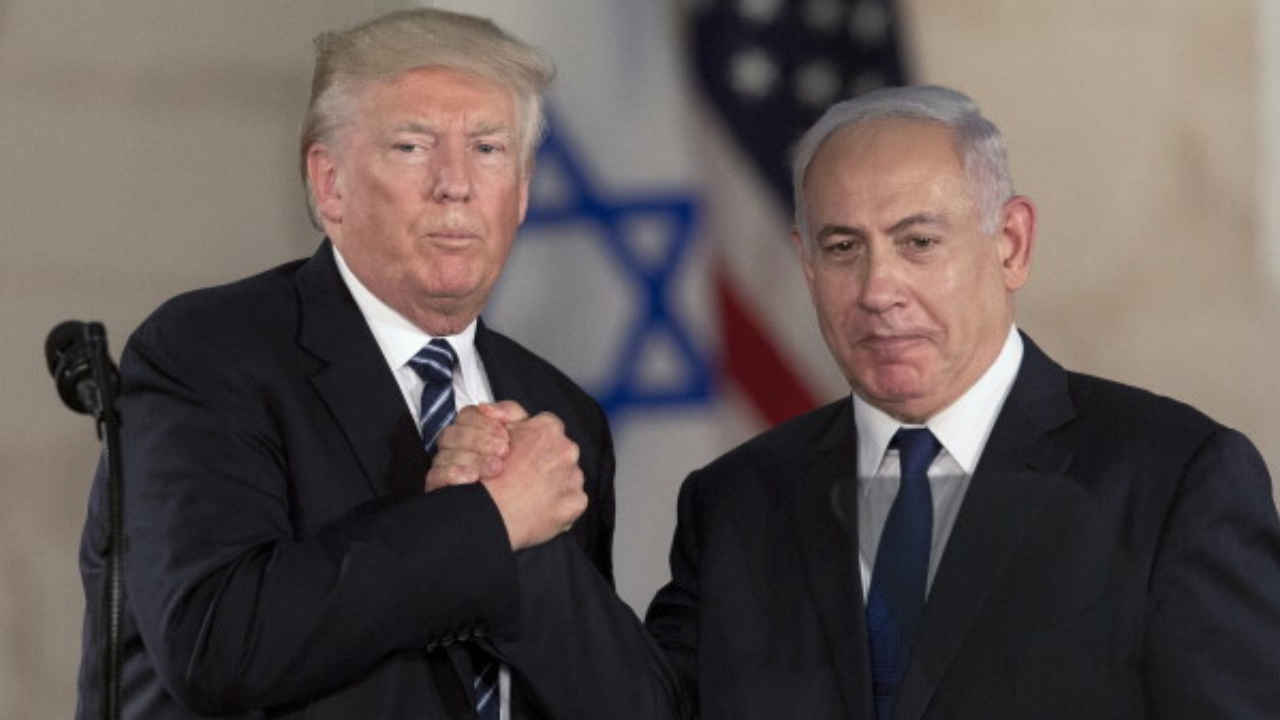
The white-hot escalation between Israel and Iran cannot be solved by expanding a six-year-old trade framework. Washington is currently attempting to construct a regional architecture on a foundation of shifting sand, operating under the assumption that normalization agreements can bypass active, state-level warfare. The core flaw in this strategy is the belief that commercial ties and diplomatic handshakes with Gulf states can neutralize the structural, ideological enmity between Jerusalem and Tehran. It is a fundamental miscalculation. The recent exchange of ballistic missiles and strikes on critical infrastructure, including the Mahshahr petrochemical plant in Iran and targets in Haifa, exposes the limits of transactional diplomacy when confronted with existential conflict.
Diplomatic efforts are currently stalled because the American administration is attempting to force two entirely different realities into a single agreement. On one track, negotiators are trying to hammer out a fragile framework with Tehran to reopen the Strait of Hormuz, exchange unblocked assets, and secure a temporary ceasefire. On the other track, Washington is publicly demanding that Arab states, including Saudi Arabia and Qatar, immediately sign onto an expanded version of the 2020 Abraham Accords as a mandatory condition for regional peace. This approach treats deeply rooted geopolitical rivalries as a real estate negotiation where more signatures automatically equal a better deal.
The strategy ignores the hard reality on the ground. Security architecture cannot be built while the primary combatants are actively trading blows that bypass the very nations being asked to sign the peace.
The Illusion of Containment Through Normalization
The original premise of the Abraham Accords was that regional economic integration would create a united front capable of deterring Iranian aggression. By bringing Israel, the United Arab Emirates, Bahrain, and Morocco into a shared economic and security orbit, the West hoped to isolate Tehran.
That isolation did not produce submission. Instead, it accelerated Iran's willingness to use its asymmetric proxy network and direct military capabilities to disrupt the global economy. The conflict in the Persian Gulf, marked by the de facto closure of the Strait of Hormuz to major shipping lanes, proves that regional trade agreements are entirely defenseless against state-directed military force.
Furthermore, the domestic calculations of the Gulf Cooperation Council states have fundamentally shifted. While nations like the UAE have absorbed direct strikes and integrated some defensive aid, they are acutely aware of their own vulnerability. The dream of a grand anti-Iran coalition anchored by Arab capital and Israeli technology looks entirely different when viewed from a frontline city within range of Iranian drone batteries. The Gulf states are not looking to become foot soldiers in a generational war between Jerusalem and Tehran. They are looking for an exit ramp that protects their state-backed diversification projects and energy infrastructure.
The Fatal Flaw of Mandatory Signatures
The recent push from Washington making it "mandatory" for nations like Saudi Arabia, Qatar, Jordan, and Pakistan to join an updated version of the Accords has caused deep friction. Rather than building a cohesive alliance, this top-down pressure has stunned regional leaders and complicated the delicate ceasefire talks with Iran.
Riyadh has maintained a consistent, decades-long position. True normalization with Israel requires a credible, irreversible path toward a sovereign Palestinian state. Attempting to use the immediate crisis of an Israel-Iran war to bypass this requirement is a non-starter for Saudi leadership. By trying to force a simultaneous signature, American policy risks alienating the exact partners needed to manage regional stability over the long term.
[Washington's Diplomatic Push]
       │
       ├─► Demand: Mandatory Abraham Accords Signatures (Saudi Arabia, Qatar, UAE)
       │
       └─► Reality: Direct Military Conflict Continues (Israel ⇆ Iran)
This structural mismatch creates a dangerous diplomatic vacuum. Israel remains deeply critical of any Western effort to strike a deal with Tehran that leaves the Iranian nuclear program and ballistic missile infrastructure intact. Conversely, the Iranian leadership has no incentive to accept long-term restrictions on its strategic leverage if Washington cannot provide ironclad guarantees against unilateral Israeli strikes. The result is a cycle where diplomacy operates in a vacuum while the actual combatants continue to recalibrate their red lines through military actions.
The Redefinition of Deterrence
The nature of the conflict between Israel and Iran has evolved far beyond the shadow war of the past decade. The threshold for direct engagement has been permanently lowered. When air defense networks are tested by multi-layered missile salvos, the diplomatic community's focus on economic normalization seems detached from reality.
- Infrastructure Targeting: The focus has shifted toward energy hubs and economic lifelines, raising the stakes for global markets.
- Proxy Limitations: Tehran has demonstrated a willingness to engage directly from its own territory rather than relying solely on regional proxies.
- Failed Ceasefires: The collapse of localized truces shows that neither side believes the current status quo is sustainable.
Structural Fragmentation of the Region
The belief that the Middle East can be divided into neat, binary camps—those who sign the accords and those who do not—ignores the complex domestic realities of each state. A country's foreign policy is not a monolith. Within the Gulf itself, responses to the conflict vary wildly based on geographic proximity to Iran and exposure to maritime trade disruptions.
| Country | Diplomatic Posture | Primary Strategic Concern |
|---|---|---|
| Saudi Arabia | Cautious, insists on Palestinian statehood | Protection of domestic economic transformation projects |
| UAE | Defiant, integrated defensive cooperation | Securing maritime trade routes and commercial hubs |
| Qatar | Mediator, resistant to forced normalization | Maintaining open channels for regional conflict resolution |
This fragmentation means that a forced, region-wide treaty cannot hold. When regional powers deny the use of their airspace for offensive operations out of fear of immediate retaliation, a theoretical alliance exists only on paper. True security architecture requires a shared assessment of threat and a willingness to absorb risk. Neither exists in the current alignment.
The current escalation demonstrates that economic integration cannot precede basic security stabilization. You cannot build a durable trade zone in a combat theater. Until the core security dilemmas between the primary actors are addressed through direct, realistic terms that account for deterrence and sovereignty, expanding diplomatic frameworks will remain a public relations exercise rather than a path to peace.