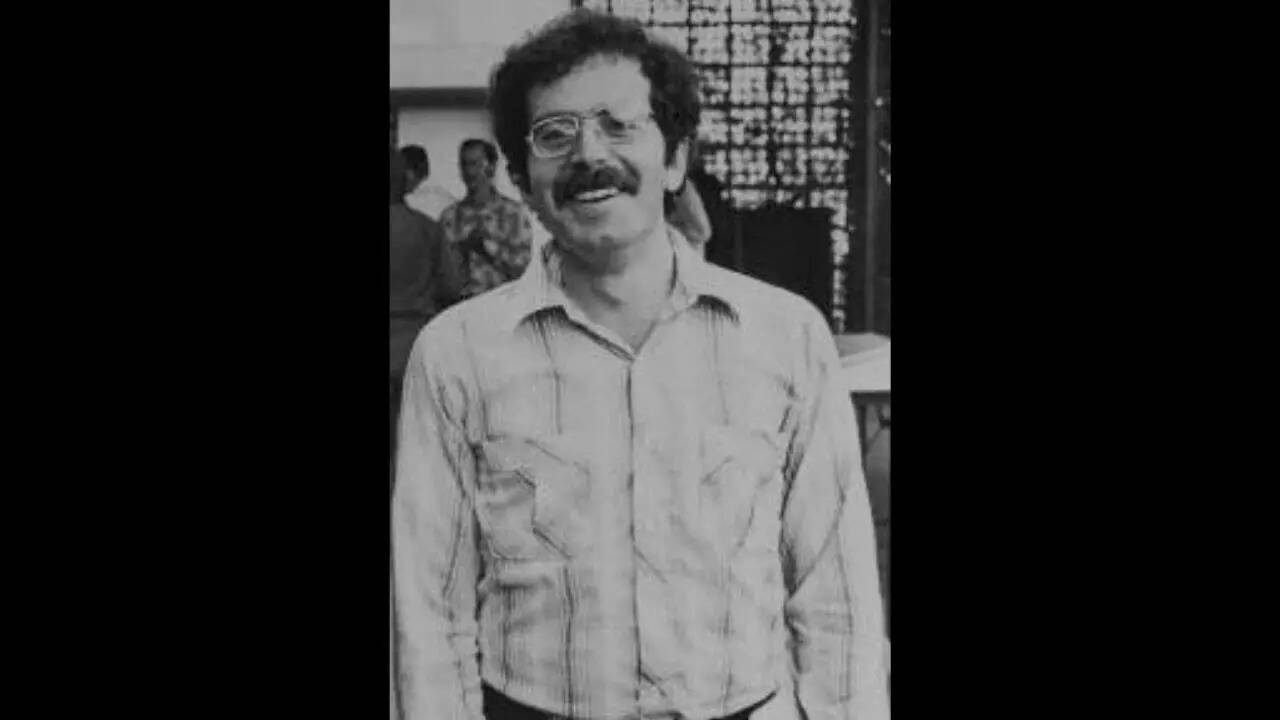
On the evening of April 30, 1987, American astronomer Marc Aaronson was crushed to death by the rotating dome of the 4-meter Mayall Telescope at Kitt Peak National Observatory. He was 33 years old. He was at the absolute peak of his intellectual powers, aggressively chasing the exact expansion rate of the universe. Shortly before his sudden death, Aaronson uttered a phrase that has since echoed through academic folklore: “If we are going to die anyway...why be cautious? Why not risk all now, at this moment, in this adventure?”
What sounds like romantic philosophy was actually a hyper-literal description of the risks required to drag human knowledge forward. Today, modern science has abandoned this edge. We have traded the messy, dangerous, and high-stakes pursuit of fundamental truths for bureaucratic safety, predictable funding cycles, and sterile computational models.
By analyzing the tragedy of Aaronson’s final run, we expose a deeper crisis in the global scientific machinery. The institutional aversion to high-risk, high-reward experimentation is actively stalling major breakthroughs in physics, astronomy, and deep technology.
The Anatomy of an Observatory Tragedy
To understand what was lost, you must understand the machinery of 20th-century astronomy. The Mayall Telescope was not a sleek, automated digital camera. It was an thousands-of-tons leviathan of steel, gears, and concrete operating in sub-freezing mountain air.
Astronomers in the 1980s did not sit in warm control rooms halfway across the world looking at a Zoom feed. They climbed into the prime focus cage, suspended hundreds of feet above the concrete floor in pitch darkness. They handled delicate photographic plates with numb fingers. They walked out onto narrow catwalks in high winds to check instruments.
Aaronson was chasing the Hubble constant, a hyper-controversial measurement determining the age and scale of the cosmos. The field was locked in a brutal ideological war. One camp insisted the universe was roughly 20 billion years old; Aaronson and his collaborators argued it was closer to 10 billion. The stakes were nothing less than the baseline blueprint of reality.
On that April night, a freak accident involving a malfunctioning hatch lock and the massive, moving mechanism of the telescope dome pinned Aaronson. His death was instantaneous. It was a stark reminder that looking into the deep past of the cosmos required stepping into physical danger.
The tragedy forced immediate, sweeping safety overhauls across global observatories. Interlocking kill-switches were installed. Protocols were rewritten. Humanity insulated its scientists from the physical machinery of discovery.
But that insulation cost something profound.
The Institutional Retreat to Comfort and Certainty
Go to an observatory today and you will find an empty summit. The modern astronomer is a data analyst who submits a code script to a queue, waiting weeks for a clean dataset to appear in an inbox.
This transformation has undeniably saved lives and increased data throughput. It has also fundamentally altered the psychological profile of the researcher. When you remove the visceral connection to the instrument, you remove the appetite for radical experimentation.
Consider how funding works in the current academic climate. Agencies like the National Science Foundation or European research councils rely on peer-review panels that inherently favor predictable outcomes. If a researcher proposes a project with a 90% chance of failure but a 10% chance of rewriting physics textbooks, the panel kills it. They call it reckless. They prefer incremental progress.
- The Grant Trap: Researchers spend up to 40% of their working hours writing proposals tailored to avoid offending conservative reviewers.
- The Publication Metric: Tenure tracks depend on the sheer volume of papers published, driving scientists to slice one meaningful discovery into four separate, mediocre articles.
- The Software Reliance: Massive simulations replace physical observation, creating an echo chamber where models are tested against other models rather than raw, chaotic reality.
This structural timidity explains why we are currently living through a foundational physics drought. We have spent decades refining the Standard Model and verifying Einstein’s general relativity to extreme decimal points. Yet, we remain completely blind to the nature of dark matter and dark energy, which make up 95% of the known universe. We are polishing the brass on a ship that is anchored in harbor.
The True Cost of High Risk Exploration
True scientific advancement requires an acceptance of catastrophic failure. When the Apollo program raced to the moon, NASA engineers calculated a significant probability that the crew of Apollo 11 would not return. They launched anyway.
When researchers built the Large Hadron Collider, a vocal minority of critics filed lawsuits claiming the particle accelerator might create a micro-black hole that would swallow the Earth. The physicists turned the machine on regardless.
We must differentiate between reckless negligence and calculated audacity. Aaronson’s quote was not an endorsement of suicide; it was an acknowledgment that the pursuit of frontier knowledge carries an unavoidable tax. If you only look where it is safe to walk, you will only discover what is already known.
Imagine a hypothetical research team today trying to build a radically new type of nuclear fusion reactor using untested plasma configurations. Under current compliance frameworks, the safety assessments, environmental impact statements, and liability insurances would drain the budget before a single magnet was wound. The project dies in committee, while safe, incremental, and ultimately ineffective solar panel refinements receive hundreds of millions in state funding.
Rewriting the Rules of Scientific Progress
Fixing this structural rot requires more than just romanticizing the past. It demands a hard, institutional pivot toward structured volatility.
First, we must allocate a fixed percentage of all federal and private scientific funding specifically to high-risk ventures. Call it a failure budget. If an institution spends its entire failure budget and every single project succeeds, that institution has failed. It means they did not take big enough swings.
Second, we need to decouple career advancement from peer consensus. The history of science is a history of outcasts who turned out to be right. When Dan Shechtman discovered quasicrystals in 1982, the head of his laboratory handed him a textbook on crystallography and suggested he read it, before telling him he was a disgrace to the team. Shechtman won the Nobel Prize in Chemistry twenty-nine years later.
The current system is designed to filter out the Shechtmans and the Aaronsons before they ever get near a telescope or a lab bench. We are producing a generation of brilliant technicians, but we are starving the world of explorers.
The universe does not yield its deepest secrets to those who sit safely behind a desk, optimizing metrics for a performance review. It demands a willingness to stand in the dark, next to a roaring piece of dangerous machinery, looking out into the void with the full understanding that the ceiling might just come crashing down.