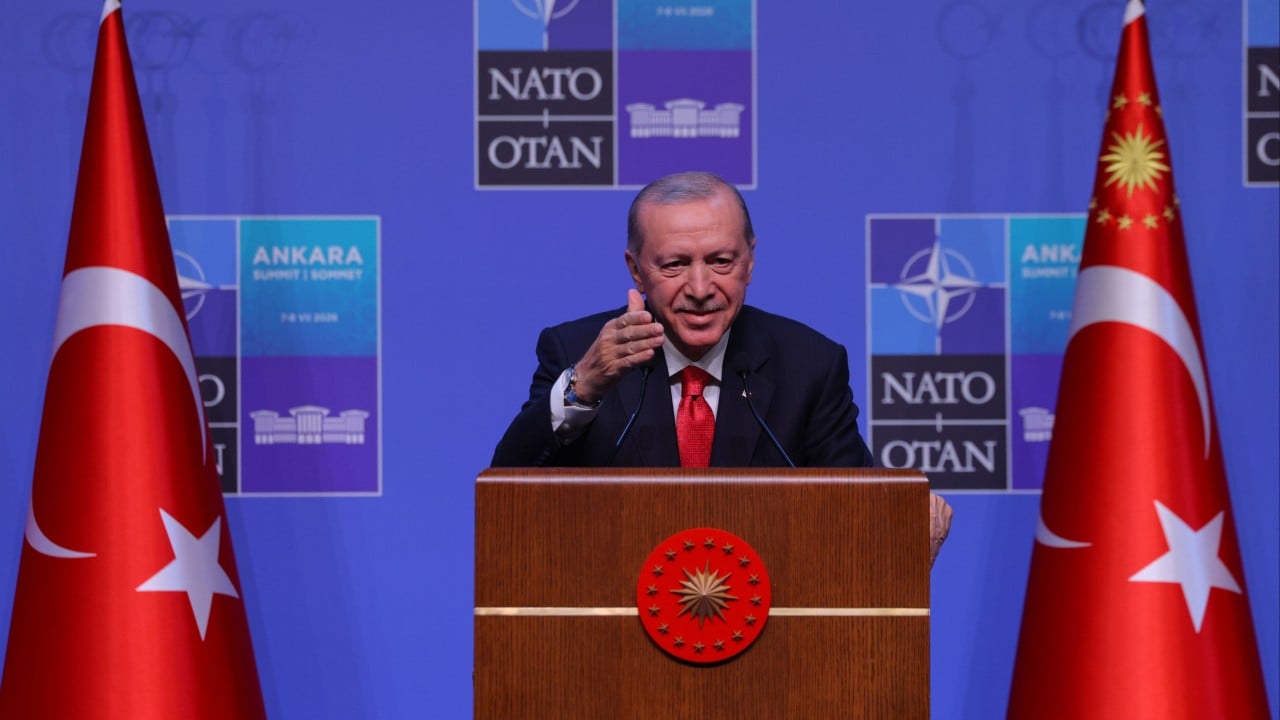
The global health apparatus is addicted to panic. Every time a virus breaches a village border, the same institutional choreography plays out. A high-ranking official stands behind a podium, declares that the epidemic is outpacing our collective response, flashes a mounting death toll, and demands an immediate injection of international capital.
We saw this exact script during the historic West African Ebola outbreak, and we continue to see it whenever a filovirus or respiratory pathogen flares up. The legacy media laps it up, printing terrifying headlines about soaring body counts.
But tracking raw mortality figures during an active outbreak is a fundamentally flawed way to measure a crisis. In fact, obsessing over cumulative death tolls is the fastest way to misallocate resources, panic the public, and ensure that the next outbreak lasts twice as long as it should.
The mainstream narrative screams that we are losing the race against the virus. The reality is far more damning: we are running the wrong race entirely.
The Illusion of Cumulative Data
When health agencies announce that suspected deaths have climbed to hundreds or thousands, they treat that number as a real-time indicator of viral velocity. It is not. It is a lagging indicator, a historical record of where the virus was weeks ago, wrapped in layers of administrative delay and diagnostic uncertainty.
In epidemiological physics, an outbreak is governed by transmission dynamics, not cumulative tallies. The metric that actually matters is the effective reproduction number, or $R_t$, which measures the average number of secondary cases generated by a single infected individual at a specific point in time.
$$\text{If } R_t > 1, \text{ the outbreak expands. If } R_t < 1, \text{ the outbreak dies out.}$$
An institutional fixation on raw death counts creates a dangerous distortion. A snapshot of 200 or 2,000 deaths tells you nothing about the current trajectory of transmission. If those deaths are the result of a massive, synchronized exposure event three weeks prior, but local containment measures have already driven $R_t$ below 1, the epidemic is actually collapsing. Yet, the panic machine will keep grinding, funneling emergency field hospitals and mobile labs to a region where the fire has already burned through its fuel, while ignoring a quiet, exponential simmer in a neighboring district.
I have spent years analyzing how international aid organizations deploy assets during biological crises. I have watched millions of dollars worth of personal protective equipment (PPE) and isolation tents sit rotting on tarmac runways because they were dispatched based on sensationalized headlines rather than real-time incidence modeling. By the time the bureaucratic cargo planes land, the epidemiological epicenter has moved fifty miles down the road.
Dismantling the Premise of Containment Panic
The public constantly asks variations of the same question: Why can't we stop these outbreaks before they get out of hand?
The question itself assumes a flawed premise. It envisions a world where a virus can be neatly boxed in if we just throw enough border closures, military quarantines, and international experts at it.
This top-down, militarized approach to public health consistently backfires. When the World Health Organization or local ministries announce that an epidemic is "outpacing" containment efforts, their default solution is to tighten the screws. They advocate for aggressive isolation protocols and top-down restrictions.
Here is the brutal truth that bureaucratic health leaders refuse to admit: aggressive, top-down containment measures often accelerate transmission instead of stopping it.
Consider the mechanics of trust in a crisis. When an international agency floods a developing region with biohazard suits, military checkpoints, and ominous rhetoric about an unstoppable killer, local populations do not feel safe. They feel hunted.
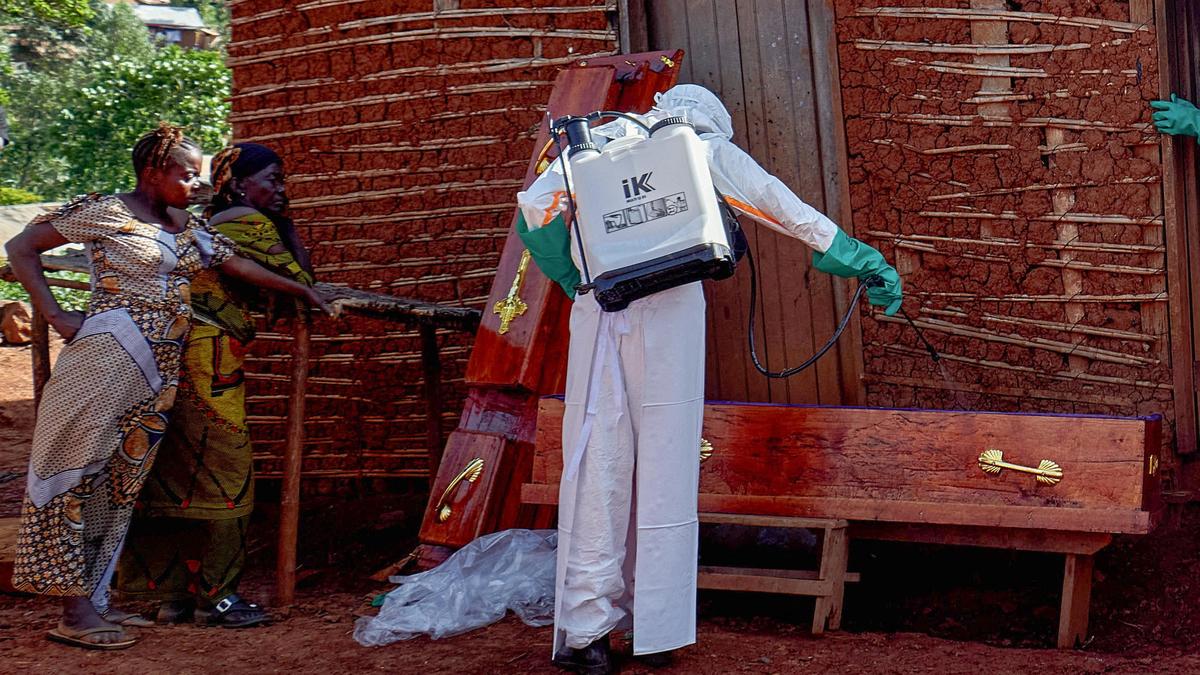
When you tell a community that a disease is completely out of control, you do not incentivize them to visit your centralized isolation clinics. You incentivize them to hide their sick. Family members hide symptomatic relatives in backrooms to avoid having them dragged off to a clinical facility where they assume they will die alone. Traditional, unsafe burial practices—which are massive vectors for hemorrhagic fevers due to the high viral load in deceased bodies—are moved underground, away from the eyes of authorities.
By signaling panic, the global health elite drive the actual epidemic into the shadows, rendering their own data collection mechanisms completely useless.
The Heavy Hitters Get It Wrong
The institutional consensus relies heavily on mathematical models generated by institutions like the Imperial College London or the Institute for Health Metrics and Evaluation (IHME). While these models are mathematically sophisticated, they are only as good as the behavioral assumptions baked into them.
Most predictive models treat human populations as static billiard balls bouncing off one another with fixed probabilities of transmission. They fail to account for spontaneous, localized behavioral adaptation.
Long before an international aid agency establishes a functioning treatment center, local populations adapt. They stop shaking hands. They alter their caretaking habits. They recognize the signs of infection and self-isolate. This organic, bottom-up behavioral shift changes the transmission coefficient entirely.
[Standard Model Assumption]
Linear Contact Rates -> Exponential Growth -> Total Catastrophe

[Real-World Dynamic]
Rising Case Awareness -> Spontaneous Behavior Modification -> Truncated Transmission Curve
When agencies ignore this human element, their interventions are fundamentally misaligned. They build massive, 100-bed Ebola Treatment Units (ETUs) at the peak of a panic headline, only for those units to sit completely empty because local behavior had already flattened the curve weeks prior. This is not a hypothetical scenario; it occurred repeatedly during the 2014-2016 West Africa epidemic, where multi-million-dollar treatment facilities constructed by foreign militaries accepted fewer than a handful of patients before being decommissioned.
Shift Resources to the Point of Care
If the goal is to actually save lives rather than manage institutional optics, the strategy must change. Stop funneling the lion's share of capital into massive centralized logistics hubs and international administrative coordination.
The solution is radical decentralization.
Instead of building massive, terrifying isolation compounds that alienate communities, resources must be pushed directly to existing local primary care networks. This means equipping village clinics with basic infection prevention infrastructure, rapid diagnostic tests, and direct cash transfers to allow local healthcare workers to manage cases safely without waiting for an international savior.
The downside to this approach is obvious: it lacks the theatricality that politicians and donors love. A decentralized strategy does not look impressive on an evening news broadcast. It does not involve cargo planes landing with giant logos plastered on the side, nor does it feature dramatic press conferences declaring a global state of emergency. It is quiet, tedious, and distributed.
But it works. Giving local communities the agency and tools to manage their own health risks beats a centralized, panicked bureaucracy every single time.
Stop Measuring Victory by the Absence of Cases
The ultimate metric of success in global health shouldn't be the total eradication of an outbreak within an arbitrary timeframe. Viruses are a permanent feature of our ecology. Spillover events from zoonotic reservoirs are inevitable.
Victory means reducing the case fatality rate through early, supportive clinical care and preserving the integrity of the surrounding health system. When a health system collapses under the weight of an epidemiological panic, far more people die from disrupted malaria treatments, missed immunizations, and unassisted obstructed labors than from the headline-grabbing virus itself.
Stop listening to the panic merchants at the podiums. The next time a global health bureaucrat tells you an epidemic is outpacing the response, understand that the failure isn't a lack of money or international control. The failure is their own rigid, outdated playbook.
Stop tracking the dead. Start empowering the living.