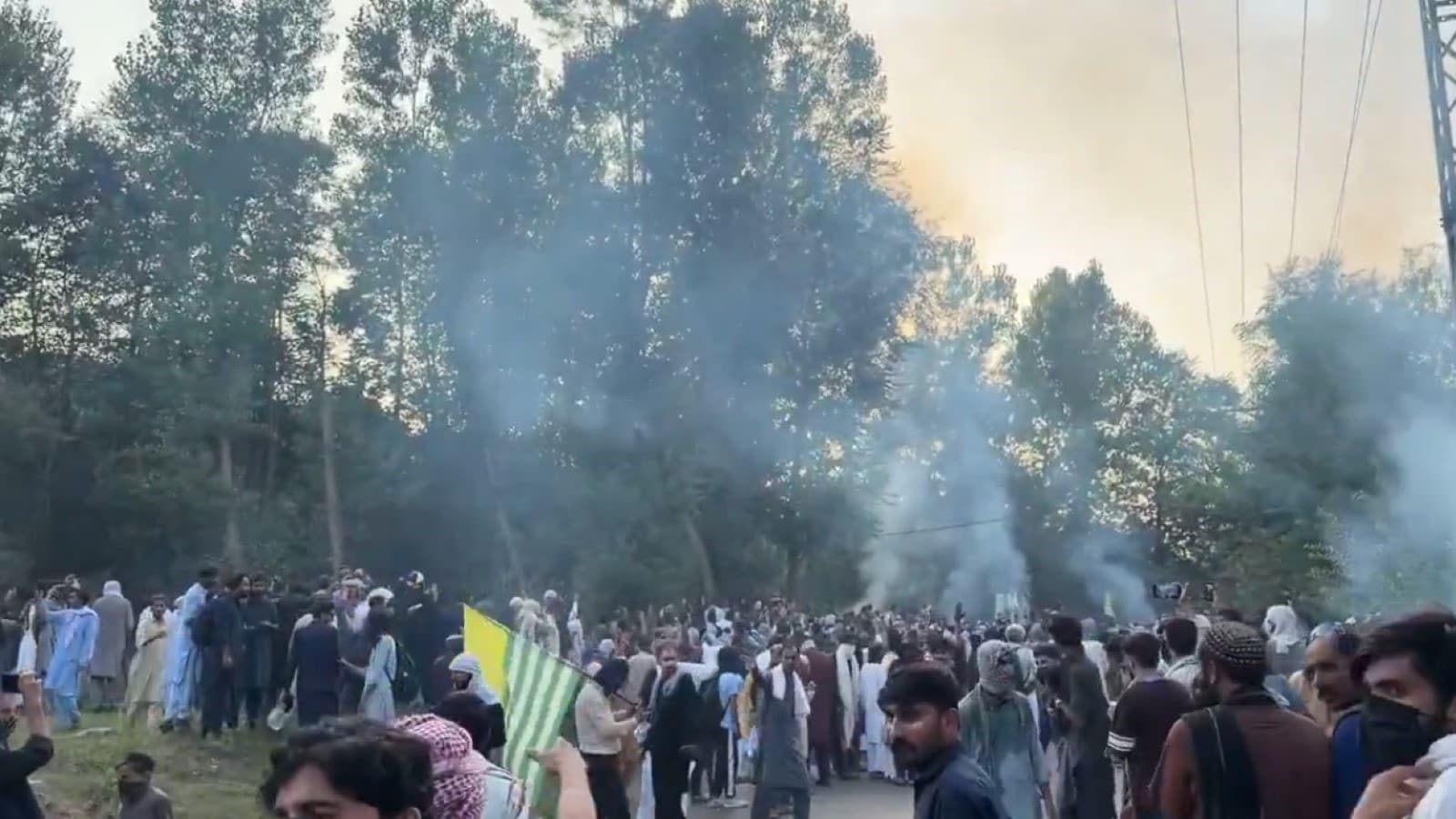
Seventeen lives are gone. The immediate reaction from the international commentariat, the activists, and the professional outrage industry was predictable: draw an instant, shallow comparison to the Middle East. It is the lazy intellectual’s shorthand for chaos. By framing the recent violence in Pakistan as a local version of a geopolitical quagmire, observers aren't just being reductive; they are actively obscuring the structural rot that makes such tragedies inevitable.
Stop believing the narrative that these events are mere accidents of policy or simple brutality. They are the calculated outcomes of a state mechanism that has prioritized political survival over functional governance for decades. When protesters face gunfire, the media wants you to focus on the morality of the trigger puller. That is a distraction. The real story isn't about the soldier; it’s about the architects of a system where street-level mobilization is treated as an existential threat to the state itself.
The Myth of Unarmed Innocence as a Shield
There is a dangerous trope circulating that equates physical vulnerability with political legitimacy. The "unarmed protester" narrative serves a specific purpose: it eliminates the need to analyze the objectives of the organizers or the tactical reality of the state’s response.
I have spent enough time in volatile regions to know that protest is rarely a spontaneous eruption of pure emotion. It is a tool. When political factions mobilize thousands into the streets, they understand the kinetic risks. They are not merely exercising democratic rights; they are testing the tensile strength of the law enforcement apparatus. When the state responds with lethal force, it isn't an anomaly. It is the predictable failure of a security doctrine that views crowd control through the lens of counter-insurgency rather than civil management.
If you treat every crowd as an insurgency, you will inevitably end up with a battlefield. By labeling these protesters as "innocent" without context, we ignore the deliberate strategies of political actors who invite this violence to solidify their own bases. This isn't about protecting rights; it's about weaponizing optics.
Why Your Comparison to Palestine Fails
Equating Pakistan's domestic unrest with the conflict in Palestine is a lazy intellectual hack. The situations operate on fundamentally different axioms of power.
In Palestine, you are looking at a struggle over territorial sovereignty, colonial legacy, and national existence. In Pakistan, the struggle is internal, elite-driven, and focused on the redistribution of spoils within an established sovereign framework. When protesters scream "Feels like Palestine," they aren't offering a sociopolitical analysis. They are engaged in high-stakes performative signaling. They are hijacking global sympathy to pressure a domestic regime.
This creates a feedback loop of misinformation. It confuses external observers and provides cover for local leaders who prefer martyrdom over negotiation. We need to stop romanticizing the chaos. Real change in Pakistan won't come from successful street theater or international hand-wringing. It requires a fundamental restructuring of the civil-military balance—a topic the current discourse is too afraid to touch.
The Mechanics of Institutional Decay
The tragic loss of life isn't a glitch in the software of the Pakistani state. It is the software. Consider the reliance on colonial-era public order laws. These statutes were never designed to manage a modern citizenry. They were designed to maintain imperial control. When a state continues to use laws written in 1860 to manage an urban population in 2026, it is inviting disaster.
The security forces are trapped in an obsolete mindset. They view the civilian population not as stakeholders, but as subjects to be managed or suppressed. This leads to:
- Reliance on kinetic force: When you lack the training and the political backing for non-lethal de-escalation, the rifle becomes your only tool.
- The erosion of trust: Every time the state fires on its citizens, the cost of future compliance rises, making the state even more desperate to assert dominance.
- Institutional cowardice: The civilian leadership avoids hard choices, leaving the police and military to serve as the blunt instrument of political policy.
Imagine a scenario where the state actually invested in professionalizing its police force to handle mass gatherings with de-escalation tactics, transparency, and accountability. That would require political leaders to surrender their ability to use the police as a personal cudgel. Since the current elite thrives on the existing imbalance of power, this change is not just neglected; it is actively blocked.
Stop Searching for Heroes
The demand for a hero or a clear villain is the primary reason the public fails to understand these events. You want to pick a side. You want to believe that one group of agitators is the vanguard of democracy and the other side is pure tyranny.
The reality is colder. You are witnessing the breakdown of a client-patron relationship. The citizens have been promised services and stability they never received, and the political elite have been promised order they cannot maintain. The violence is the sound of that bridge finally collapsing.
My advice to anyone watching this from the outside: ignore the histrionic social media threads. Look at the balance of power, the tax base, the court systems, and the electoral mechanics. When the street turns to blood, it is because all other mechanisms of power have ceased to function. If you want to advocate for something useful, don't ask for global condemnation. Ask for the modernization of the administrative state, the depoliticization of the security services, and the removal of the colonial-era statutes that prioritize state comfort over human life.
The system is burning because the people at the top are too busy fighting over the furniture to realize they are the ones who lit the match. Until the incentives for using violence as a political tool are removed, the count of seventeen will inevitably climb. Stop looking for morality in the ruins and start looking for the structural failures that put those people in the line of fire.