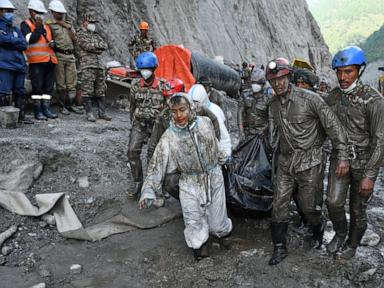
Silence hangs heavy over the debris-choked river valleys of Nepal. Weeks after a catastrophic flash flood tore through rugged mountain communities, a grim reality continues to unfold across the Himalayan foothills. Rescuers pulling four more bodies from a hydropower plant tunnel brought a small measure of closure to a fraction of grieving households, but for hundreds of other relatives, the waiting is an ongoing torture. They aren't getting consistent updates from official channels. Instead, they patrol muddy riverbanks alone, driven by a desperate hope that defies physical odds and administrative indifference.
The disaster struck without warning on an ordinary late-August afternoon. A massive wall of water, mud, and boulders, triggered by a high-altitude glacier collapse along the Nepal-Tibet border, obliterated villages, suspension bridges, and numerous hydropower stations. The sheer velocity of the torrent reached staggering speeds—estimated by scientists at nearly 100 miles per hour—traveling tens of miles down steep river valleys in minutes. While international news coverage often fixates on the soaring overall death toll, which climbed past one thousand confirmed fatalities, a massive humanitarian crisis remains hidden deep underground. Dozens of workers were swallowed by subterranean infrastructure, cut off from the outside world when raging water and thick sediment sealed off exit routes.
The Agony Left Behind in the Mud
Information scarcity hurts more than physical exhaustion. Relatives of the missing speak of running into a stone wall whenever they try to contact state authorities, police barracks, or electricity board officials. You go to regional administrative offices and find closed doors, chaotic desks, or blank stares. Nobody maintains a single unified list that matches across districts. Nobody can confirm with absolute certainty whether a husband, brother, or son managed to find an air pocket or perished instantly under tons of debris.
Take the daily routine of families scouring the banks of swollen rivers. They walk miles through washed-out terrain, holding up laminated photographs of their loved ones to anyone who will look—passing truck drivers, foreign aid workers, and local villagers. They are essentially doing the state's work because institutional rescue coordination broke down in the chaotic first weeks.
When specialized recovery teams finally managed to cut through thick layers of mud to clear a path into the hydropower tunnels, they uncovered horrors that officials had tried to downplay. Four bodies recovered in a single operation represented only a tiny fraction of the missing workforce. Five more subterranean locations were identified immediately afterward, but heavy machinery takes days or weeks to mobilize in terrain where roads and bridges no longer exist.
People are furious, and their anger is entirely justified. When massive industrial infrastructure projects are rushed into fragile, rapidly warming mountain ecosystems, the human cost is born exclusively by local laborers and migrant workers who possess little political leverage until tragedy forces them into the spotlight.
Inside the Dark Tunnels of the Trishuli Project
The engineering marvels designed to power Nepal's expanding energy grid turned into subterranean death traps in a matter of minutes. Hydropower generation in the Himalayas relies on complex networks of underground tunnels, surge chambers, desilting basins, and intake structures engineered to harness rushing mountain water. When a wall of slurry slammed into these systems, the tunnels acted like hydraulic piston chambers.
Workers were caught mid-shift with virtually no escape window. Some managed to scramble into small maintenance alcoves or elevated control rooms, praying for rescue while oxygen levels slowly dwindled and freezing water crept up their chests. Others were swept away instantly by the surging force of the debris flow.
The technical challenge of reaching these trapped spaces is immense. Days turned into weeks, yet incredible stories of survival gave people something to hold onto. Rescue teams pulled two Nepali workers alive from a buried tunnel nine days after the disaster. A day later, a Chinese worker was pulled out alive from a different sector of the damaged grid. Those moments of triumph felt miraculous. They proved that human endurance can push past medical expectations and survive in pitch-black, flooded environments far longer than textbook science predicts.
Those survivors, however, are rare exceptions. For every person pulled out breathing, dozens more remain unaccounted for in tunnels choked with massive boulders and compacted silt. Forensic experts note that recovering and identifying bodies from these compressed subterranean tombs presents extreme challenges that could take months or even years.
The Transboundary Challenge and Climate Realities
Water pays no attention to national borders. Many of the deadliest flash floods originate in high-elevation glacial zones across the border in Tibet before roaring down into populated valleys and infrastructure projects inside Nepal. This cross-border dynamic complicates emergency response and information sharing. Downstream communities often receive zero advance warning because meteorological data and upstream sensor networks are fragmented or poorly shared between governments.
Climate change acts as a force multiplier for these disasters. As Himalayan glaciers retreat at accelerating rates due to rising global temperatures, unstable glacial lakes form behind fragile moraine dams. When these natural dams burst, they unleash cataclysmic torrents known as glacial lake outburst floods. Scientists have warned for years that rushing headwaters pose an existential threat to Nepal's booming hydropower sector. More than a dozen major power plants were severely damaged or completely destroyed in this single event alone, wiping out years of economic development gains.
When developers build massive tunnels and dams in high-risk gorges without factoring in modern climate volatility or installing fail-safe automated warning systems, disaster is inevitable. The human cost falls squarely on the workers stationed in those remote canyons.
When Hope Clashes With Institutional Failure
Families shouldn't have to stage roadside protests or hunt down rescue workers to get basic facts. The communication breakdown following the disaster exposed glaring weaknesses in emergency response protocols across South Asia. Local disaster management agencies were completely overwhelmed by the scale of destruction. Spanning multiple river basins and damaging over a dozen active power projects, the catastrophe paralyzed normal administrative functions.
Yet, institutional paralysis shouldn't translate into emotional abandonment. When you lose everything in a matter of minutes, a lack of transparency feels like a second disaster. Relatives report that different government departments issue contradictory figures on missing persons. Names get duplicated across provincial lists. Survivors are misidentified in initial hospital reports. Meanwhile, grieving spouses and elderly parents sleep in makeshift tents near riverbanks, refusing to leave until they find physical proof of their kin's fate.
Independent environmental and disaster management experts point out that preparedness in the Himalayas needs a complete overhaul. Building massive renewable energy projects in high-risk river zones without robust, automated early warning systems or safe, elevated evacuation shelters for workers is a recipe for recurring tragedy.
The Price of Reconstruction and Oversight
Nepal's government estimates the price tag for rebuilding damaged infrastructure at nearly five billion dollars. Roads, highways, schools, transmission lines, and power plants require massive financial injections. International donors and multilateral banks are stepping in with loans and aid packages, but money alone won't fix structural flaws in regulatory oversight and worker safety.
Serious questions linger about whether private and public companies operating these hydropower facilities ignored early environmental warnings or failed to implement adequate safety protocols for underground staff. Labor union representatives have voiced intense anger over safety standards, pointing out that automated flood sensors should have triggered evacuation alarms long before raging water reached turbine halls. Official investigations have been promised, but families know that government inquiries move at a glacial pace compared to the rushing rivers that stole their lives.
Reconstruction cannot succeed on concrete and steel alone. It requires genuine accountability, absolute transparency, and a fundamental shift in how human life is valued in major industrial development projects. Until the last missing worker is accounted for and grieving families receive honest answers, the wounds caused by that August flash flood will remain raw. The river may eventually clear, but the public demand for justice will not wash away.