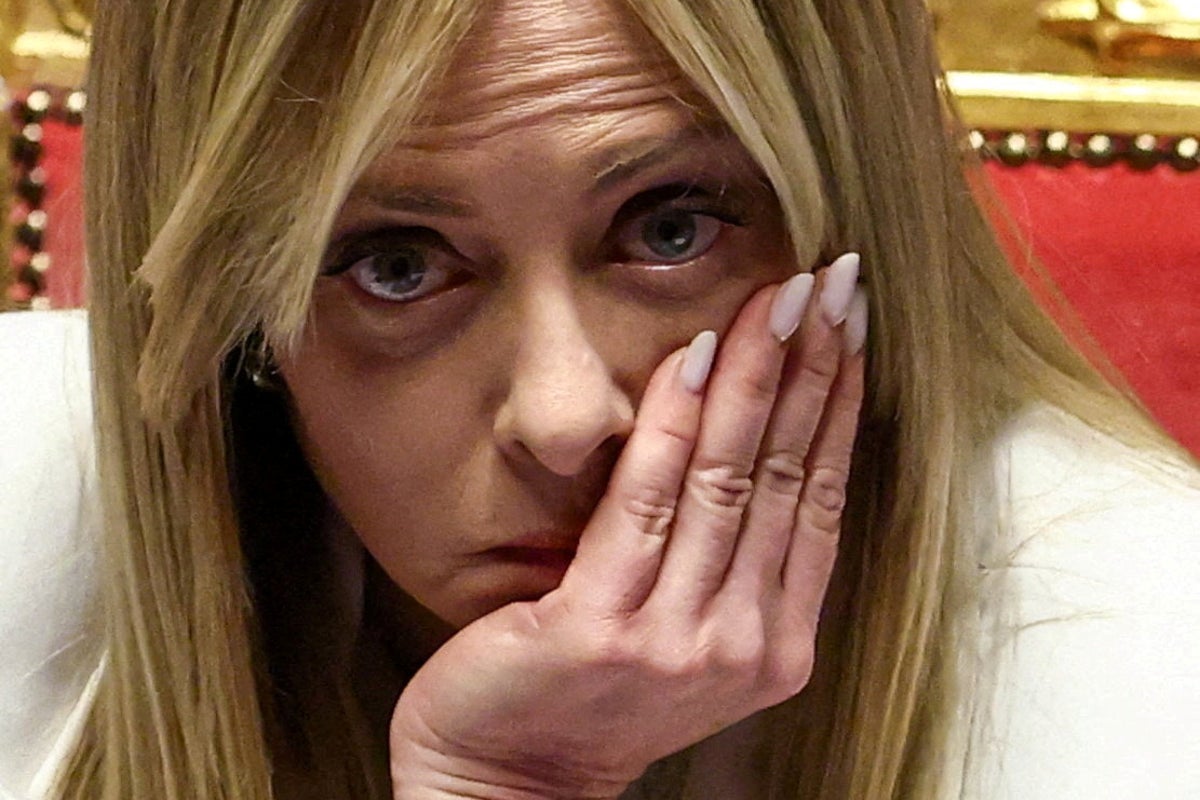
Giorgia Meloni sat before a screen and stared at a ghost. The image was crisp, the lighting was perfect, and the expression was unmistakably hers. It was a photograph of the Italian Prime Minister, yet she had never posed for it. She had never worn those clothes or stood in that particular room. Every pixel was a lie, meticulously stitched together by an algorithm that didn't know her name, but knew the exact geometry of her jawline.
When she shared that deepfake image with the public, it wasn't an act of vanity. It was a flare sent up from a sinking ship. She was showing Italy—and the world—that the era of "seeing is believing" has officially died.
We are living through a quiet, digital heist. Our faces, our voices, and our very identities are being harvested to create puppets that look like us, sound like us, but answer to someone else. This isn't a plot from a sci-fi paperback. It is the current reality of the Palazzo Chigi.
The Architect of the Mirage
Imagine a young graphic designer named Marco. He isn't a criminal. He’s bored. In a small apartment in Milan, he feeds thousands of public images of Meloni into a generative adversarial network. He watches as the machine learns. At first, the results are monstrous—blurred eyes, six fingers, skin that looks like melting wax. But the machine is a tireless student. It tries again. And again. Millions of times per second.
Eventually, the blur sharpens into a gaze. The wax firms into skin. Marco clicks a button, and suddenly, the Prime Minister of Italy is saying things she never thought, in a voice that would fool her own mother.
This is the "democratization" of deception. A decade ago, this level of forgery required a Hollywood studio and a multimillion-dollar budget. Today, it requires a decent graphics card and a lack of conscience. The barrier to entry has vanished, leaving the door wide to anyone with a grudge or a political agenda.
When Meloni broadcast the fake image, she was forcing us to look into the abyss of that accessibility. She wasn't just a politician protecting her brand; she was a human being pointing at a digital doppelgänger and saying, "This thing is a weapon."
The Erosion of the Social Contract
Society operates on a series of invisible handshakes. We trust that the person on the news is the person they claim to be. We trust that a video of a world leader is a record of history. Deepfakes don't just spread misinformation; they poison the well of truth itself.
If anything can be faked, then nothing is true.
This leads to what researchers call the "Liar’s Dividend." When a real video of a politician behaving badly finally surfaces, they can simply shrug and say, "It’s a deepfake." The existence of the fake makes the real indistinguishable from the forged. We lose our grip on reality, spinning into a state of permanent skepticism where we believe nothing and, consequently, can be convinced of anything.
Consider the psychological toll on the victim. To see your own face manipulated to serve a cause you despise is a form of digital violation. It is an identity theft that no bank can reverse. Meloni’s warning was an attempt to reclaim the narrative before the narrative became untethered from the person entirely.
The Arms Race for Reality
The Italian government isn't just complaining; they are scrambling to build digital fences. But how do you police a ghost?
Legislators are currently debating laws that would require "watermarking" for AI-generated content. The idea is simple: every fake image should carry a digital stamp, a scarlet letter that tells the viewer they are looking at a machine’s imagination.
But the "Marco" in the Milan apartment isn't going to use the software that includes watermarks. He’s going to use the open-source tools that have no guardrails. He’s going to operate in the shadows where the law is a suggestion and the reach is global.
We are entering a period of history where our eyes are our worst enemies. To survive, we have to develop a new kind of literacy. We have to learn to look for the "uncanny valley"—that slight stiffness in the neck, the unnatural blink rate, the way the hair doesn't quite interact with the collar.
But as the AI improves, those tells vanish. The valley is being filled in.
The Weight of the Warning
Meloni’s choice to share the fake was a gamble. By giving the image oxygen, she risked spreading the very deception she sought to fight. But silence is no longer an option. When the leader of a G7 nation stands up and admits that her own identity is being weaponized against her, the stakes move from the theoretical to the existential.
This isn't about politics. It’s about the fundamental right to own one's own image.
Behind the high-level policy discussions and the technical jargon lies a very simple, very human fear. It is the fear of being replaced. Not by a robot in a factory, but by a ghost in the machine that wears your face while it burns your world down.
The warning has been issued. The image is out there. We are now the ones who have to decide what to do when the screen stares back at us with eyes that look exactly like our own, but hold no soul.
The ghost is out of the bottle. We are just beginning to realize that the bottle was us.