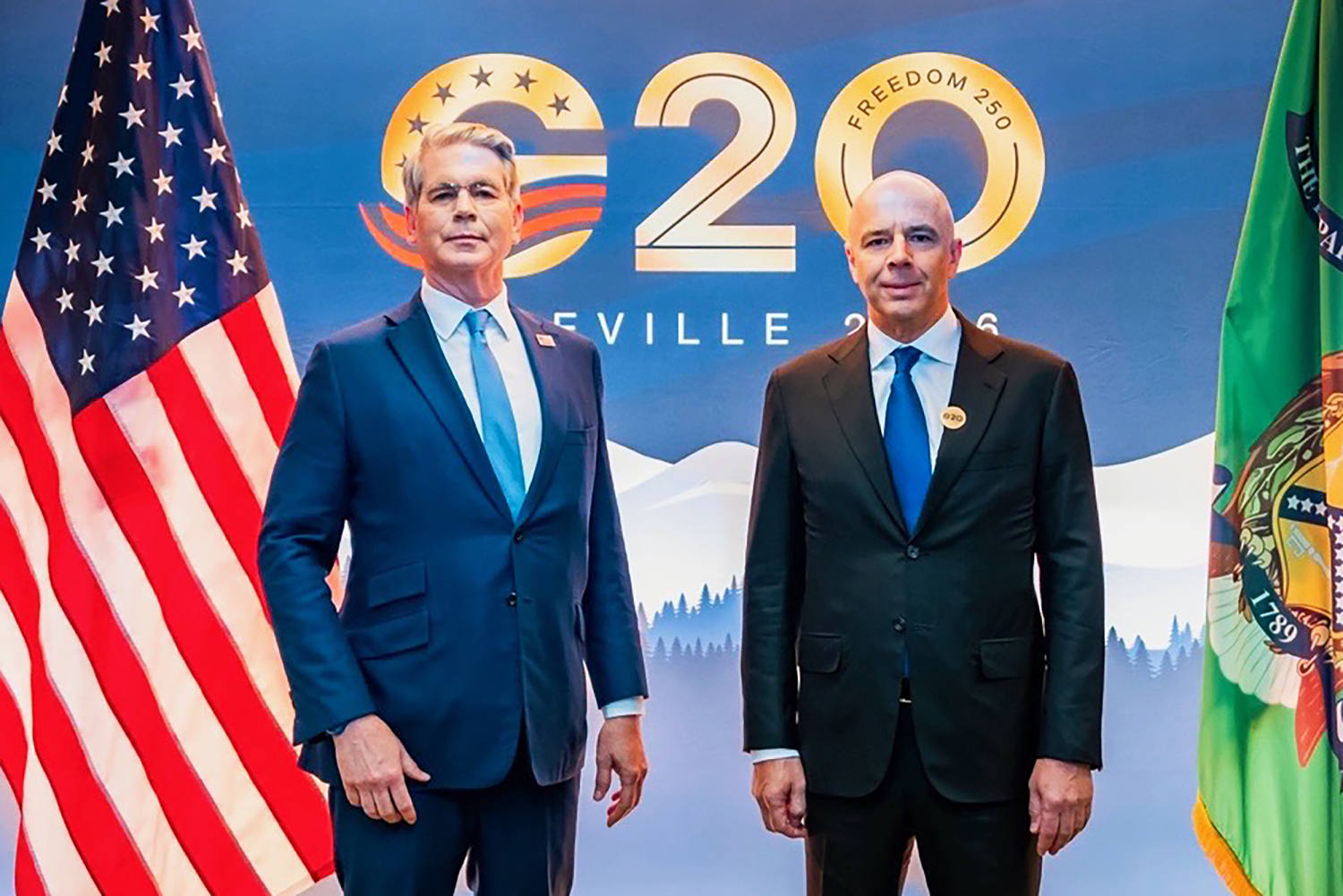
The collective hand-wringing over a sanctioned official showing up at a high-level summit misses the entire point of how modern capital actually moves. When the headline broke about the Russian finance minister taking a seat at the table during a major international gathering hosted by Western allies, the commentary class lost its collective mind. Analysts shrieked about diplomatic breaches, toothless enforcement, and the erosion of the rules-based order.
They are wrong. Not because sanctions are failing on a technicality, but because the entire premise of financial exclusion is an archaic relic of a twentieth-century unipolar world that no longer exists. Meanwhile, you can explore related events here: The Concrete Fortress Where Millions Are Learning to Survive.
I have spent decades watching bureaucrats design punitive asset freezes and exclusion regimes from comfortable conference rooms in Washington and Brussels, completely blind to the adaptive capacity of global liquidity. Every time a major economy gets cut off from Western rails, the plumbing simply reroutes.
The Myth of the Iron Curtain
The lazy consensus in international relations holds that if you block a nation from SWIFT and freeze its central bank reserves, you reduce its economic influence to zero. This is a fairy tale told to domestic audiences to project strength. To see the complete picture, we recommend the detailed analysis by Bloomberg.
Capital does not care about your moral outrage. It cares about yield, arbitrage, and survival. When Russian entities were booted off primary Western settlement networks, the immediate assumption was that trade would grind to a halt. Instead, bilateral currency swaps exploded. Non-aligned nations quietly established alternative messaging channels, and a massive shadow liquidity pool formed overnight.
By throwing a tantrum when a sanctioned minister breathes the same air as Western delegates, critics betray a fundamental misunderstanding of leverage. True leverage is not locking doors; it is maintaining enough proximity to monitor and influence the flow. When you drive an adversary entirely underground, you lose whatever visibility you had.
The Architecture of Evasion
Look at the mechanics. Sanctions rely on a network effect. If every bank on earth complies, the target starves. But we do not live in a unipolar monetary system anymore.
When you tell a middle-income country in the Global South that they cannot trade in dollars, you are not punishing Russia; you are giving every emerging market a multi-billion-dollar incentive to ditch the greenback. I have watched trade desks in Dubai and Singapore set up routing mechanisms that make Western compliance officers look like toddlers playing chess. They use multi-tiered shell structures, stablecoins, and localized currency clearinghouses that bypass New York entirely.
The presence of a blacklisted official at a multilateral summit is not a sign of Western weakness. It is a loud, undeniable admission that isolation is a two-way street. The host nations did not invite them out of charity. They invited them because trying to manage global supply chains, commodity pricing, and sovereign debt restructuring while pretending a top-ten economy does not exist is an exercise in administrative self-sabotage.
What the PAA Crowd Gets Wrong
People asking whether sanctions have failed are asking the wrong question entirely. The question is not whether sanctions inflict pain. They do. Rubles fluctuate, import costs spike, and domestic logistics face brutal friction.
The real question is whether that pain achieves its strategic objective, or if it merely accelerates the balkanization of the global economy.
The consensus view claims that economic warfare accelerates regime collapse or behavioral change. History shows the exact opposite. Comprehensive financial blockades harden political resolve at home, create a captive oligarch class entirely dependent on the state, and incentivize the creation of parallel financial architecture that will permanently erode Western monetary hegemony.
You cannot punish a country into submission when alternative patrons are standing in the wings with open checkbooks and commodity hunger.
The Cost of Pretending
Let us be brutally honest about the hypocrisy. Western multinationals spent the first two years of the conflict finding inventive loopholes to keep trading energy and raw materials through third-party intermediaries. Cargo ships routinely engage in ship-to-ship transfers off the coast of Greece, swapping Ural crude while politicians give fiery speeches about moral clarity.
When the financial press hyperventilates over a delegate badge, they are engaging in theater. They want you to focus on the optics of who is sitting in a conference chair, rather than the structural reality that the dollar's monopoly on cross-border settlement is slowly bleeding to death from a thousand self-inflicted cuts.
If you want to understand why emerging economies are accumulating gold and signing bilateral trade pacts in local currencies, stop looking at diplomatic communiqués. Look at the balance sheets of central banks outside the G7. They watched the weaponization of the international reserve system and drew the only logical conclusion: diversification is no longer a portfolio strategy; it is national insurance.
The next time a sanctioned minister walks into a room and the cameras start flashing, do not look for the scandal. Look at the quiet conversations happening in the corners, where the adults are figuring out how to keep the lights on while the ideologues scream at the clouds.