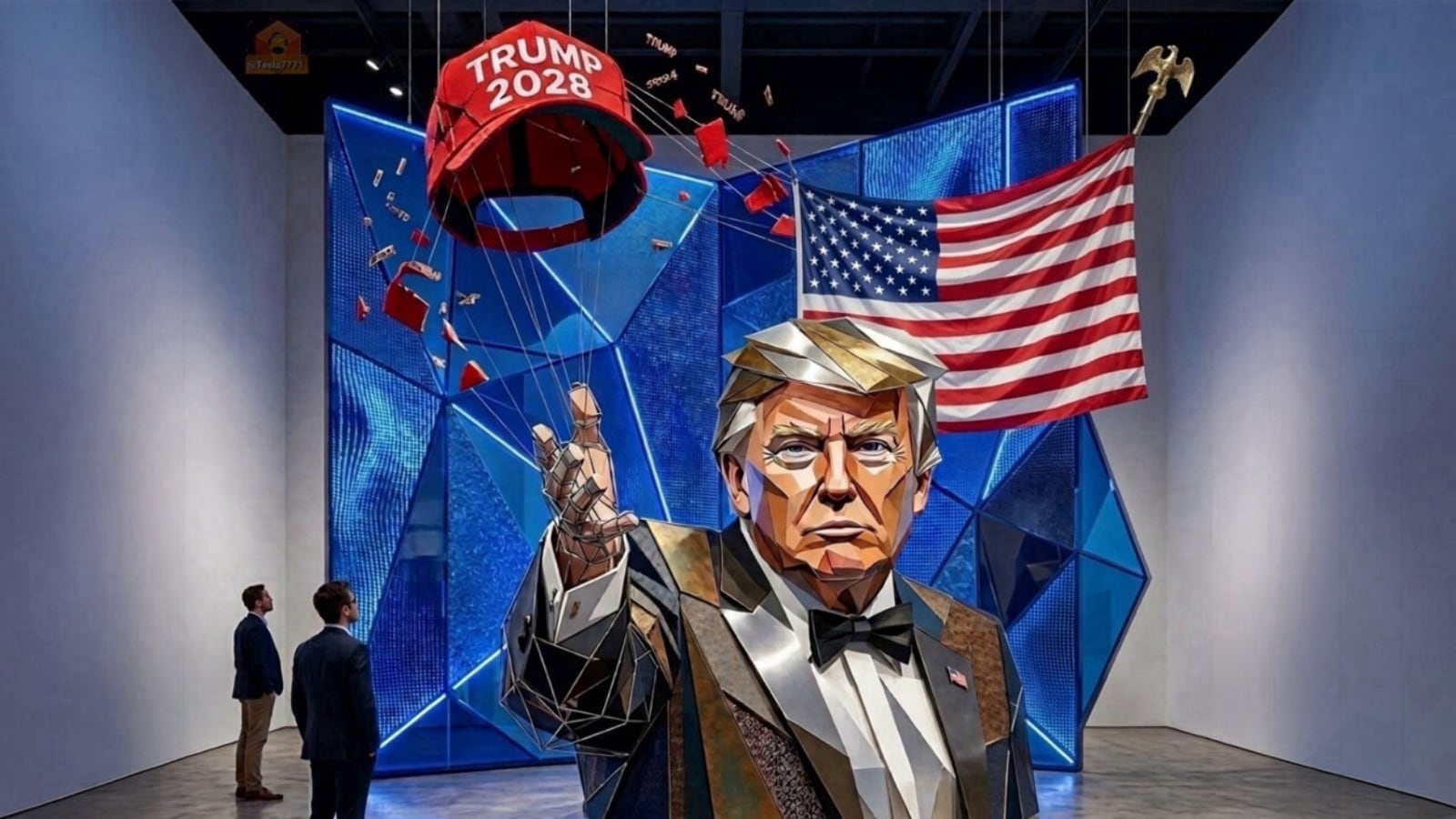
The media establishment is having a collective meltdown over digital synthesis. Every legacy outlet keeps publishing identical warnings about synthetic media floods, hand-wringing over how artificial intelligence visuals will completely destroy public trust and fool the masses. They call it dangerous propaganda. They treat every computer-generated image of politicians as a calculated deception designed to trick voters into believing a physical falsehood.
They are missing the entire point.
This lazy consensus assumes the audience is entirely passive, gullible, and incapable of discerning context. It treats synthetic pixels like 19th-century photographic proof. But political communication stopped being about objective truth a long time ago. What we are witnessing on digital platforms is not an effort to deceive. It is the raw evolution of the internet meme, weaponized into a high-speed communication tool that bypasses traditional gatekeepers entirely.
The Fallacy of the Deception Narrative
Critics argue that computer-generated graphics erode democratic norms because people might mistake a fictional rendering for reality. This perspective relies on a fundamentally flawed understanding of how digital consumers actually interact with media. When an account posts an image of a political leader standing in golden armor atop a warship, nobody with a functional internet connection believes a medieval fantasy battle actually occurred off the coast.
The image functions as a hyper-visible emotional signifier. It communicates a feeling of strength, defiance, or humor much faster than a three-thousand-word policy brief ever could. Treat this as a modern form of political cartooning. For decades, editorial cartoonists drew politicians as oversized babies, animals, or superheroes. Nobody accused the New York Times of spreading dangerous disinformation when a cartoonist drew a president wearing a crown. Substituting charcoal and ink with neural networks changes the medium, not the underlying function.
Why Fighting the Format is a Losing Strategy
Opponents demand tighter platform moderation, digital watermarking mandates, and strict guardrails to prevent political figures from sharing fabricated assets. This approach misunderstands the incentives of modern attention economies. Digital algorithms reward velocity, emotional resonance, and shock value. Restricting synthetic tools will not restore institutional trust; it will only force creators to find alternative ways to manufacture viral moments.
Consider how political campaigns have operated historically. Spin doctors craft narratives, photojournalists frame moments to make candidates look heroic, and television producers select clips that favor their preferred candidates. Every single layer of media consumption is curated and manipulated. Artificial intelligence simply democratizes that manipulation, taking the high-production-value framing previously reserved for Hollywood studios and placing it directly into the hands of political communicators.
Instead of whining about the technology, critics need to recognize that digital synthesis is the new baseline for political baseline engagement. The public has already adapted. They consume these visuals with a layer of heavy irony and emotional detachment. They do not look at a hyper-real rendering and ask if it is real; they ask what message it is trying to send.
Stop trying to regulate pixels. Start competing on narrative.