People love to exaggerate about the black mamba. You've probably heard it's the fastest snake on Earth, chases down people for fun, and drops you dead before you even hit the floor. None of that is completely true. Snakes don't have personal vendettas, and physics doesn't quite work the way Hollywood portrays it. Let's clear up the myths and look at how this animal actually survives in the wild.
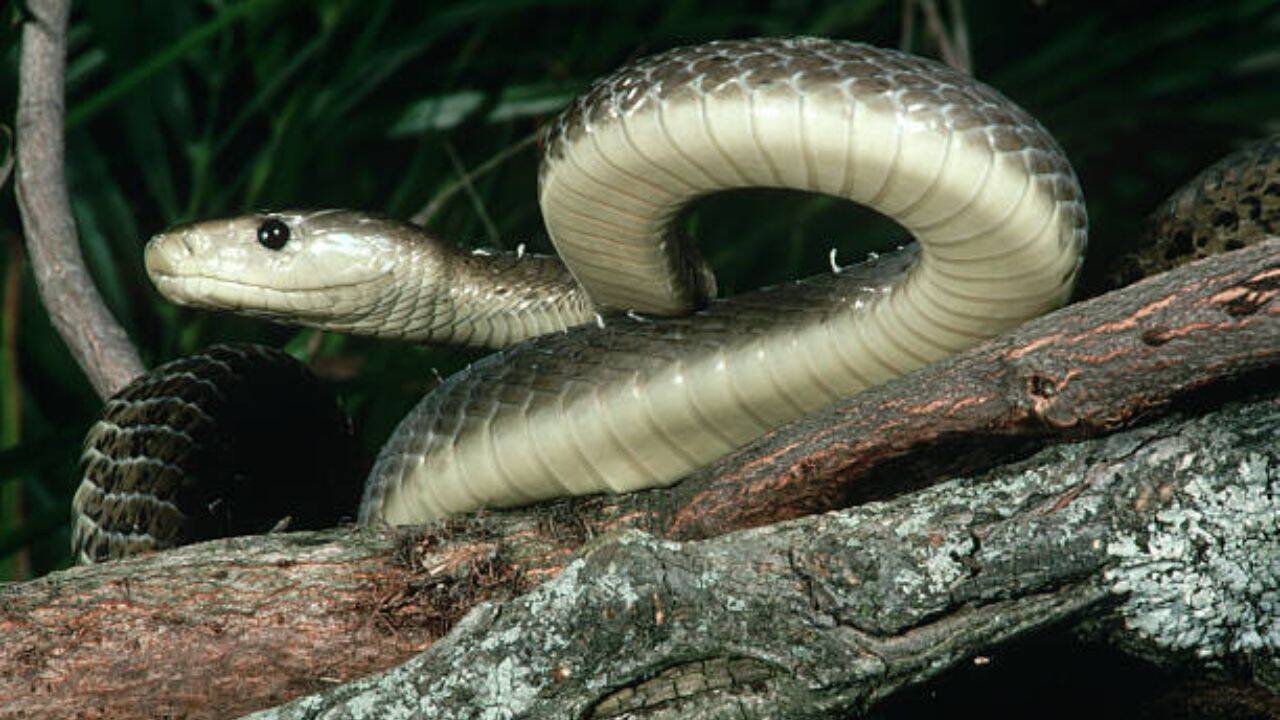
Dendroaspis polylepis isn't even black on the outside. Its skin ranges from olive to a dark gray-brown, and the name actually comes from the inky, jet-black lining of its mouth. When a black mamba feels cornered, it rears up, opens that dark mouth, and hisses. It's a striking visual display designed to make you back away, not an invitation to a fight.
The Speed Myth
Let's address the biggest misconception right away. Is the black mamba the fastest snake on Earth? No. That title usually goes to the sidewinder rattlesnake or the racer snake depending on how you measure short bursts across sand versus open ground.
The black mamba can move fast, though. Reliable field studies show it hits top speeds around 11 to 12 miles per hour (about 18 kilometers per hour) over very short distances. That sounds quick until you realize an average human can run much faster than that. Mambas don't cruise at top speed across the African savanna to hunt humans. They use bursts of speed to dart between termite mounds, fallen logs, and thick brush where they feel safe.
They're shy, nervous creatures. Given the choice between a confrontation with a human and slithering away into a bush, a black mamba picks the bush every single time. Bites usually only happen when someone accidentally steps on one or tries to kill it.
How It Hunts and Strikes
Hunting is all about efficiency. The black mamba is an ambush and pursuit predator that relies on speed to secure meals before potential prey can fight back.
Prey Selection
Unlike pythons that squeeze the life out of large mammals, mambas specialize in warm-blooded prey. They mostly eat small mammals like hyraxes, bushbabies, and rodents, alongside birds. They hunt during the day, using excellent eyesight to spot movement.
The Strike
When a mamba finds a meal, it doesn't mess around. It strikes quickly, delivers a dose of neurotoxic and cardiotoxic venom, and often lets go immediately. Why let go? Because prey like tree squirrels can be dangerous if they fight back with sharp teeth. The mamba strikes, retreats slightly, and waits for the venom to shut down the nervous system.
The venom is a complex cocktail of dendrotoxins. It blocks nerve signals to muscles, causing rapid paralysis. Once the prey stops moving, the snake tracks the scent trail to swallow its meal whole.
Living in the Bush
You'll find black mambas across sub-Saharan Africa, spanning from Senegal to East Africa and down toward South Africa. They adapt well to different environments, living in savannas, rocky hills, and sparse woodlands. They spend a lot of time off the ground in hollow trees or thick brush, though they frequently bask on flat rocks.
Life in the wild is tough. Young mambas face predators like mongooses, large birds of prey, and other snakes. An adult mamba has fewer natural enemies, but habitat loss remains a constant pressure as human settlements expand into their native ranges.
If you're ever walking through rural areas in their range, the best defense is simply paying attention. Watch where you put your feet and hands. Give wildlife space, and let the animals go about their day without interference.