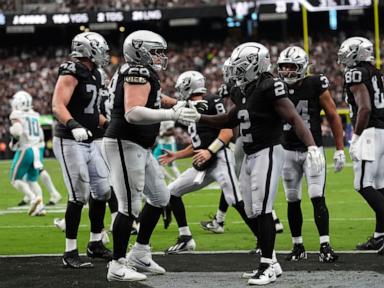
Every talking head in sports media is currently hyperventilating about the Las Vegas Raiders' upcoming schedule gauntlet. The narrative is lazy, predictable, and fundamentally detached from how actual football games are won and lost in the fall. The consensus is that a six-game stretch starting on the road against the Los Angeles Chargers is a death sentence, a meat grinder that will expose every roster flaw and send the franchise packing toward another April draft lottery.
They have it backwards. This brutal stretch is not a trial by fire. It is an oxygen mask.
When you spend years evaluating front office decisions and sitting in war rooms, you learn one immutable truth about the National Football League. Soft schedules breed soft teams. A pillow-fight slate against backup quarterbacks and bottom-tier defenses masks structural rot, hides tactical ineptitude, and gives incompetent coaching staffs a false sense of security. The Raiders do not need an easy road right now. They need an anvil.
Let us dismantle the panic.
The Myth of the Trap Schedule
The panic button is being slammed because analysts look at the logos on the schedule, count the projected win totals of the opponents, and multiply by panic. That is not analysis. That is astrology for men in quarter-zips.
Take the opener of this supposed gauntlet against the Chargers. The prevailing wisdom treats divisional road games as insurmountable hurdles for a roster transitioning its identity. Why? Because people still evaluate teams by their name tags rather than their trench play. Los Angeles boasts marquee talent at flashy positions, but football remains a brutal exercise in physics and attrition. Flashy skill players do not matter when your interior offensive line gets turned into a turnstile by a three-man rush.
I have watched organizations panic when the schedule turns hostile, tearing up game plans by Wednesday and playing scared by Sunday. That is how you turn a competitive disadvantage into a blowout. The teams that survive these stretches are the ones that lean into the ugliness. They shorten the game, run the ball into heavy boxes, and dare the opponent to beat them with discipline rather than splash plays.
If you are a Raiders fan looking at this six-game block and praying for a soft landing, you are wishing for mediocrity. A soft schedule lets you sneak into an eight-win purgatory where you miss the playoffs, miss the elite quarterback draft tier, and keep the same coaching staff around to waste another year of prime defensive play.
Where the Conventional Wisdom Breaks Down
The entire alarmist argument rests on three faulty premises. Let us take them apart one by one.
First, the belief that travel and consecutive road games break a team mentally. Modern travel logistics, nutrition science, and recovery protocols have completely neutralized the traditional "road fatigue" excuse. Players sleep in luxury hotels, fly in chartered aircraft configured like executive boardrooms, and consume tailored caloric intake down to the gram. The mental hurdle of a road game is entirely self-inflicted by coaches who talk about hostile environments too much during Monday meetings.
Second, the fixation on quarterback pedigree. The media evaluates every matchup through the lens of signal-caller name recognition. If the opposing quarterback has a Pro Bowl nod, the game is written off as an automatic L. This ignores the reality of modern defensive disguises. With the explosion of split-field coverages and simulated pressures, young or struggling quarterbacks are getting eaten alive by competent front sevens regardless of their draft pedigree. The Raiders do not need to out-duel a superstar quarterback; they need to make him uncomfortable before his primary read develops.
Third, the panic over depth. Critics love to point out that a tough stretch will expose injuries because "depth is tested." News flash: every team in the league is three injuries away from disaster by November. Depth is a myth perpetuated by people who want a convenient excuse when their preseason predictions implode. True roster resilience is about schematic adaptability—knowing how to hide a backup tackle or scheme around a missing linebacker.
The Uncomfortable Reality in the Film Room
If you turn on the All-22 film of this Raiders roster, the flaws aren't going to be solved by playing a softer opponent. They are structural. Pass protection breakdowns happen because of pre-snap identification errors, not just raw athletic mismatches. Run defense gashes happen because linebackers are peeking into the backfield instead of executing their run-fits with violent intent.
Playing a slate of weak opponents would only allow those technical errors to slide. A blown assignment against a bottom-feeder results in a five-yard gain instead of a sack because the defender lacks the closing speed to punish the mistake. You think you are improving because the scoreboard looks friendly, but you are actually rotting from the inside out.
When you face elite competition, every technical lapse is put under a magnifying glass and set on fire. That hurts. It leads to ugly Sundays, furious call-in radio hosts, and panic pieces across the internet. But it also provides absolute clarity. By game four of this stretch, coaches no longer have anywhere to hide their schematic band-aids. They either adapt or they get exposed permanently.
How to Actually Evaluate This Stretch
If you want to watch these next six games like someone who understands the game instead of someone reacting to Twitter reactionaries, ignore the final score for a moment and look at three specific metrics.
- Third-down conversion delta under pressure. Can the offense sustain a drive when the opponent knows a pass is coming? If the answer is no, the personnel needs a complete overhaul, and no soft schedule was ever going to fix that.
- Yards before contact in the run game. This tells you everything you need to know about the offensive line's ability to win the line of scrimmage. If the running back is getting hit behind the line against elite fronts, it is time to stop pretending the scheme is the problem and start looking at individual talent.
- Explosive pass play prevention. Can the secondary keep everything in front of them when the pass rush doesn't get home? Good teams find ways to survive bad pass rushes with disciplined zone discipline. Bad teams give up back-breaking 45-yard touchdowns because a safety bit on play action.
If the Raiders fail these metrics during this gauntlet, then the rebuild is real, necessary, and overdue. But if they pass—even with a bruised and battered record—it proves the foundation is finally made of concrete instead of plywood.
Stop whining about the schedule. Championship teams do not check the travel log before they lace up. They want every obstacle right in front of them, because that is the only way to prove you belong on the same field when it matters in January.