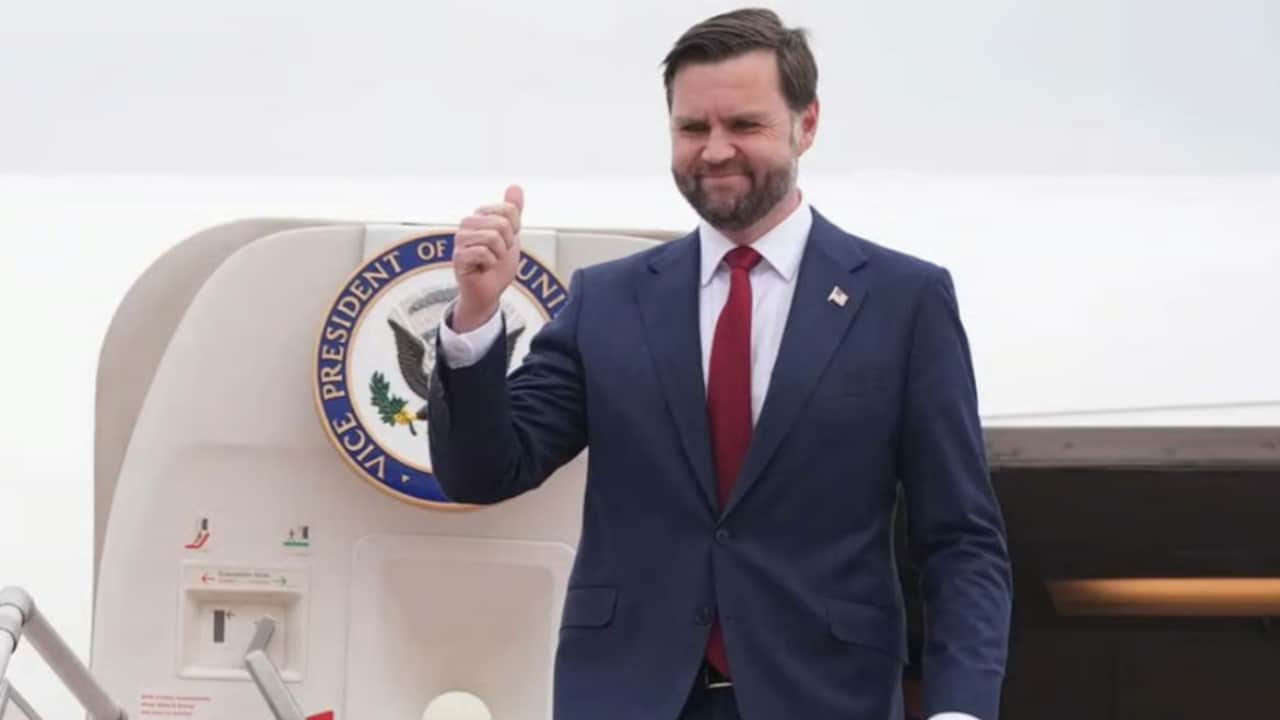
Don't buy the official spin. When Vice President JD Vance canceled his flight to Geneva from Joint Base Andrews at the absolute last minute, the White House rolled out the classic, boring excuse: "logistical issues". They want you to believe a few missing details or scheduling conflicts just pushed things back.
It's a cover story. For another look, check out: this related article.
The reality is that the historic, fragile 14-point memorandum of understanding (MoU) signed by Donald Trump and Iranian President Masoud Pezeshkian just hit its first massive wall of geopolitical resistance. Hours before Vance was set to board his plane to lead technical negotiations over Iran's nuclear program, everything started fracturing.
This isn't about bad flight scheduling. This is about a high-stakes diplomatic gamble that is already threatening to unravel. Related reporting on this trend has been published by The Guardian.
The Friction Behind the JD Vance Postpones Switzerland Visit Headline
To understand why the JD Vance postpones Switzerland visit drama actually matters, you have to look at what happened right before the grounding. Trump and Pezeshkian had just signed a sweeping framework to end hostilities, lift the punishing naval blockade on Iranian ports, and kick off a 60-day sprint to hammer out a final nuclear agreement.
Then reality intervened. While the U.S. immediately held up its end of the bargain—U.S. Central Command actually lifted the blockade and allowed over 12 million barrels of oil to start flowing through the Strait of Hormuz—the diplomatic side stalled hard.
Reports surfaced from regional networks like Al-Mayadeen indicating that Tehran was intentionally holding back its own delegation. Why? Because despite the U.S. push for peace, the broader Middle East is still completely on fire. Israeli airstrikes were pounding southern Lebanon, reportedly killing civilians in villages like Harouf.
Iran’s core condition for this entire peace process is a total, multi-front ceasefire. With bombs still dropping in Lebanon, the Iranian leadership balked at sitting down in a Swiss conference room.
Why Vance Is Suddenly the Face of the Iran Deal
It's kind of ironic that Vance is the guy taking the heat for this. Remember, he was originally the guy who was deeply skeptical about the U.S. getting bogged down in conflicts with Iran. Now? He is the public face of the entire administration's strategy.
Before his trip got yanked, Vance stood at the White House podium and delivered a fiercely defensive press conference. He didn't sound like a standard diplomat. He sounded aggressive, telling domestic critics and foreign allies alike to basically shut up and trust the process.
Vance’s core argument is brutal but straightforward. He claims the U.S. isn't ceding anything because American forces already broke Iran's capabilities during the hot war.
"We destroyed a substantial number of their ballistic missiles and their ballistic missile launchers themselves," Vance told reporters. "The nuclear weapons program is destroyed. It is gone."
He wants the American public to see this MoU not as a soft concession, but as an enforcement mechanism built on a position of overwhelming military strength. If Iran steps out of line, they lose the benefits—plain and simple.
The $300 Billion Problem and the Fractured Coalition
While Vance is trying to project absolute confidence, his back home is anything but unified. A vocal faction of congressional Republicans is furious about the deal. They are looking at a projected $300 billion reconstruction fund intended to help rebuild after the conflict, alongside massive sanctions relief, and they see a total capitulation.
The international blowback is even worse. Israel feels completely alienated by the sudden diplomatic shift. It got so tense that Vance had to issue a direct, blunt warning to members of the Israeli government who were publicly slamming Trump's agreement.
Trump even took to Truth Social to demand everyone in the region back off and let the negotiations "beautifully unfold," pointing out that Wall Street loved the drop in oil prices and the surging stock market.
But you can't buy lasting peace with a good day on the stock market. Iran’s lead negotiators are already issuing public warnings that any perceived U.S. violation of the early terms will result in an "even harder slap". Meanwhile, Iranian parliament speaker Mohammad Bagher Ghalibaf made it clear on social media that Tehran won't hesitate to deliver a "crushing response" if Washington shows bad faith.
What Needs to Happen Before Anyone Boards a Plane
This Swiss trip isn't dead forever, but the administration cannot just reschedule the flight and hope for the best. To salvage the 60-day negotiating window, several massive roadblocks need immediate clearing:
- Enforce a real multi-front ceasefire: Iran will not send its technical team to Switzerland while Israeli jets are striking targets in Lebanon. Washington has to exert immense pressure on Jerusalem to halt operations, or the deal dies on the vine.
- Formalize the IAEA nuclear inspections: While Special Envoy Steve Witkoff privately briefed congressional leaders that Iran will invite UN inspectors back to their nuclear sites, that agreement needs to be locked down in writing before Vance puts boots on the ground.
- Fix the broken public messaging: Vance claims the rollout hasn't been chaotic, but when the Pakistani Prime Minister cancels his own trip to Switzerland because the signing ceremony logistics fell apart, it’s a mess. The administration needs a single, cohesive narrative.
The clock is ticking on the 60 days. Every day Vance spends in Washington instead of Geneva is a day the hardliners in Tehran and Washington use to tear this fragile peace apart. Keep your eyes on the border actions in Lebanon over the next 48 hours. If the guns don't go silent there, that Swiss trip isn't happening anytime soon.