The headlines are screaming about a European political earthquake, a frozen front line, and cargo planes pancaking onto airport perimeter roads. The daily financial newsletters breathlessly stitch these disasters together into a tapestry of terminal doom for markets.
Stop panicking. You are looking at smoke while the engine room is running fine.
Every time a regional election in Saxony-Anhalt yields a surge for the Alternative for Germany, or a diplomatic shuttle crashes into a brick wall in Moscow, pundits reach for the panic button. They treat localized political friction and tragic logistical anomalies as systemic financial poison. They are wrong. Markets do not care about your anxiety; they care about liquidity, industrial output, and supply chain adaptation.
Let us dismantle the three lazy consensus narratives dominating the current news cycle and look at what is actually happening beneath the noise.
The German Political Panic is Local Theatre Not Macro Poison
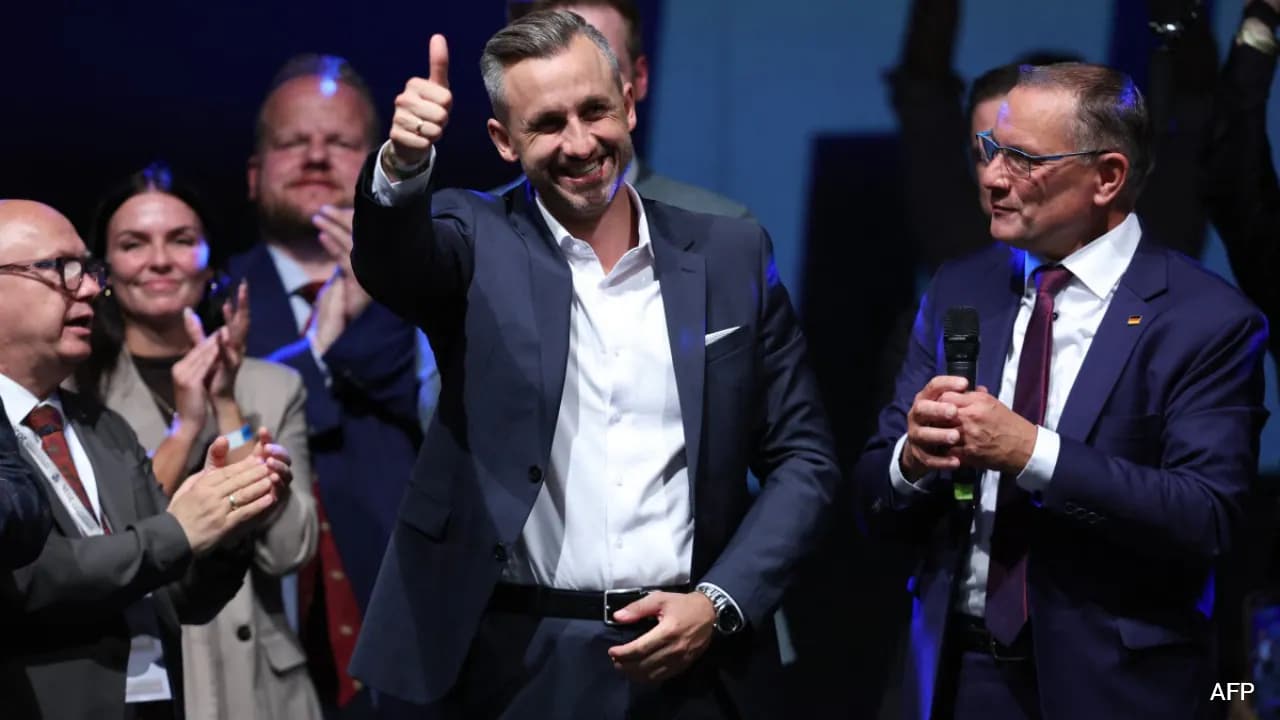
The mainstream narrative treats the AfD's regional victory in Saxony-Anhalt as the death knell for European stability. Chancellor Friedrich Merz’s conservatives are trailing, and commentators are warning of a structural fracture in the heart of Europe.
This is amateur analysis.
State-level elections in Germany are protest amplifiers. Voters use regional ballots to punch the incumbent federal nose without handing over national governance keys. The institutional architecture of the Federal Republic is specifically designed to absorb radical shocks through a wall of federalism, coalition firewalls, and constitutional safeguards.
I have watched institutional investors pull capital out of European equities every time a populist party gains five points in a regional parliament. It is a predictable, expensive mistake. Capital flees based on headlines, then returns when it realizes German manufacturing conglomerates do not halt production lines because of regional council shifts. The corporate balance sheets of the DAX are exposed to global consumer demand, not local municipal ordinances. If you are selling European equities because of a state election result, you are trading emotional fiction instead of financial reality.
The Ukraine Stalemate is Already Priced In
Diplomatic missions to Moscow and Kyiv yielding zero movement are treated as sudden shocks by financial anchors who clearly never opened a history book on protracted regional conflicts.
The stalemate is not a bug in the global economic system; it is the baseline.
Markets adapted to the physical partition of European supply chains over two years ago. Grain corridors adjusted, energy sourcing migrated away from Russian pipelines to liquefied natural gas terminals, and defense industrial bases across the continent finally woke up from a thirty-year slumber. When envoys return empty-handed from weekend talks, stock indices should not flinch. The ongoing attrition has already been absorbed by corporate cost structures.
Treating a frozen conflict as a recurring market catalyst ignores how corporate risk management actually functions. Global supply chains do not wait for peace treaties; they route around craters. Anyone waiting for a grand diplomatic breakthrough to re-enter industrial sectors is missing the entire adaptation cycle that happened while they were staring at map updates.
Aviation Incidents Are Tragic Realities Not Macroeconomic Levers
The tragic crash of a cargo plane in Miami and volcanic ash groundings in Indonesia are horrific human events. They disrupt local logistics for forty-eight hours. They do not threaten global trade flows.
Financial commentary loves to lump localized infrastructure disruptions into a grand narrative of systemic fragility. Let us be precise. A regional airport closure or a fleet grounding creates localized headaches for overnight carriers, but redundancy is built into global logistics networks. Shippers reroute freight. Hubs absorb the overflow.
Conflating an operational accident with macroeconomic vulnerability is lazy journalism designed to generate clicks through fear. If a single logistics hiccup causes you to rethink your portfolio thesis, your thesis was built on tissue paper to begin with.
The Real Risk is Your Focus on the Wrong Dashboard
The financial media wants you staring at political polls in eastern Germany and diplomatic communiqués from the Kremlin because it is easy to write about. It requires zero quantitative rigor.
Meanwhile, central bank liquidity shifts, structural labor shortages in manufacturing hubs, and actual capital expenditure cycles in energy infrastructure go completely underreported.
Stop trading political theater. Look at the balance sheets, watch the energy input costs, and ignore the daily sirens screaming from the news desks. The noise is loud by design. Tune it out and look at the ledger.