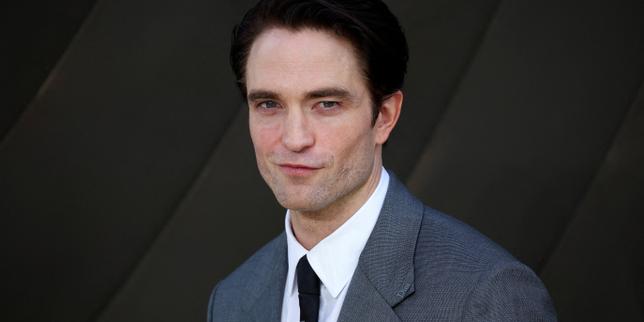
Casting the lead actor for the James Bond franchise is not an artistic gamble; it is a multi-billion-dollar capital allocation decision governed by demographic retention, brand equity preservation, and production amortization. Analyzing the persistent industry speculation surrounding Robert Pattinson assuming the 007 mantle requires separating tabloid rumor from the strict operational realities of Eon Productions and Amazon MGM Studios. While unverified reports periodically claim Pattinson has been cast, no official confirmation exists from the rights holders. Evaluating Pattinson as a candidate reveals how modern studios balance avant-garde credibility against global four-quadrant box office durability.
The Epistemological Reality of 007 Casting
Standard entertainment journalism treats casting rumors as binary news events—either an actor is hired or they are not. In franchise management, casting operates as a multi-stage risk-mitigation funnel.
Fact Versus Speculation in the Post-Craig Era
Daniel Craig’s tenure concluded with No Time to Die in 2021, leaving the intellectual property without an active lead for the longest hiatus since the legal disputes of the early 1990s. Known facts establish that producers Barbara Broccoli and Michael G. Wilson retain creative control over the character, even after Amazon’s acquisition of MGM. Broccoli has publicly stated that the next iteration requires a "reinvention" of the character and a minimum ten-to-twelve-year commitment from the selected actor.
The claim that Robert Pattinson has already been cast falls strictly into the category of unsubstantiated rumor. No trade publications of record—such as Variety, The Hollywood Reporter, or Deadline—have corroborated a signed contract. Treating the rumor as a finalized event ignores the industrial timeline of major tentpole filmmaking, where lead casting precedes pre-production announcements, director attachments, and script locks.
The Opportunity Cost of Franchise Exclusivity
A primary structural barrier to Pattinson taking the role is schedule conflict and asset exclusivity. Pattinson is already anchored to Warner Bros. Discovery’s The Batman universe, directed by Matt Reeves. A standard Bond contract demands exclusivity over the actor's prime production windows for over a decade, alongside rigorous global promotional tours.
For an actor to hold the lead roles in both Batman and James Bond simultaneously creates severe logistical bottlenecks:
- Insurance and Liability: Studio completion bonds penalize productions when lead talent moves directly from one high-risk physical shoot to another without recovery windows.
- Brand Dilution: Consumers struggle to separate two distinct, dark, brooding British-adjacent vigilante archetypes played by the same performer within overlapping release cycles.
- Negotiating Friction: Two rival conglomerates (Amazon MGM and Warner Bros.) would have to coordinate release calendars to prevent cannibalizing their own marketing spend.
The Four Pillars of Eon Productions Casting Logic
Historically, Eon Productions avoids hiring actors who already possess massive, inescapable global fame at the moment of signing. Sean Connery, George Lazenby, Timothy Dalton, and Daniel Craig were respected working actors, not entrenched box-office titans, when they signed their initial contracts. Pierce Brosnan and Roger Moore carried television recognition, which differs fundamentally from global theatrical saturation.
1. The Amortization Horizon
Producers view the lead actor as a depreciating physical asset. Stunt work, global press tours, and shifting audience tastes erode an actor's viability over time. Born in May 1986, Pattinson enters his late thirties and early forties during the theoretical production window of the next Bond trilogy.
If a studio commits to a 12-year arc spanning four films—the modern cadence of one film every three years—a 40-year-old actor finishes his contract at 52. Daniel Craig was 38 when Casino Royale released in 2006 and 53 when No Time to Die arrived in 2021. Pattinson fits the exact chronological profile Eon favors: old enough to project weathered authority and institutional gravitas, yet young enough to survive a decade of physical production demands without immediate age-related recasting.
2. The Indie-to-Tentpole Credibility Arbitrage
Following the massive commercial success of the Twilight saga, Pattinson executed a deliberate decade-long reputation overhaul. By working with auteur directors—including David Cronenberg, Claire Denis, Robert Eggers, the Safdie brothers, and Christopher Nolan—he dismantled his teen-idol image and established high-art credibility.
In behavioral economics, this functions as signaling. When Eon Productions hires an actor with elite critical standing, it signals to skeptical adult demographics that the franchise will prioritize character psychology and prestige filmmaking over formulaic action. Pattinson’s trajectory mirrors Daniel Craig’s pre-Bond career in Layer Cake and Munich, offering the studio an immediate shield against accusations of creative stagnation.
3. Aesthetic Alignment and Physicality
Ian Fleming’s literary template for James Bond relies on specific visual cues: a lean, athletic build, sharp facial structure, and a demeanor that blends aristocratic detachment with sudden capacity for violence.
Pattinson’s physical profile—standing 6'1" with an angular frame—matches the tailored, European silhouette popularized during the Connery and Brosnan eras, contrasting with Craig’s compact, brutish physicality. Furthermore, Pattinson’s native English background satisfies Eon’s unspoken geopolitical requirement: the actor must authentically inhabit British institutional culture without relying on dialect coaching.
4. Global Four-Quadrant Elasticity
A Bond film must recoup production budgets exceeding $250 million, plus another $150 million in global marketing, requiring a theatrical gross north of $800 million to reach profitability before ancillary windows. The lead actor must index high across all four demographic quadrants: males and females, under and over 25.
Pattinson possesses rare cross-generational equity:
- Millennial and Gen-Z Recognition: Built through Harry Potter, Twilight, and The Batman.
- Cinephile and Older Adult Respect: Earned through Tenet, The Lighthouse, and The Boy and the Heron.
- International Box Office Pull: Proven in European and Asian markets, where Bond generates over 65% of its theatrical revenue.
Mechanism Analysis: Why the Rumor Persists
Understanding why Pattinson’s name dominates speculative cycles requires examining the mechanics of modern entertainment media and bookmaker markets.
Asymmetric Information in Betting Markets
British bookmakers routinely publish odds on the next James Bond. These markets have low liquidity and high sensitivity to minimal capital inflows. A single $500 wager placed on an actor can force oddsmakers to slash that candidate's odds from 12/1 to 3/1 to balance their liability book.
Entertainment outlets then report the odds shift as empirical evidence of insider knowledge. This creates a closed feedback loop: a minor bet moves the line, articles amplify the movement, casual fans place follow-on bets, and the actor becomes the statistical "frontrunner" without a single phone call occurring between the actor's agent and Eon Productions.
The Nolan Variable
Speculation surrounding Pattinson intensifies whenever Christopher Nolan is linked to directing the next installment. Nolan has publicly expressed his desire to direct a Bond film under specific creative conditions, and he frequently utilizes a recurring repertory of actors. Having directed Pattinson in Tenet (2020) and The Odyssey (2026), Nolan’s hypothetical attachment immediately elevates Pattinson’s probability in industry models.
In studio packaging, securing a marquee director often dictates the lead talent. If Amazon MGM concedes final cut and creative autonomy to a director of Nolan’s stature, the studio’s traditional resistance to hiring an already-famous actor like Pattinson evaporates, because the director’s brand supersedes the actor’s prior roles.
Structural Limitations of the Pattinson Hypothesis
Applying a rigorous stress test to the Pattinson candidacy exposes critical vulnerabilities that prevent it from being an optimal strategic play for Eon Productions.
- The Franchise Fatigue Threshold: Audiences increasingly reject actors monopolizing multiple iconic intellectual properties. Placing the face of Gotham City inside MI6 risks turning the viewing experience into a meta-textual distraction rather than an immersive narrative.
- Compensation Inflation: An actor with Pattinson’s leverage commands an upfront fee in the $15 million to $20 million range, plus first-dollar gross participation or back-end bonuses. Eon historically prefers locking unknown or mid-tier talent into lower initial base salaries ($1 million to $3 million for the first film), preserving capital for physical production and marketing while scaling the actor’s pay only after box office performance is validated.
- Creative Restlessness: Pattinson has repeatedly expressed aversion to rigid corporate studio mandates, favoring unpredictable, boundary-pushing roles. The James Bond apparatus is notoriously conservative regarding brand protection—governing everything from the lead actor's public conduct to commercial tie-ins with watchmakers and luxury automakers. Friction between an experimental actor and a risk-averse family-run production company presents a high probability of mid-contract fallout.
The Strategic Play for Rights Holders
To maximize the long-term enterprise value of the James Bond intellectual property, Eon Productions and Amazon MGM should resist the short-term publicity spike of casting an established mega-star like Robert Pattinson. Hiring an actor already tethered to a competing flagship franchise introduces unnecessary scheduling friction, inflates upfront capital expenditure, and compromises the character's blank-slate immersion.
The optimal strategy is to apply the Pattinson template without hiring Pattinson himself: target a British actor between the ages of 32 and 37 who possesses demonstrated theatrical range in independent cinema, zero competing superhero or tentpole obligations, and a low initial salary baseline. This preserves budget allocation for practical stunt production, secures clean 12-year scheduling exclusivity, and allows the franchise to define the actor rather than forcing the actor's existing brand to redefine James Bond.