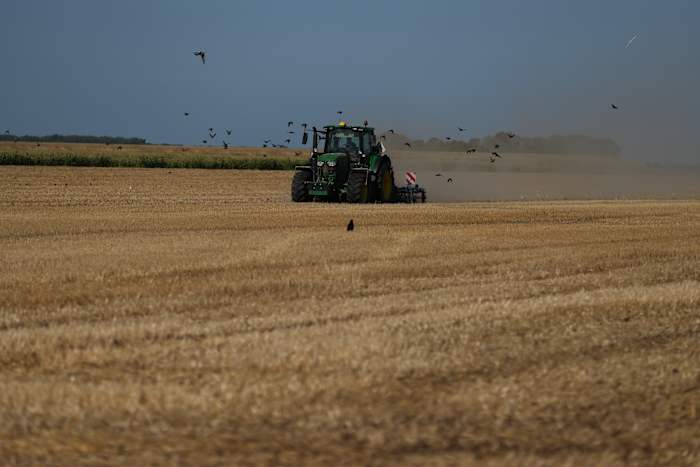
Panic sells. Calm reporting does not. Every time the thermometer spikes across the European continent, the media apparatus grinds into motion with the exact same tired script. Headlines scream about punishing droughts shriveling Dutch potatoes and Bosnian corn, framing weather events as apocalyptic collapses of human agriculture.
It is lazy journalism built on agricultural illiteracy. Meanwhile, you can find other stories here: Where Two Histories Meet Under One Quiet Roof.
I have spent decades watching markets overreact to weather panics while the underlying systems quietly adapt, restructure, and often emerge stronger. The consensus narrative treats farming like a fragile greenhouse glass pane. It is not. It is a stubborn, heavily capitalized, wildly resilient machine. When water gets scarce, efficiency spikes. When traditional yields dip, value rises, and innovation accelerates out of sheer necessity.
The Fallacy of Static Agriculture
The lazy consensus assumes that a historical baseline of rainfall is the only way to grow a potato or a corn stalk. If water drops below that arbitrary historical average, disaster follows. This ignores the basic mechanics of modern crop science and market economics. To understand the complete picture, check out the detailed article by The Guardian.
Dutch agriculture is not a collection of backyard garden plots relying on the whim of rain clouds. It is a hyper-engineered, high-tech industrial complex. When a dry spell hits, irrigation protocols shift instantly. Water management boards regulate distribution with surgical precision.
Crop shriveling in a headline translates to loss in the field, but it rarely translates to a caloric deficit on shelves. What actually happens is a brutal sorting mechanism. Inefficient producers bleed out. Resilient operations upgrade their root systems, pivot to drought-tolerant strains, and optimize micro-irrigation.
Bosnian corn fields tell a different story of structural underinvestment, not climate doom. Blaming a drought for poor yield in regions lacking modern infrastructure is a convenient excuse for structural stagnation. The fix is not praying for rain. The fix is capital allocation and drip systems.
The Economics of Scarcity
Let us look at the numbers the panic pedakers leave out. Scarcity drives pricing power. When Dutch potato yields drop by ten percent, the price per ton often compensates growers for the volume loss. More importantly, it forces processors to stop wasting raw material on low-margin starch extraction and redirect supply toward high-value consumer products.
Markets correct faster than meteorologists can update their forecasts.
Imagine a scenario where every European farm received unlimited water for free. You would get rampant nutrient leaching, severe soil degradation, and massive fertilizer runoff choking local waterways. Droughts are nature's heavy-handed way of resetting the soil profile, forcing deep root penetration, and killing off surface-level pathogens that thrive in soggy muck.
The Uncomfortable Truth About Adaptation
My contrarian take has a massive downside, and I will own it right now: this transition hurts smallholders. If you are a generational family farm operating on thin margins with zero capital reserves for subsurface drip irrigation or smart soil sensors, a dry summer is an existential threat.
The agricultural sector is undergoing a ruthless Darwinian purge. Consolidation is accelerating. Agribusiness giants are buying up distressed acreage, installing automated water grids, and turning farming into a software-driven logistics play.
Nobody wants to admit that the romanticized European family farm is economically obsolete during climate stress. We mourn the aesthetic while ignoring the efficiency.
Dismantling the Food Security Myth
People ask if European droughts will cause widespread starvation or empty supermarket aisles. The answer is a flat no. Europe is a net exporter of calories with massive trade surpluses. A localized drop in Bosnian corn or Dutch potatoes is a blip in a globalized supply chain that spans the Americas, Ukraine, and Asia.
Food does not vanish because it did not rain in Rotterdam. It gets rerouted. Global logistics arbitrage ensures that deficits in one region are backfilled within forty-eight hours by commodity traders looking to cash in on regional price spikes.
Stop reading the weather warnings as grocery bills of doom. They are marketing campaigns for anxiety.
The next time a drought hits the headlines, look past the cracked earth photos. Look at who is investing in deep-well technology, who is hedging futures, and who is quietly modernizing while the rest of the continent panics over a dry lawn.
The sky is not falling. The soil is just waking up.