For years, statements out of European capitals regarding the West Bank sounded remarkably similar. They expressed deep concern, issued mild warnings about international law, and went right back to business. But reality on the ground has shifted past the point of polite diplomatic friction.
European governments are running out of patience. A combination of surging settler violence and aggressive new expansion plans has forced a loud pivot in how Brussels, Paris, Berlin, and London deal with the Israeli government. Building on this theme, you can also read: The Century Event When Climate Models Break And Ocean Heat Takes Over.
The Breaking Point Behind Closed Doors
If you look at the diplomatic history, European paralysis used to be the default setting. Unanimous consent rules meant any single country could block punitive measures. Hungary famously held the line for months, vetoing penalties against extremist settlers to shield its diplomatic alignment with Benjamin Netanyahu's government.
That wall finally cracked. A shift in regional politics and leadership changes cleared the runway for the European Union to agree on concrete sanctions against violent extremists and specific settlement groups. Diplomats inside closed-door briefings in Brussels describe an atmosphere that has turned visibly hostile toward ongoing territorial policies. Observers at TIME have shared their thoughts on this matter.
It is not just rhetoric anymore. When major powers like France, Germany, Italy, and the United Kingdom issue joint ultimatums demanding the immediate withdrawal of controversial construction plans, the dynamic changes.
Why the E1 Corridor Changes Everything
You might wonder why a single real estate tender triggers such an immediate Western backlash. The answer comes down to pure geography.
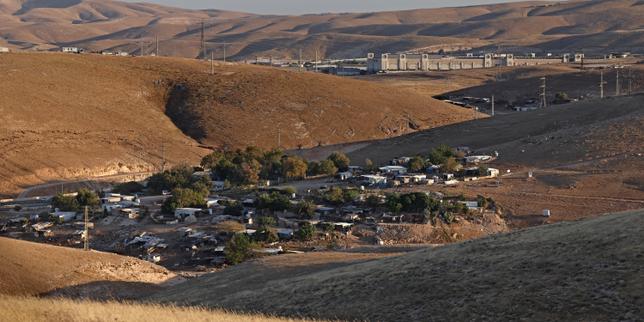
Consider the E1 corridor project just east of Jerusalem. It sounds like boring administrative jargon, but it represents an existential threat to any future Palestinian state. Building out housing units in this specific zone physically slices the West Bank in half. It severs the northern territories from the southern sectors, making continuous Palestinian territorial integrity practically impossible.
European heavyweights don't just view this as another neighborhood expansion. They view it as a deliberate move designed to kill the two-state framework permanently. When London summoned the Israeli charge d'affaires over these specific tenders, it signaled that domestic political games in the region are running headfirst into fierce international resistance.
The Human Cost of Impunity
Diplomatic summits and zoning maps miss the daily reality of what's happening to ordinary families. Human rights organizations have documented record levels of forced displacement across rural communities. Entire villages are being squeezed out as armed outposts expand under the protection or passive indifference of security forces.
The statistics paint a grim picture. Since early 2023, escalating harassment, night raids, and physical destruction have forced dozens of communities to pack up and abandon their ancestral lands. Property gets torched, access to water gets cut off, and grazing fields become off-limits.
European officials are finally acknowledging that these incidents aren't isolated anomalies caused by a few bad actors. They are part of a systematic pattern backed by financial streams and institutional cover.
What Comes Next for Trade and Sanctions
Words are cheap, but economic restrictions hit where it hurts. Several European nations are pushing past symbolic gestures to target the financial infrastructure keeping these settlements alive.
Discussions are actively moving toward restricting imports originating directly from illegal settlements. While a complete EU-wide commercial ban faces fierce internal debates, individual countries are starting to take unilateral steps. Belgium and other states are tightening the screws on commercial goods flowing from disputed territories into European markets.
At the same time, targeted travel bans and asset freezes on extremist figures are becoming standard policy rather than empty threats.
The friction between European capitals and the current Israeli administration is no longer about minor diplomatic disagreements. It represents a fundamental collision over sovereignty, territory, and the rule of international law. As deadlines approach and construction tenders advance, Europe's hardened stance is setting up a high-stakes autumn confrontation.