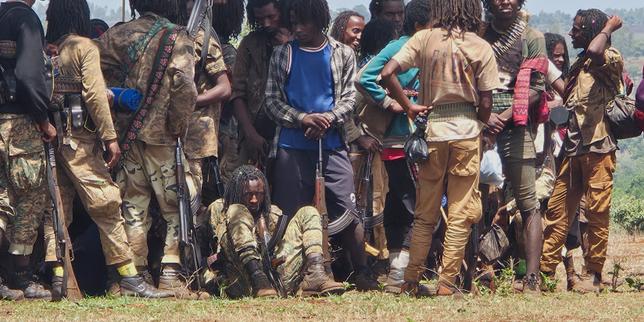
When bitter enemies decide they hate the guy in charge more than they hate each other, politics gets messy. Seven distinct armed factions inside Ethiopia just signed a pact to take down Prime Minister Abiy Ahmed. It sounds like a massive threat to Addis Ababa. But if you look past the headlines, this coalition is built on quicksand.
The group calls itself the Alliance for Survival. It brings together heavyweights who spent years shooting at one another, including the Tigray People's Liberation Front (TPLF) and the Amhara Fano militia. History tells us that shotgun marriages of convenience in the Horn of Africa rarely end well.
Who Actually Signed Up for This Pact
The coalition features seven distinct movements operating across different corners of the country. Aside from the TPLF and Fano, it includes the Oromo Liberation Army (OLA), the Ogaden National Liberation Front (ONLF), the Afar Revolutionary Democratic Unity Front (ARDUF), the Benishangul People's Liberation Movement (BPLM), and the Gumuz People's Democratic Movement (GPDM).
Reading through that roster reveals an immediate contradiction. Fano fighters and TPLF forces spent the brutal 2020-2022 civil war on opposite sides of the battlefield. More importantly, they harbor active, violent territorial disputes over lands like western Tigray, which Amhara nationalists claim as Welkait.
The founding paperwork glosses right over these land disputes. They managed to agree that Abiy Ahmed needs to go. Agreeing on who runs the country afterward is an entirely different battle.
The Immediate Fallout in Addis Ababa
Prime Minister Abiy's administration isn't panicking publicly, treating the announcement as a desperate stunt by fragmented actors. Yet the domestic political cost is already mounting. The Ethiopian Media Authority swiftly moved to restrict local media from broadcasting statements or coverage originating from outlets tied to the opposition, trying to choke off the narrative before it gains traction on the streets.
For Addis Ababa, fighting on multiple fronts is nothing new. Federal forces are already stretched thin trying to maintain order against insurgents in Amhara and Oromia while managing a fragile, post-Pretoria peace in Tigray. Stretching the national army across distant operational theaters is a logistical headache.
Even so, simultaneous skirmishes do not equal a unified military campaign. A bunch of separate groups fighting the same government in their own backyards doesn't automatically mean they can coordinate a march on the capital.
Why Coalitions of Convenience Usually Collapse
Ethiopian political history is littered with grand anti-government coalitions that imploded the second pressure mounted. In 2021, a similar opposition front formed with grand ambitions, only to fracture under the weight of competing ethnic nationalism and command rivalries within twelve months.
The fundamental problem is structural. Ethiopia's ethnic federal model turns regional borders into battlegrounds. Every militia in this new alliance represents a specific ethnic constituency with its own vision for self-rule. If they somehow managed to unseat Abiy, the fight for supremacy between Tigrayan leadership, Amhara nationalists, and Oromo factions would start immediately.
Regional dynamics outside the border complicate things further. Tensions involving neighboring Eritrea and Egypt have simmered as regional geopolitics over Red Sea access and Nile waters boil over. Addis Ababa frequently accuses external players of funneling support to domestic insurgents, accusations that neighboring capitals flatly deny while regional proxy rivalries intensify.
This alliance marks a loud symbolic death for the 2022 Pretoria peace agreement, proving that the TPLF is once again openly hostile to federal authority. But turning a joint declaration on paper into a functional governing alternative requires a level of trust that simply does not exist between these groups.
The real test won't be whether seven rebel factions can stretch federal troops thin. It will be how long they can tolerate each other before the old hatreds flare back up.