Ink dries quickly on parchment, but doubt stains much longer.
Consider a small room in a crowded neighborhood on the outskirts of New Delhi. A ceiling fan rotates with a rhythmic, clicking groan, pushing heavy July air across a metal desk. On that desk sits a ledger containing names, fathers' names, ages, and addresses—the fragile bridge between a living, breathing human being and the democratic apparatus of the world's largest electorate.
To an algorithm in a server room or a bureaucrat behind a polished mahogany counter, this ledger is a dataset. Clean. Rows and columns. Rows that can be sorted, filtered, and occasionally, quietly deleted.
To Rajesh Kumar, a fifty-four-year-old shopkeeper who has walked to the same dusty schoolhouse polling booth for three decades, that ledger is his civic pulse. Or it was, until he checked his name last Tuesday and found a blank space where his franchise used to live.
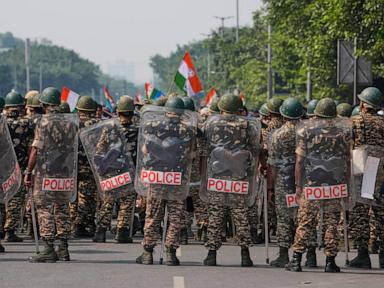
Silence descended on the Supreme Court lawn under a pale, unforgiving afternoon sun. Opposition leaders stood shoulder to shoulder, their white kurtas stark against the crimson sandstone of the judicial enclave. They were not carrying banners with abstract slogans. They held thick, dog-eared files—physical bundles of paper containing affidavits, complaints, and the names of thousands who had vanished from the voter rolls without a knock on their door, without an explanation, without a trace.
Democracy rarely dies in a sudden, cinematic explosion of midnight tanks and shattered glass. More often, it suffocates in the margins of administrative paperwork. It slips away in the quiet revision of voter lists, where an administrative error or a targeted purge can silence an entire street before the campaign posters are even printed.
The protest marching toward the apex court was born out of a profound, gnawing panic. When the guardians of the ballot box begin to lose control of the roll call, the foundation begins to shift.
Think about how an election actually works at the ground level. Before a single vote is cast, before the first electronic voting machine is beeped into life, before the ink is stamped on an index finger, there is the list. It is the gatekeeper. If your name is on it, you exist in the eyes of the state. You matter. Politicians must listen to your grievances about water pipelines, school fees, and inflation. If your name is missing, you are a ghost. You pay taxes, you breathe the air, you work the shifts, but politically, you do not exist.
Over the past several months, whispers turned into alarms across multiple states. Opposition parties—fractured by ideology on most days—found themselves united by a terrifying common denominator. Their strongholds were thinning. Neighborhoods known for casting votes against the ruling establishment reported bizarre anomalies. Whole families found their names scrambled across different polling booths miles away. Entire apartment complexes discovered they had been mysteriously remapped.
Imagine waking up on election morning, walking to the familiar booth where the elderly security guard has nodded at you for years, only to be told: You are not on this list. Go away.
That is not a glitch. That is disenfranchisement by design or by staggering incompetence. And in a political landscape as razor-thin and fiercely contested as India's, a shift of a few thousand votes in targeted constituencies can tilt the balance of power for an entire decade.
The march to the Supreme Court was an act of desperation. Courts are cold, deliberate institutions. They operate on rules of evidence, petitions, and legal briefs. They do not move at the speed of political outrage. Yet, when the electoral machinery itself becomes the subject of intense suspicion, the judiciary remains the last structural bastion where citizens can demand an accounting.
The petition filed by the opposition delegation wasn't merely about administrative oversight. It was an existential cry. They demanded transparency in how names are added and deleted. They demanded independent oversight of the database cleanups. They demanded that the Election Commission—an institution historically revered for its autonomy—open its books to public scrutiny.
Because trust is the ultimate currency of a republic. Once spent, it cannot be printed back into existence by executive decree.
Walk down any narrow lane in Old Delhi or through the sprawling agrarian belts of Uttar Pradesh, and you will sense the psychological toll of this erosion. People are watching their neighbors disappear from the lists. They are asking a simple, terrifying question: If they can take away my vote today, what else can they take tomorrow?
This is the hidden cost of procedural opacity. When systems become too complex, too digitized, and too insulated from public accountability, they invite paranoia. Even legitimate technological updates—such as merging databases or removing duplicate entries—begin to look like malicious engineering when communication breaks down. The state says it is modernizing. The citizen suspects it is purifying.
And that suspicion is corrosive. It turns neighbors against neighbors. It turns every routine bureaucratic failure into a conspiracy theory. It makes people cynical about the very mechanisms designed to give them a voice.
The opposition leaders who walked toward the Supreme Court gates knew the legal hurdles ahead of them. They knew that proving systemic voter suppression in a nation of over nine hundred million registered voters is like finding a needle in a haystack of digital haystacks. But they also knew they had no choice. If you do not fight for the integrity of the list, fighting for the seat is a theater of the absurd.
Back in that small room with the clicking ceiling fan, Rajesh Kumar closes the ledger. He doesn't know what a writ petition is. He has never read a Supreme Court brief. He only knows that his grandfather voted, his father voted, he voted five years ago, and now, mysteriously, his name has evaporated into the administrative ether.
Outside his window, the street noise continues—the honking horns, the shouts of vendors, the indifferent hum of daily survival. But underneath the noise, there is a quiet, steady realization spreading across the country. Democracy is not maintained by the grand theater of national elections alone. It is guarded in the damp ink, the printed pages, and the sacred, stubborn insistence that every single citizen counts.
And until those lists are rendered transparent, until every lost name is restored to its rightful place, the shadow over the ballot box will only grow longer.