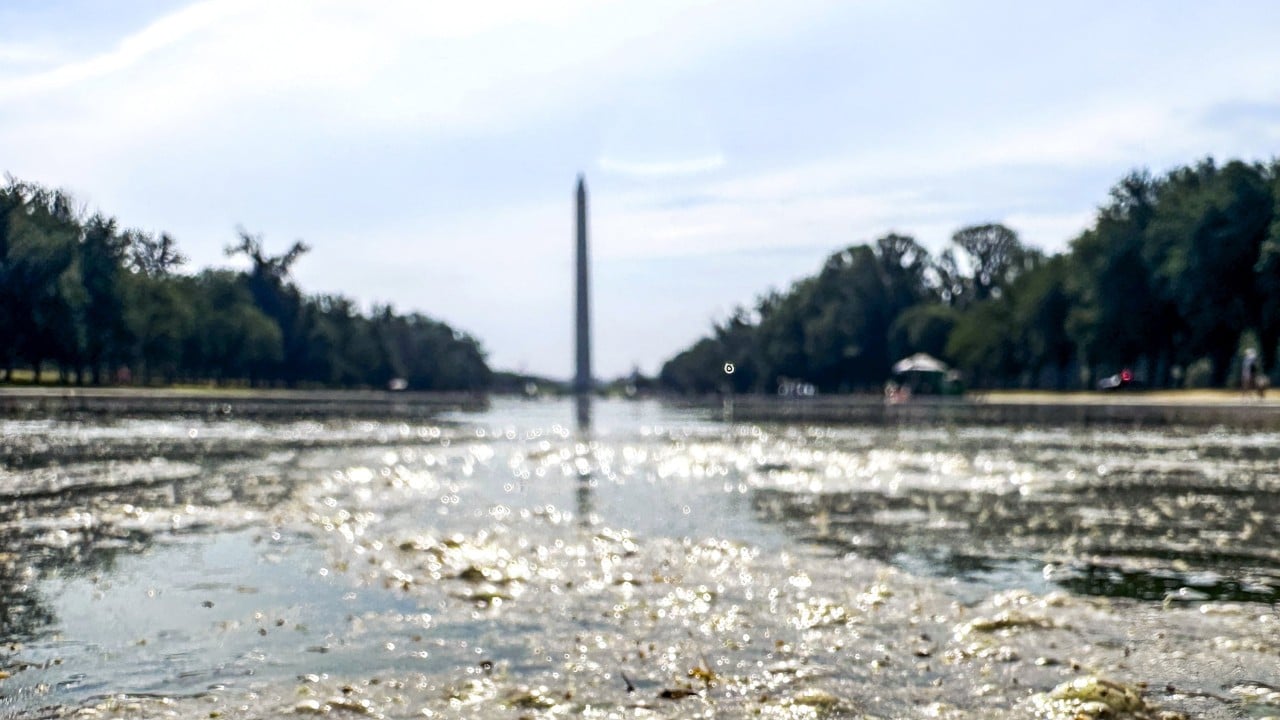
The failure of a US$14.7 million infrastructure renovation is rarely caused by a single point of vulnerability. Instead, it occurs when a system design ignores fundamental thermodynamic, biological, and material realities. The rapid accumulation of green algae and subsequent peeling of the newly applied industrial coating at the Lincoln Memorial Reflecting Pool—just weeks after its June 2026 reopening—serves as a case study in failed asset optimization. When an open-air aquatic system is treated as a cosmetic asset rather than a complex biological reactor, failure is a predictable outcome.
To diagnose why this capital expenditure yielded zero operational stability, the project must be evaluated through three distinct technical frameworks: fluid dynamics and stagnation mechanics, thermodynamic absorption, and substrate adhesion chemistry. For a closer look into this area, we suggest: this related article.
The Stagnation Loop: Fluid Dynamics vs. Biological Growth
Open aquatic systems require constant energy inputs to disrupt the biological colonization of water. Algae reproduction relies on a combination of nutrient availability, sunlight, and low water velocity. The 6.75-million-gallon basin operates under severe structural constraints that inherently favor biomass accumulation.
The primary operational breakdown stems from a fundamental misunderstanding of the pool's volume-to-surface-area ratio. Stretching 2,000 feet with a shallow depth, the basin maximizes exposure to solar radiation. The 2026 renovation attempted to seal the basin to eliminate a historical sub-surface leak. While sealing a concrete structure prevents water loss, it creates an unintended operational bottleneck. To get more details on this topic, in-depth analysis can be read at Financial Times.
Previously, the unsealed concrete allowed a steady volume of water to exfiltrate into the surrounding tidal flat. This water loss triggered automated level sensors, forcing a continuous introduction of fresh, cooler makeup water from the municipal or river supply. This inadvertent throughput created a pseudo-flushing mechanism. By sealing the concrete bed with an impermeable industrial liner, the engineering team eliminated this underlying water exchange.
The system now operates as a closed loop where the only water loss occurs via evaporation. Because evaporation removes pure H2O while leaving dissolved solids, nitrogen, and phosphorus behind, the concentration of nutrients increases over time. This creates a hyper-eutrophic state. Without a chemical sanitization infrastructure capable of continuous dosing—such as large-scale chlorination, which is absent due to environmental runoff regulations and structural design limitations—the mechanical circulation pumps cannot move water fast enough to disrupt the boundary layer where algae spores anchor.
Thermodynamic Acceleration via Chromatic Selection
The decision to coat the interior of the concrete basin in a dark shade, marketed as "American Flag Blue," directly altered the thermal dynamics of the water column. The thermal performance of an open body of water is heavily dictated by its albedo—the measure of diffuse reflection of solar radiation.
$$Albedo = \frac{\text{Reflected Flux}}{\text{Incident Flux}}$$
Uncoated, aged gray concrete possesses a relatively high albedo, reflecting a significant portion of solar radiation back through the water column and into the atmosphere. Coating the basin in a dark blue pigment drastically lowered the surface albedo, converting the basin floor into an efficient solar absorber.
This surface color shift creates an immediate thermodynamic feedback loop:
- Solar Absorption: The dark coating absorbs shortwave solar radiation and converts it into longwave thermal energy.
- Convective Transfer: The absorbed heat transfers directly into the adjacent stagnant water layer at the bottom of the pool.
- Microclimate Optimization: Shallow water depths accelerate this heating, driving water temperatures upward toward and beyond 85°F during summer months.
Algae metabolic rates are highly temperature-dependent. Within specific biological thresholds, every 10°C increase in water temperature roughly doubles the rate of algal enzymatic activity and reproduction. The dark blue aesthetic choice transformed a cooling basin into a highly optimized incubation chamber, outstripping the capacity of short-term chemical countermeasures like hydrogen peroxide additions or localized ozone nanobubbler deployment.
Substrate Adhesion Chemistry and Hydrostatic Failure
The second visible symptom of the renovation's failure—the rapid peeling and delamination of the industrial coating—points to a failure in material science application. Applying an impermeable membrane over a large concrete structure sitting in a historical tidal flat introduces significant moisture vapor transmission challenges.
Concrete is inherently porous and acts like a rigid sponge. It absorbs moisture from the underlying water table via capillary action, a process known as hydrostatic pressure. When an impermeable coating is applied to the top surface of a concrete slab, any moisture migrating from beneath the slab becomes trapped directly under the non-porous film.
[ Water Column: 6.75M Gallons ]
--------------------------------------------------
▼▼▼ Downward Hydrostatic Pressure (Weight of Water)
==================================================  <-- Impermeable Coating
▲▲▲ Upward Osmotic / Vapor Pressure (Groundwater)
--------------------------------------------------
[ Porous Concrete Substrate ]
As solar radiation heats the dark blue coating, the temperature of both the concrete substrate and the trapped moisture rises. This thermal escalation causes the trapped water to vaporize or expand, generating upward osmotic pressure against the bond line of the coating. If the tensile strength of the coating's adhesion to the concrete is lower than the upward vapor pressure, the coating delaminates. This results in blistering, cracking, and eventual tearing of the liner under the mechanical stress of the moving water above.
Furthermore, if the concrete substrate was not allowed to dry fully to meet strict moisture-content thresholds before application, or if the surface profile was not mechanically abraded to ensure a proper mechanical anchor, chemical cross-linking between the coating and the concrete fails. Once a single breach or tear occurs—such as a localized rupture along a joint—water from the pool enters beneath the membrane, accelerating the delamination across the rest of the 7-acre floor.
Strategic Mitigation Blueprint
Remediating an asset of this scale requires moving away from reactive treatments toward systemic stabilization. Draining the pool to patch localized delamination areas under warranty provides only temporary cosmetic relief; it does not alter the underlying chemical and physical variables driving system failure.
The operational strategy must shift to a two-pronged engineering intervention. First, the mechanical filtration loop must be augmented with high-capacity, inline ultraviolet (UV) sterilization units. UV radiation alters the cellular DNA of algae spores, preventing reproduction before the biomass can visually manifest. This eliminates the reliance on heavy manual dosing of chemical oxidizers like hydrogen peroxide, which offer short half-lives in open, sunlit environments. Second, if the dark blue coating is replaced during warranty remediation, the material specification must be altered to a high-albedo, vapor-permeable formulation. The coating must allow the concrete substrate to breathe, relieving upward hydrostatic vapor pressure while reducing the overall thermal absorption profile of the basin. Without these structural adjustments, the system will remain locked in a costly cycle of draining, patching, and rapid biological re-colonization.