The recent kinetic degradation of a primary thermal power plant operated by DTEK underscores a transition in the conflict from territorial seizure to systemic resource exhaustion. When major generation facilities are forced offline, the consequence is not merely local service interruption; it is the deliberate tightening of the thermal and electrical bottlenecks that sustain the Ukrainian industrial and civilian base. The strategic objective behind these high-precision strikes is the acceleration of entropy within a power grid already operating at a fraction of its pre-2022 capacity.
The Mechanics Of Generation Attrition
The targeting of thermal generation assets relies on the vulnerability of heavy industrial equipment. Thermal plants, which burn coal or natural gas to drive spinning turbines, represent high-value, static targets. Unlike distributed renewable sources, these facilities possess a finite, non-redundant set of mechanical components—specifically turbines, heat exchangers, and boiler systems. Once a strike compromises these core assets, the "mean time to repair" (MTTR) is significant, often exceeding the time frame in which the kinetic pressure is reapplied.
The degradation of this capacity follows a clear mathematical progression:
- Initial Shock: Destruction of transmission substations and grid interconnects, limiting the evacuation of generated power.
- Kinetic Targeting of Generation: Direct strikes on boiler houses and turbine halls to force total cessation of output.
- Operational Exhaustion: The accumulation of damage across hundreds of incidents—exceeding 230 strikes against a single operator—creates a cumulative deficit that renders central command and dispatch protocols fragile.
The Strategic Value Of The Grid As A Lever
The Ukrainian energy sector has evolved into a proxy for the broader national resilience. With roughly 70 percent of pre-war thermal capacity either destroyed, damaged, or under occupation, the remaining grid is functionally dependent on the balance between nuclear base-load power and the flexible peaking capacity provided by thermal units.
By forcing thermal assets offline, the adversary forces the grid operator to navigate two severe constraints:
- The Balancing Gap: Nuclear power is inherently rigid. It lacks the ability to ramp output rapidly to match the fluctuations in demand. Thermal plants serve as the "shock absorbers" that manage peak loads. When these are removed, the grid becomes susceptible to cascading frequency instability, necessitating forced load shedding—or rolling blackouts—to prevent a total blackout.
- The Interconnection Limitation: While Ukraine’s integration with the European Network of Transmission System Operators (ENTSO-E) provides a vital backstop for energy imports, this is capped by the physical capacity of cross-border interconnectors. When internal generation falls below the threshold that imports can fill, the system enters an acute deficit state.
Infrastructure Decentralization As An Operational Pivot
The response to this sustained attrition is not the reconstruction of the pre-war centralized model but a strategic pivot toward decentralized generation. The logic is simple: smaller, distributed assets—such as microgrids, rooftop solar, and modular natural gas units—possess a higher survivability coefficient. A network composed of thousands of nodes is mathematically harder to eliminate than a network composed of twenty.
This transition involves three critical shifts:
- Asset Granularity: Moving from gigawatt-scale thermal plants to megawatt-scale distributed energy resources (DERs).
- Supply Chain Hardening: Localizing the availability of spare parts and power electronics to bypass the lead times associated with heavy industrial equipment.
- Operational Autonomy: Equipping critical facilities with independent storage and generation capacity to ensure essential functions remain operational even when the primary grid is severed.
Institutional Resilience Under Kinetic Pressure
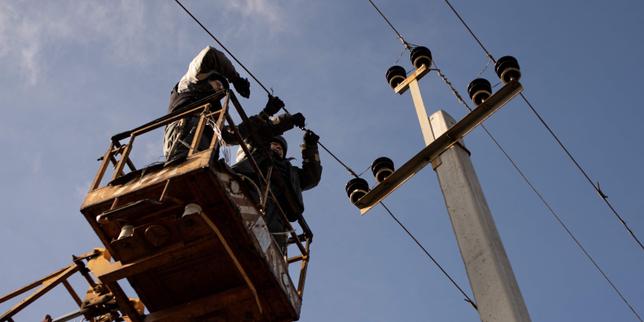
The persistence of the largest private energy investor in Ukraine suggests a shift in corporate strategy from asset management to crisis maintenance. When a facility is struck, the organizational priority transitions from "optimal output" to "immediate restoration." This requires a workforce capable of emergency repair under active combat conditions, essentially functioning as a tactical engineering corps.
This model of resilience is not a permanent solution; it is a stopgap designed to endure until the structural imbalance is rectified. The long-term security of the nation’s power supply depends on the successful scaling of the distributed model and the hardening of the transmission substations that currently serve as the primary failure points.
Future energy stability will be a function of the speed at which decentralization outpaces kinetic destruction. The strategic imperative is to secure capital for modular, redundant generation that renders large-scale kinetic strikes obsolete in their objective to influence civilian and industrial behavior. Focus investment on industrial-scale energy storage and behind-the-meter generation to decouple essential output from the primary transmission network.