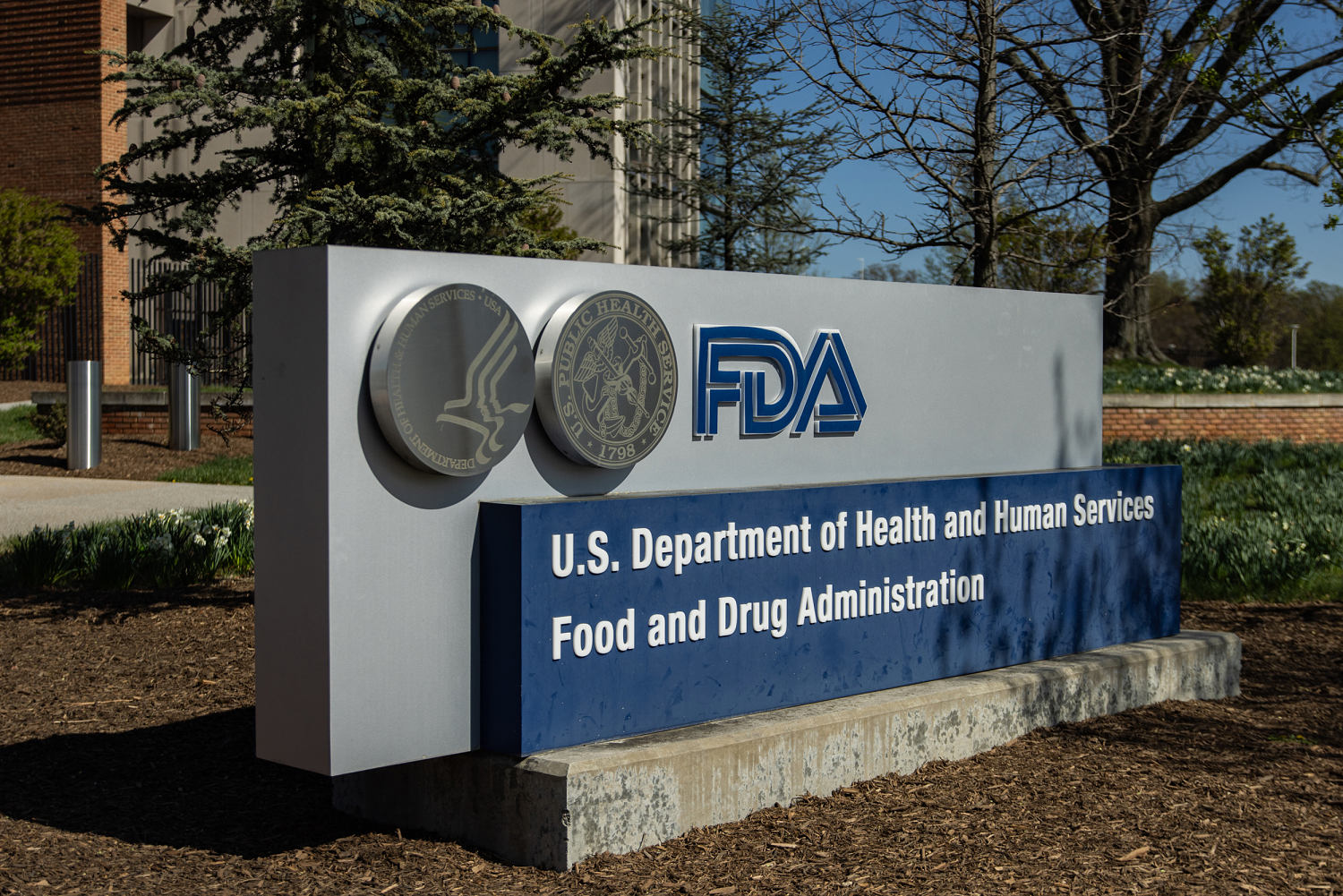
The coffee in the basement cafeteria of the White Oak Federal Research Center tastes like damp cardboard and late nights. Anyone who has spent a decade chasing clinical trial data through the labyrinthine corridors of the Food and Drug Administration knows that taste. It is the flavor of bureaucratic exhaustion.
But lately, the quiet in those hallways has taken on a different quality. It is not the restful silence of a job well done. It is the heavy, vibrating stillness that settles over a house right after the front door slams shut.
Within the span of a single week, the two most powerful people responsible for the safety of every pill, vaccine, and medical device in America walked out that door. First, the agency’s chief handed in a resignation that caught Washington off guard. Then, days later, the head of the drug regulation division—the steady hand navigating the highly technical, high-stakes world of pharmaceutical approvals—announced their departure.
To the outside world, reading the headlines on a morning commute, it looks like standard political theater. A reshuffling of the deck. A standard organizational shakeup.
It is not.
When the leadership of the world's premier health regulatory agency vanishes overnight, the ripple effects do not stay confined to Maryland. They travel down the supply chain. They seep into Wall Street boardrooms. Ultimately, they land on the sterile stainless-steel trays of local pharmacies, affecting people who have never heard the names of the bureaucrats who just walked away.
The Invisible Shield
To understand why a couple of empty desks in Silver Spring matter, consider a hypothetical patient named Sarah.
Sarah does not exist, but millions of people exactly like her do. She is forty-two, managing a chronic autoimmune condition, and sitting at her kitchen table looking at a small oval tablet. She swallows it with a sip of water without a second thought. She doesn’t check the chemical composition. She doesn’t call a laboratory to run a mass spectrometry test on the batch number.
She trusts.
That trust is not an accident. It is the product of an invisible, incredibly complex shield forged by thousands of career scientists, medical officers, and statistical reviewers. At the apex of that shield sit the regulators who just left.
The FDA does not just stamp "approved" on boxes. The agency acts as a massive, high-pressure filter between the relentless ambition of the pharmaceutical industry and the biological vulnerability of the human body. On one side, you have massive corporations spending billions of dollars, desperate to get their compounds to market before a patent window closes. On the other side, you have patients who are desperate for cures.
The regulator’s job is to stand in the middle of that raging torrent and say, Prove it.
Prove that this molecule cures more than it kills. Prove that your manufacturing facilities do not introduce contaminants. Prove that your clinical trial data is not just a statistical fluke wrapped in a glossy presentation.
When the people who hold the ultimate authority to say no suddenly vanish, the filter loses its tension. The shield starts to sag.
The Cost of Cold Seats
A federal agency running on autopilot is a dangerous machine.
When top leadership positions are vacant, or filled by temporary acting officials, the institutional psychology changes overnight. Acting directors, no matter how competent or well-meaning, rarely possess the political capital to make monumental decisions. They are caretakers. They keep the lights on, but they hesitate to draw lines in the sand.
Consider the backlog of breakthrough therapies waiting for review. The pharmaceutical pipeline is not a gentle stream; it is a pressurized firehose of gene therapies, personalized cancer vaccines, and complex biologics. Each one requires agonizingly difficult judgment calls. Is a 12% reduction in tumor size worth a 3% risk of severe liver failure?
These are not math problems with clean answers. They are profound ethical dilemmas disguised as science.
When the top offices are empty, the decision-making process slows to a crawl. Reviewers become risk-averse. The fear of making a mistake without a permanent boss to back them up paralyzes the middle management. For a biotech startup waiting on an approval to secure its next round of funding, a three-month delay is a death sentence. For a patient waiting for a new lung cancer drug because the frontline chemotherapy failed, a three-month delay is a literal death sentence.
The opposite can also happen. Without strong, seasoned leadership willing to absorb intense political and corporate pressure, the agency can buckle. Lobbyists smell blood in the water when an agency is leaderless. The push to accelerate approvals, to lower the bar for clinical evidence, to look past red flags in post-market surveillance data becomes incredibly intense.
The silence at the top creates a vacuum. And in Washington, a vacuum is always filled by the loudest, richest voice in the room.
The Human Toll of Institutional Memory
The deepest tragedy of these departures is the invisible loss of institutional memory.
You cannot replicate thirty years of regulatory expertise with a transition memo or a spreadsheet. The departing officials knew where the bodies were buried. They remembered the lessons of past disasters—the drug withdrawals that happened because a surrogate endpoint turned out to be a mirage, the clinical trials that looked perfect on paper but fell apart under rigorous site inspections.
Losing that knowledge is like watching a library burn down while trying to write a thesis.
We live in an era where the public understanding of medicine is deeply fractured. Skepticism is high. Conspiracy theories travel faster than peer-reviewed data. To maintain public confidence, the regulatory apparatus must appear rock-solid, predictable, and utterly insulated from chaos.
A sudden, double-barreled exit at the absolute top suggests the exact opposite. It signals friction. It hints at ideological warfare behind closed doors, or a level of burnout so severe that even the most dedicated public servants decided they had had enough.
If the scientists inside the building are losing faith in the mission, why should the person standing at the pharmacy counter keep theirs?
The View from the Kitchen Table
The sun is coming up over the White Oak campus now, casting long shadows across the empty parking spaces reserved for the executive tier. Soon, the cubicles will fill up with thousands of dedicated, underpaid scientists who will clock in, open their laptops, and continue analyzing Excel spreadsheets filled with liver enzyme metrics and survival curves.
They will do their jobs because they believe in the shield.
But they will be looking up at the executive suites, wondering who is going to take the heat the next time a controversial drug causes a national uproar. They will wonder if their next decision will be supported, or if it will be sacrificed to satisfy a political news cycle.
Back at the kitchen table, Sarah swallows her pill. She doesn't know about the empty offices. She doesn't know about the intense, exhausting pressure that caused two of the nation's most important health officials to walk away from their life's work in the span of seven days.
She shouldn't have to know.
The true measure of a society's stability is how little its ordinary citizens have to think about the systems keeping them alive. But right now, the machinery is brittle. The guards have left the watchtower, and the quiet in the hallways is getting louder.