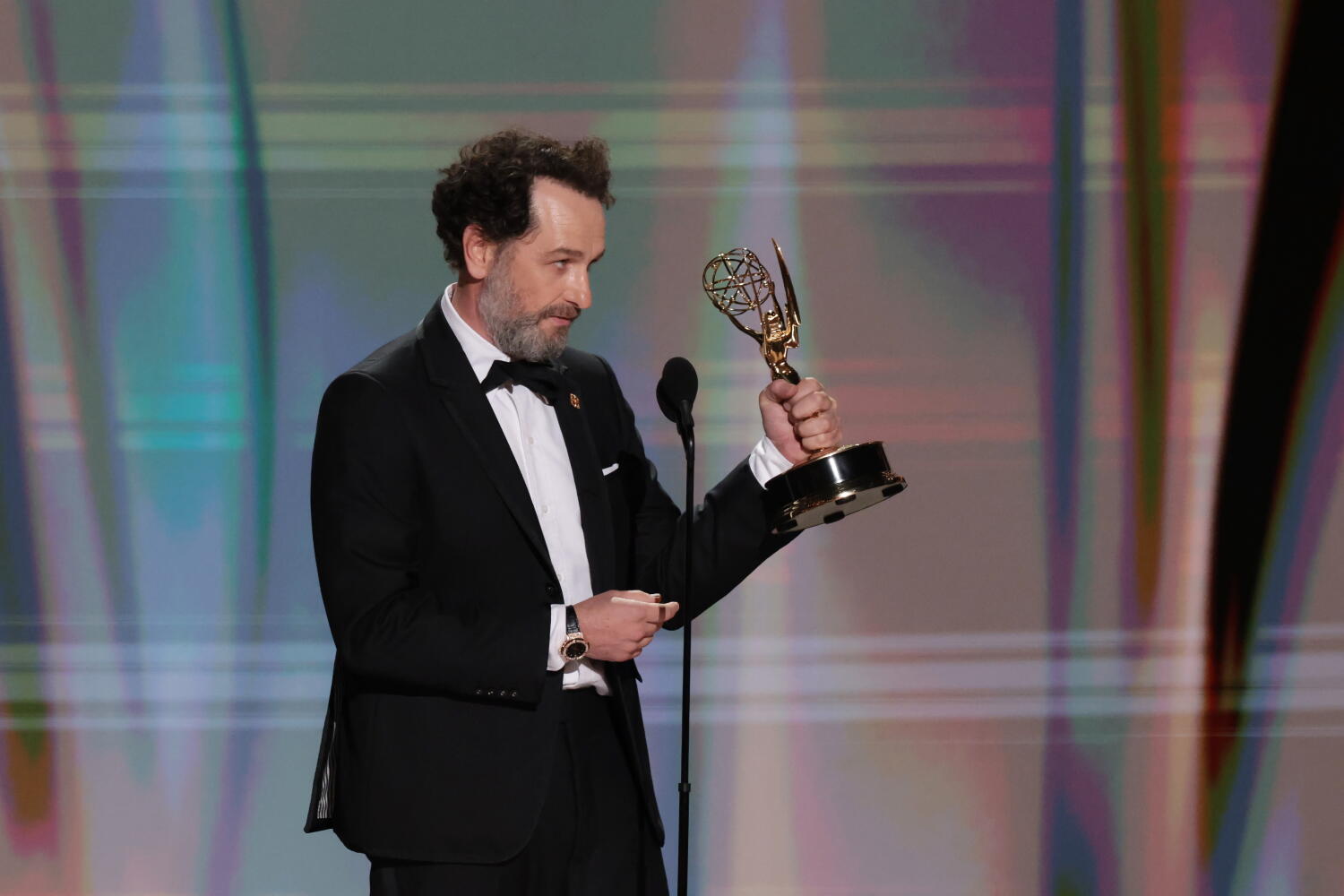
Every single major outlet is treating the recent Emmys ceremony as a standard coronation of prestige and high art. They are publishing their neat little lists of winners, praising the voters for recognizing great television, and acting as though a roomful of aging guild members managed to capture the cultural zeitgeist.
It is a complete farce.
The standard narrative claims that the Television Academy finally got it right, honoring bold storytelling and risk-taking creators. That lazy consensus ignores the mechanical rot eating away at the entire medium. The people voting on these trophies do not represent modern viewing habits. They represent an insular clique clinging desperately to legacy structures while the actual audience abandoned traditional linear logic years ago.
When you look past the red carpet pageantry and the polite applause, the entire voting apparatus operates on a delayed fuse. Winners are routinely chosen not because they defined the cultural conversation over the past twelve months, but because their marketing campaigns out-spent the competition during the final stretch of voting windows. We are handing gold statues to shows that finished airing a year prior, treating serialized television like vintage wine that needs five years in a dark cellar before anyone is allowed to judge its quality.
Let us look at the mechanics of how these wins actually happen. I have watched studios dump eight-figure sums into trade advertising blitzes specifically designed to target the cognitive fatigue of voters who refuse to watch screeners unless they are physically handed a tablet pre-loaded with episodes. This is not artistic evaluation. It is an endurance test for aging executives who treat ballot-marking as an administrative chore rather than a celebration of craft.
The consequence of this institutional blindness is a profound disconnect between commercial reality and critical validation. The shows sweeping the major categories are frequently minor footnotes in actual audience retention. Millions of viewers tune out of the broadcast every single year because the ceremony itself feels like an internal corporate memo disguised as a party.
Why do we keep pretending that an industry self-congratulatory ritual has any bearing on what makes a story resonate?
The lazy consensus tells us that prestige television is thriving because the budget numbers are high and the aspect ratios are cinematic. That completely misunderstands why people watch serialized fiction in the first place. High production values do not automatically convert to emotional gravity. We have traded narrative momentum for thirty-minute preamble scenes where characters stare blankly into middle distances while a melancholy cello score tries to convince you something profound is happening.
When a series wins top honors simply because it looks expensive and moves at the speed of a glacier, it signals to every network executive that they should double down on slow-burn boredom. It kills genuine risk. Real creative danger looks messy. It fails loudly. It does not secure unanimous approval from an academy terrified of appearing unsophisticated.
The most egregious myth perpetuated by the entertainment press is that awards validation drives cultural longevity. It does the exact opposite. The moment a show is crowned by committee, it instantly becomes homework. Viewers stop watching out of genuine curiosity and start watching out of a sense of cultural obligation, which is the absolute death knell of pop culture vitality.
Consider the treatment of genre work, or anything that dares to prioritize kinetic plotting over brooding interiority. It is routinely sidelined to technical categories where the academy can pat itself on the back for acknowledging visual effects without having to pretend that creature design or stunt coordination carries the same weight as a scene of two actors whispering across a dining room table.
This arbitrary hierarchy of genres is intellectually bankrupt. Good writing is good writing, whether it happens on a spaceship or in a Manhattan boardroom. Yet the voting body remains hopelessly tethered to a mid-century notion of theatrical drama that treats television as merely a smaller, cheaper cousin to cinema.
We need to stop treating these ceremonies as objective measures of excellence. They are lobbying outcomes disguised as art criticism. Until the voting demographic changes to reflect people who actually consume media at the speed of modern life, the trophies will continue to reward the past while the future happens entirely without them.
Stop checking the winners lists for validation. Stop letting industry PR machines convince you that a gilded paperweight dictates artistic worth. The best television being made right now does not need a committee's permission to matter, and the sooner we stop caring who holds the microphone at the podium, the sooner we can get back to actually enjoying good stories.