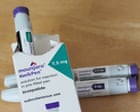
The UK is currently caught in a high-stakes standoff between a global pharmaceutical giant and a cash-strapped healthcare system. Eli Lilly, the American firm behind the weight-loss sensation Mounjaro, is making a bold demand. They want the NHS to pay more for their drugs. If the government agrees, Lilly promises to pour more investment into British life sciences. If they don’t, that money might just head elsewhere.
It’s a classic carrot-and-stick routine. You’ve probably seen the headlines about "miracle" weight-loss jabs. Mounjaro is the heavyweight in that ring, often showing even better results in clinical trials than its famous rival, Ozempic. But the cost of keeping a nation's waistline in check is astronomical. For the NHS, every penny spent on a subcutaneous injection is a penny taken away from GP appointments or elective surgeries.
The Price of Innovation in a Budget Crisis
Eli Lilly isn't just asking for a few extra pounds. They're challenging the very way the UK prices branded medicines. Right now, the Voluntary Scheme for Branded Medicines Pricing, Access, and Growth (VPAG) caps the total bill the NHS pays for branded drugs. If the bill goes over a certain limit, pharma companies have to pay a rebate back to the government.
Lilly’s executives argue this system is suffocating. They claim that high rebate rates make the UK an unattractive place to launch new products or build research centers. David Ricks, Lilly’s CEO, has been vocal about this. He basically told the UK government that if they want to be a "life sciences superpower," they have to act like one. That means paying market rates that reflect the R&D costs of developing these complex biologics.
But here’s the reality. The NHS is already facing a multi-billion pound deficit. Total spending on obesity-related illnesses in the UK is estimated at £6.5 billion annually. While Mounjaro could technically save money long-term by reducing heart disease and diabetes, the upfront cost is a massive hurdle. You can't just ignore the immediate budget impact because of a theoretical saving ten years down the line.
What Mounjaro Actually Costs the System
Let’s talk numbers. The list price for Mounjaro isn't what the NHS pays—those deals are usually kept under wraps—but we know the scale is huge. Estimates suggest that if everyone eligible for weight-loss jabs in the UK actually got them, the cost could exceed the entire current budget for all other primary care medications combined.
Lilly knows they have leverage. Mounjaro (tirzepatide) works by targeting two different hormones, GLP-1 and GIP. This dual-action approach makes it incredibly effective. Patients often lose up to 20% of their body weight. For a government desperate to get people back to work and off long-term sick leave, this looks like a magic bullet.
The company is dangling a £279 million investment package in front of the Treasury. This includes "gateway labs" for startups and clinical trials for obesity treatments. But there’s a catch. That investment is contingent on a more "favorable" commercial environment. It’s a trade-off. Do we pay higher drug prices to secure jobs in the Thames Valley? Or do we keep drug prices low to protect the frontline NHS budget?
The Life Sciences Superpower Myth
The UK government loves the phrase "life sciences superpower." It sounds great in a manifesto. It’s a lot harder to achieve when you're competing with the US and China. In the US, drug prices are largely unregulated, which is why Lilly makes the lion's share of its profit there. In Europe, governments negotiate hard.
The UK used to be a middle ground. We had a strong academic base and a single-payer system that could provide massive amounts of data for clinical trials. But that edge is dulling. Clinical trial start-ups in the UK have slowed down compared to our European neighbors. Lilly is pointing at this decline and saying, "We can fix this, but you have to make it worth our while."
It’s not just about greed. Developing a drug like Mounjaro costs billions. If a company can’t see a clear path to profit in a specific market, they’ll deprioritize it. We’ve already seen some companies bypass the UK for initial launches because the pricing negotiations are too grueling. Honestly, it’s a gamble for the government. If they cave to Lilly, every other pharma company will be at the door asking for the same deal.
Why the NHS is Digging Its Heels In
The NHS isn't a venture capital firm. Its job is to provide the best care for the most people with a limited pot of money. NICE (the National Institute for Health and Care Excellence) already recommended Mounjaro for weight loss, but with strict caveats. They know the demand is "unprecedented."
There's a genuine fear of a two-tier system. If the NHS can't afford to roll this out at scale, only those who can pay hundreds of pounds a month privately will get access. That widens the health inequality gap. The government is trying to find a "value-based" middle ground. They want the investment, but they can't afford to break the bank on a single class of drugs.
The Impact on Patients and the Economy
If a deal isn't reached, the consequences are pretty clear. The UK might get slower access to the next generation of Eli Lilly drugs. We might lose out on high-tech manufacturing jobs. On the flip side, if the government gives in, taxes might have to rise or other services might be cut.
It’s a zero-sum game. You can't have it all. The UK is currently trying to build a new life sciences hub in Cambridge, but the companies that should be filling it are pointing at the NHS's drug pricing and saying, "Why should we?"
The real question isn't whether Mounjaro works—it clearly does—it's whether the UK can afford to pay for it at the price Lilly wants. If we don't, we're not just losing out on a weight-loss jab. We're potentially losing a whole industry.
The Next Step
If you're tracking the UK's position as a life sciences leader, look at the next round of VPAG negotiations. That’s where the real battle over drug prices and investment will be fought. You should also watch the rollout of the NHS weight-loss program. If the government can't find the money for Mounjaro, it will be the first major sign that their "superpower" ambitions are hitting a wall.
The UK is at a crossroads. It can either be a country that prioritizes low-cost drugs or a country that pays for innovation to build its economy. It’s becoming increasingly clear that it cannot be both.