The air inside a command bunker smells perpetually of stale coffee, ozone, and cold sweat. Down here, beneath miles of reinforced concrete and granite, time does not move by the ticking of a clock. It moves by the widening of eyes around a monitor.
I remember the hum of the cooling fans in a joint operations center years ago, a low, constant vibration that got into your teeth. You learn to read the silence in a room full of generals faster than you read the telemetry. When the screen flashes amber, nobody breathes. When it flashes red, you stop thinking about home and start thinking about the threshold. Learn more on a related issue: this related article.
Right now, the threshold is being debated in Washington, in Tehran, in Tel Aviv, and in the quiet, sterile offices where men who have never held a smoking rifle weigh the architecture of human survival.
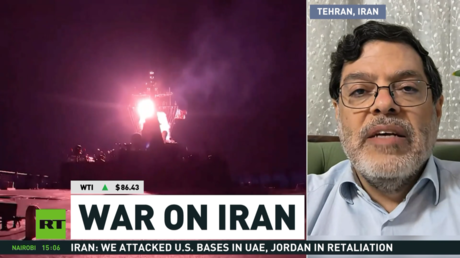
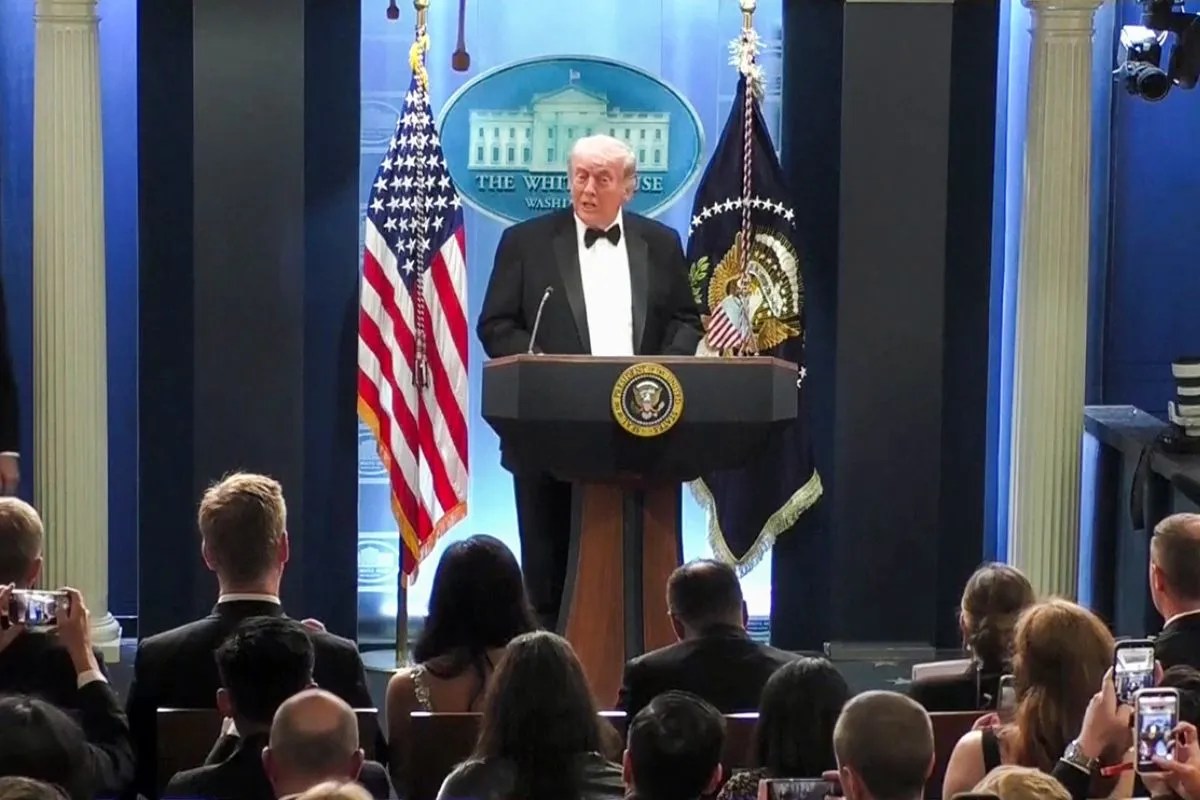
Donald Trump recently stepped into that crowded room with his characteristic bluntness, stripping away the diplomatic varnish that usually coats nuclear discourse. In a recent assessment of the US-Iran conflict, his perspective cut through the usual hedging: if Tehran possessed a nuclear weapon, he argued, they would have used it already, and the immediate consequence would have been the total erasure of Israel and the Middle East. Further journalism by Reuters explores related perspectives on this issue.
It is a stark, terrifying calculation. But beneath the bluster of the statement lies a chilling strategic truth about possession, restraint, and the invisible logic of deterrence that keeps the world from sliding off the edge.
Consider what happens next when a nation steps across the nuclear Rubicon.
We talk about enriched uranium and centrifuge cascades as if they are abstract entries in a physics textbook. They are not. They are physical manifestations of fear. Picture a line of heavy metal rotors spinning at supersonic speeds in a subterranean hall, separating isotopes in the dark. Every rotation brings a regime closer to absolute power, or absolute destruction.
Yet power, when absolute, often invites its own undoing.
For decades, political scientists have relied on the chilling doctrine of Mutually Assured Destruction. MAD, as acronyms so clinically call it, worked during the Cold War because both sides feared the dark. Washington and Moscow understood that pushing the button meant signing their own death warrants. There was a grim symmetry to the terror.
The Middle East equation does not share that clean geometry.
When Trump claims that an Iranian nuclear weapon would already have been deployed against Israel, he is pointing to a fundamental asymmetry in ideological fanaticism versus state survival. In standard geopolitical theory, even hostile actors are rational utility maximizers. They want to preserve their regime, their wealth, and their territory. But what happens when a leadership frames its entire existence around eschatological prophecy? What happens when martyrdom is codified not as a tragedy, but as a supreme victory?
This is the abyss that keeps intelligence analysts awake at night.
To understand why Tehran has not yet crossed the finish line—despite years of breakout capacity building, advanced cascading, and provocative regional proxies—we have to look past the rhetoric of invincibility. We have to look at vulnerability.
Sanctions bite, but bombs burn. Iran’s leadership knows with mathematical certainty that the moment a nuclear device is successfully detonated or definitively confirmed in their hands, the response from the West and Israel will not be another round of sternly worded United Nations resolutions. It will be kinetic. It will be total. The underground facilities at Natanz and Fordow would not merely be damaged; they would be entombed.
Restraint, in this context, is not a virtue born of peace. It is a weapon born of terror.
They know it. Washington knows it. Jerusalem knows it.
We are living through a cold, high-stakes game of chicken where every driver is staring at the hood of the other car, waiting for someone to flinch. But the road is narrowing. Regional proxies—from Hezbollah in Lebanon to the Houthis in Yemen—act as pressure valves, venting steam so the main boiler doesn't explode. Yet every proxy war brings the core antagonists closer to a miscalculation.
History is littered with the wrecks of empires that thought they could manage escalation forever. World War I did not start because everyone wanted a global conflagration; it started because a web of rigid alliances and nervous triggers turned a single gunshot in Sarajevo into a planetary blender.
When modern leaders talk about nuclear thresholds, they are playing with matches in a room filled with spilled gasoline.
The human cost of this standoff never makes it onto the chyrons of cable news. It is felt by the mother in Haifa who checks her designated neighborhood bomb shelter before buying groceries. It is felt by the university student in Tehran who watches the value of his currency dissolve into smoke while his government pours billions into uranium enrichment and regional militias instead of water infrastructure. It is felt by the young sailor on a US Navy destroyer in the Persian Gulf, staring out at a dark, oil-slicked horizon, wondering if tonight is the night the Iranian speedboats swarm.
These are the invisible stakes. They are made of flesh, bone, and relentless anxiety.
Trump’s assertion that a nuclear-armed Iran would spell the end of Israel is not merely a hypothetical tactical assessment; it is a recognition of the eliminationist rhetoric that has anchored Tehran's foreign policy since 1979. When a regime explicitly promises to wipe a neighbor off the map, giving them the ultimate tool to accomplish that mission transforms rhetoric into an existential countdown.
Israel’s doctrine has always been clear: never again. For Tel Aviv, a nuclear Iran is an intolerable horizon. The preemptive strike option—the Samson option, the midnight raid by F-35s slicing through foreign radar—is never off the table. Every Israeli prime minister knows that if they wait for proof in the form of a mushroom cloud, it will be too late to write a history of the aftermath.
So the standoff persists in the shadows.
Cyberweapons like Stuxnet tore through Iranian centrifuges years ago, proving that code can act as kinetic sabotage. Sabotage inside secure facilities, mysterious explosions at missile bases, and the targeted elimination of top nuclear scientists have all served as speed bumps on Iran's road to the bomb.
The race is a slow-motion sprint.
As long as the economic pain of sanctions and the looming threat of annihilation outweigh the psychological payoff of crossing the threshold, the regime holds back. They play the game at the edge of the precipice, keeping the enrichment dial just shy of weapons-grade, maintaining plausible deniability while projecting regional dominance through proxies.
But games at the edge eventually end with a stumble.
We deceive ourselves if we think time is on our side. Technology marches forward. Intelligence margins shrink. A breakthrough in hidden, deep-rock enrichment could shorten a breakout timeline from months to days, leaving no room for diplomacy, no room for second thoughts, and no room for error.
The command bunker is quiet again. The coffee has gone cold. On the screen, a cursor blinks against a dark map of the Middle East, indifferent to the millions of lives hanging on its next movement.
The threshold remains uncrossed. For now.