A livestreamed evening Mass in Guayaquil was supposed to be routine. Instead, it turned into a nightmare nobody in that sanctuary will ever forget.
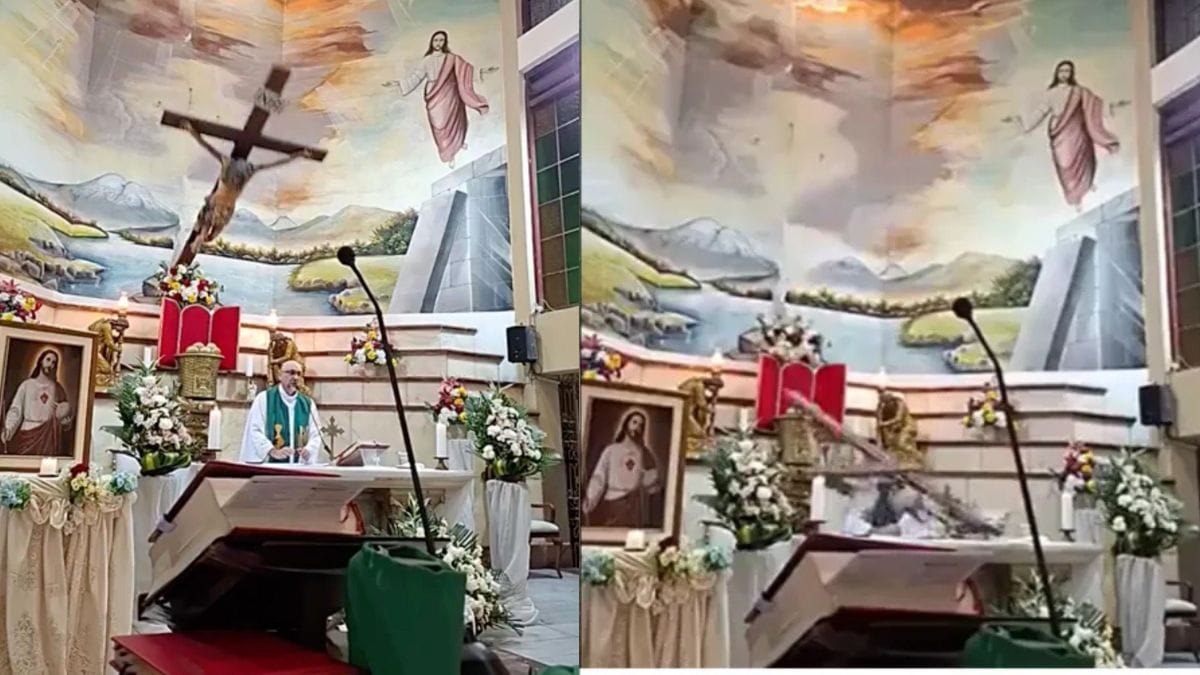
On October 17, 2026, 53-year-old Redemptorist priest Father Patricio Alfredo Sánchez Molinari died after a heavy wooden crucifix detached from the wall above the altar at Our Lady of Perpetual Help Church—known locally as Nuestra Señora del Perpetuo Socorro—and struck him. Because the service was being broadcast live online, thousands of people ended up witnessing the immediate aftermath. Voices shouted for an ambulance. Parishioners rushed forward. Then the stream went dark.
When a viral clip shows a sudden fatal accident, people naturally fixate on the shock value of the footage. Honestly, that's the least useful place to stop. What happened in Guayaquil isn't just a heartbreaking freak accident. It's a stark reminder of how easily heavy overhead fixtures in older buildings can fail without giving a single warning sign first.
What Happened During the Livestreamed Mass in Guayaquil
Details confirmed by the Archdiocese of Guayaquil and wire reports paint a grim picture, even as questions around the exact mechanical failure remain unanswered. Father Sánchez Molinari belonged to the Congregation of the Most Holy Redeemer, a Roman Catholic order founded in 1732 with members working across roughly 80 countries. He was celebrating the Saturday evening Mass in Ecuador's largest city when the large crucifix gave way behind him.
He had his back turned toward the wall, facing the congregation, and didn't appear to see the fixture coming down. After taking the blow, he collapsed behind the altar area. Emergency responders were called to the church, though efforts to save him failed.
Neither the archdiocese nor local authorities immediately released a formal engineering report explaining why the crucifix fell. Did a wall anchor pull loose from decades of vibration and moisture? Did timber rot or metal fatigue weaken the mounting bracket? Right now, public information hasn't confirmed the root mechanical cause, and pretending otherwise would be pure guesswork.
Why Heavy Overhead Fixtures Fail Without Warning
If you've ever spent time inside historic churches, cathedrals, or older civic halls, you know how common massive wall-mounted crosses, statues, and sanctuary pieces are. They look permanent. Solid. Untouchable.
They aren't.
In building maintenance and structural inspection, overhead loads carry a nasty catch: static gravity hides gradual wear. A bracket holding up a heavy wooden or composite cross can sit under constant tension for thirty or fifty years while microscopic corrosion, masonry cracking, or fastener loosening builds up out of sight. Unlike a squeaky hinge or a flickering light, a wall anchor rarely complains before it lets go.
Climate makes things trickier in coastal cities like Guayaquil. High humidity, heat cycles, and shifting masonry can gradually degrade older mortar, plaster, or metal hardware. Even if a fixture looks pristine from the pews, the concealed hardware behind it might be hanging on by a fraction of its original load capacity.
That isn't unique to religious spaces, either. Across older buildings worldwide—including a tragic incident earlier in 2026 in Chicago where a falling stone gargoyle struck and killed a passerby outside an old church—aging exterior and interior architectural elements have proven far more vulnerable than people assume. When something heavy falls from height, physics takes over fast, and there's almost no time to react.
Livestreams Changed How the Public Experiences Sudden Tragedy
Part of why this story spread so fast wasn't just the tragedy itself. It was the camera.
Livestreaming church services became standard practice during the pandemic and stuck around because it lets homebound parishioners, traveling families, and global communities stay connected. Usually, that means calm camera angles, hymns, and homilies.
When an unscripted catastrophe happens on a live feed, the medium magnifies the grief and the shock. Viewers don't just read a summary the next morning; they hear real voices panicking in real time. Clips get clipped, reposted, and stripped of context on social platforms within hours.
That creates a real tension for newsrooms and social users alike. Sharing raw clips of someone's final moments can quickly cross from public-interest reporting into voyeurism. You don't need to watch graphic footage to grasp the gravity of a fatal workplace or sanctuary accident—and frankly, chasing viral shock clips usually distracts from asking practical questions that actually prevent the next one.
Common Mistakes Buildings Make With Heavy Wall Mounts
Having worked around facility maintenance and safety audits, I've seen the same shortcuts pop up again and again in older or volunteer-run spaces:
- Treating decorative pieces like light pictures: A heavy wooden crucifix or sculpture isn't a framed print. Standard drywall anchors or single lag bolts in aging plaster aren't enough for high-leverage hanging loads.
- Skipping periodic load and anchor checks: Once a cross or altar piece is hung during a renovation or dedication, nobody inspects the backing hardware for decades—until something shifts.
- Ignoring subtle movement or dust: Fine plaster dust under a mount, a slight tilt, or a tiny gap along the top edge are classic early clues that fasteners are pulling out.
- Assuming "it's always been fine" means it's safe: Past survival isn't a structural guarantee. Materials age, and yesterday's safe mount can be today's hazard.
Practical Next Steps for Church and Facility Leaders
If you manage, maintain, or volunteer at a church, school, or older community building, don't wait for a tragedy to look up. A few straightforward steps can dramatically cut the risk of falling fixtures:
- List every heavy overhead or wall-mounted item. Focus on crucifixes, statues, sound gear, lighting rigs, and large plaques positioned above altars, aisles, pews, or walkways.
- Inspect the backing and hardware, not just the surface. Have a qualified contractor or structural handyman check how heavy pieces are anchored into studs, masonry, or concrete—and look for rust, cracks, or loosened brackets.
- Add secondary safety tethers where appropriate. On high-risk or heavy pieces, concealed steel cables or secondary brackets can catch a load if a primary mount fails.
- Log inspections on an annual calendar. Keep a simple maintenance record so inspections don't depend on memory or who happens to be on staff this year.
- Review livestream and emergency protocols. Make sure staff know how to cut a live broadcast quickly during an emergency and have clear, practiced steps for calling emergency services and clearing the area.
Father Sánchez Molinari's death is a painful loss for his order, his parish in Guayaquil, and everyone who knew him. Taking a hard look at how heavy fixtures are secured in spaces where people gather every week is one concrete way to honor safety before another tragedy strikes.
Father Patricio Sánchez Molinari Memorial Mass in Guayaquil
This video report covers the livestreamed Mass incident in Guayaquil where the falling crucifix struck Father Sánchez Molinari, giving visual context to how the tragedy unfolded.