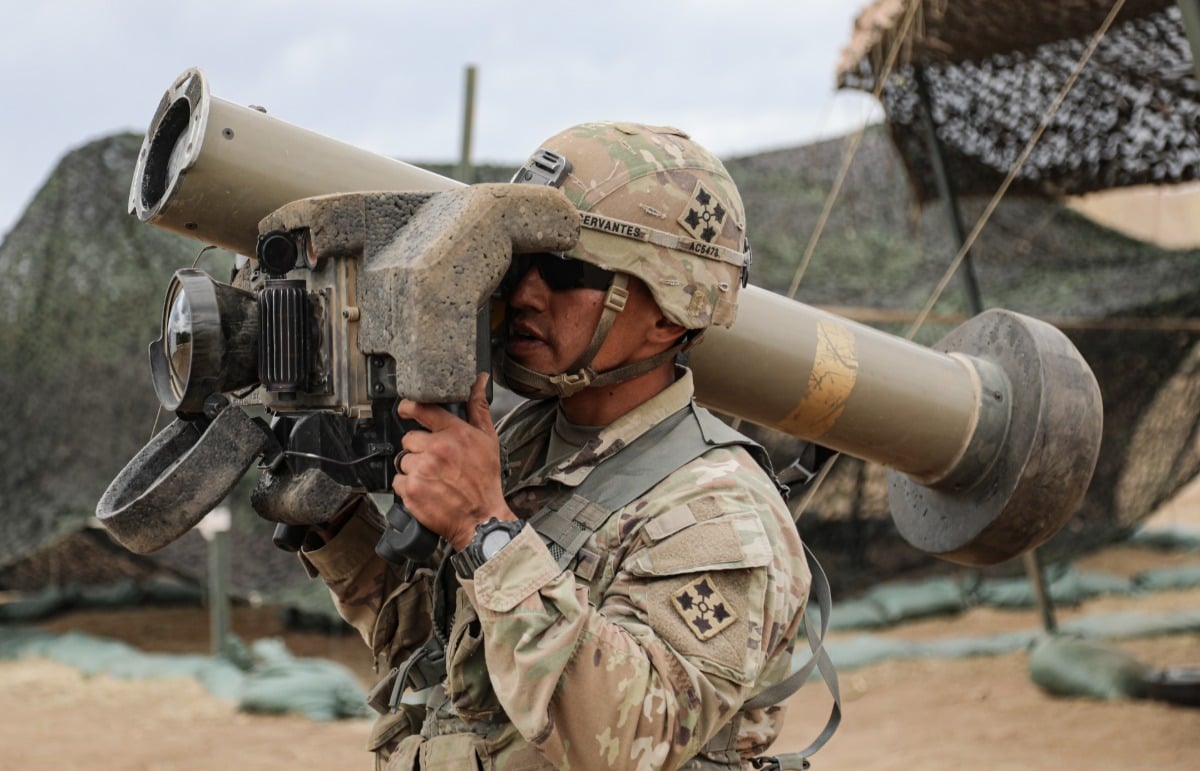
The United States Department of the Army’s stated intent to secure a rolling 10-year procurement strategy for the FGM-148 Javelin anti-tank guided missile (ATGM) represents more than a standard inventory replenishment cycle. It is a structural shift in defense industrial planning designed to solve three systemic vulnerabilities: industrial base capacity inelasticity, rapid consumption rates observed in peer-adversary proxy conflicts, and the unit-cost distortions inherent to short-term contracting. By moving away from volatile, year-to-year appropriations toward a decade-long demand signal, the military apparatus is attempting to institutionalize a state of cold-start readiness.
Understanding this procurement strategy requires breaking down the interplay between manufacturing bottlenecks, geopolitical consumption vectors, and the evolving technological utility of man-portable precision munitions.
The Tri-Mouth Bottleneck of Precision Munitions Manufacturing
The production of an advanced man-portable weapon system like the Javelin cannot be scaled linearly by injecting capital. The manufacturing architecture is constrained by a highly specialized supply chain with three primary choke points.
1. The Micro-Electronics and Focal Plane Array Deficit
At the core of the Javelin’s fire-and-forget capability is its infrared imaging seeker. The seeker relies on mercury-cadmium-telluride (HgCdTe) focal plane arrays (FPAs). The fabrication of these arrays requires cleanroom environments and semiconductor manufacturing processes that possess low yield rates compared to commercial silicon. Because the defense sector represents a fraction of global semiconductor demand, prime contractors (the Raytheon and Lockheed Martin joint venture) contend with long lead times for specialized wafers. A 10-year purchasing commitment allows component fabricators to dedicate specific production lines to military-grade optoelectronics without risking stranded assets if federal priorities shift.
2. Solid Rocket Motor Production Inertia
The physical propulsion system requires highly stable, cast double-base or composite solid propellants. The industrial base for solid rocket motors (SRMs) in the United States is highly consolidated. This consolidation creates a scheduling conflict where Javelin production lines compete directly with tactical air defense missiles, cruise missiles, and strategic deterrents for the same chemical mixing and casing facilities. A prolonged demand window allows suppliers to optimize their tooling schedules, reducing the downtime associated with switching production lines between different missile profiles.
3. The Specialized Labor Deficit
The assembly of the Javelin Command Launch Unit (CLU) and the missile guidance section involves intricate manual processes, including precision wire bonding and hand-soldering of hardened circuit boards. This requires a workforce holding specific certifications (such as IPC-A-610 space addendum standards) and security clearances. The defense industrial base cannot easily recruit this labor from the commercial tech sector. Long-term contracts give prime contractors the financial visibility needed to fund multi-year apprenticeship and retention programs, stabilizing the labor variable in the cost equation.
The Cost Function of Long-Term Defense Procurement
Short-term defense contracting introduces a fiscal penalty known as the procurement whipsaw. When Congress appropriates funds on an annual or biannual basis, sub-tier suppliers price their components to hedge against the risk of sudden cancellation. This behavior inflates the programmatic unit cost.
The application of a 10-year purchasing framework alters this cost function through two primary mechanisms:
Economic Order Quantity (EOQ) Optimization
When a prime contractor can guarantee bulk orders of raw materials—such as specialized titanium alloys, specialized optical glass, and high-energy chemical compounds—over a decade, they can execute EOQ agreements with sub-tier vendors. Suppliers pass on savings achieved from continuous run-times and volume discounts. This reduces the flyaway cost per missile, maximizing the purchasing power of the defense budget.
Amortization of Capital Expenditures
Increasing the production rate from the historical baseline of roughly 2,100 missiles per year toward the targeted ceiling of 3,960 per year requires significant factory floor expansion and automated test equipment integration. Under a standard short-term contract, a corporation cannot easily justify the capital expenditure needed to automate assembly steps. A 10-year runway allows the joint venture to amortize these fixed capital investments across tens of thousands of units, driving down the marginal cost of production over time.
The economic reality can be structured as follows:
- Fixed Baseline Costs: Tooling, facility footprints, and regulatory compliance remain static regardless of volume.
- Variable Cost Reductions: Achieved via continuous raw material pipelines and minimized supplier onboarding friction.
- The Learning Curve Effect: Factory floor efficiency increases as technicians repeat specialized assembly processes without line shutdowns, reducing labor hours per unit.
The Consumption vs. Replenishment Disconnect
The war in Ukraine transformed the Javelin from a deterrence asset into a high-rate consumption asset. The strategic calculation guiding U.S. stockpile management previously assumed that precision munitions would be expended at a controlled, predictable pace against asymmetric threats. Peer-level conventional warfare invalidated this assumption.
During the initial phases of the Ukrainian conflict, Western nations transferred thousands of Javelin systems from existing stockpiles. The rate of expenditure outstripped Western production capacity by a factor of multiple years. This created an inventory deficit that compromised the U.S. military’s minimum operational readiness requirements for other potential theaters, specifically the Indo-Pacific.
[Stockpile Depletion Vector] -> Exceeds -> [Annual Production Capacity] -> Yields -> [Strategic Inventory Deficit]
The 10-year buying plan is an explicit acknowledgment that a modern peer conflict requires a manufacturing base capable of operating in a sustained "surge" configuration. The goal is to build an active inventory buffer large enough to absorb the shock of a sudden, high-intensity conflict without leaving domestic units under-equipped while waiting years for factories to scale up.
Technological Evolution and Threat Adaptation
A common criticism of a decade-long procurement strategy for a weapon system designed in the late 20th century is the risk of technological obsolescence. The rise of low-cost first-person view (FPV) loitering munitions and active protection systems (APS) on modern armor has altered the tactical environment.
The Javelin system avoids obsolescence because the underlying missile architecture is modular. The 10-year procurement strategy does not lock the U.S. Army into buying identical hardware for a decade; instead, it funds a continuously iterating platform.
Spiral Development Paths
The procurement pipeline accommodates incremental block upgrades. The Army can transition production from older variants to newer iterations—such as the Javelin F-Model (FGM-148F), which features a multipurpose warhead combining shaped-charge armor penetration with fragmentation effects—without rewriting the foundational contract structure.
Counter-APS Integration
Modern Main Battle Tanks (MBTs) increasingly employ hard-kill active protection systems designed to intercept incoming projectiles. The Javelin's top-attack profile, which utilizes a steep diving trajectory to strike the thinnest armor plate of a vehicle, remains highly effective. Continuous funding allows engineers to update the seeker software algorithms to better isolate targets using active countermeasures or deploying multispectral smoke screens.
Electronic Warfare Resilience
Unlike laser-guided or wire-guided ATGMs, which require the operator to maintain a line of sight and transmit signals until impact, the Javelin’s imaging infrared (IIR) seeker operates autonomously post-launch. This inherent fire-and-forget nature makes it immune to radio-frequency jamming and electronic warfare suites designed to sever the link between an operator and a missile.
Strategic Limitations and Systemic Vulnerabilities
While a 10-year procurement strategy provides industrial stability, it introduces distinct vulnerabilities that planners must manage.
- Vendor Lock and Monopsony Risks: By committing to a single platform for a decade, the U.S. Army reduces the competitive pressure that drives innovation. Smaller defense technology firms developing alternative anti-armor concepts find themselves locked out of major funding streams, potentially stifling the development of next-generation kinetic solutions.
- Fiscal Rigidity: Defense priorities can shift rapidly based on geopolitical developments. A long-term contractual commitment ties up billions of dollars in procurement funds, reducing the fiscal agility of the Army if an unexpected technological pivot—such as widespread autonomous drone swarms—renders traditional ATGM frameworks less critical on the future battlefield.
- The Single Point of Failure Vulnerability: If a critical sub-tier supplier of a specific component (e.g., the specialized germanium lenses used in the seeker optics) experiences a catastrophic factory event or financial insolvency, the entire 10-year production pipeline stalls. The stability of the long-term contract is only as strong as the weakest link in the multi-tier supply chain.
The Tactical Re-Balancing Act
The decision to extend Javelin procurement through a 10-year horizon confirms that despite the proliferation of uncrewed aerial systems (UAS) on the modern battlefield, the requirement for heavy, reliable, infantry-portable armor destruction remains absolute. Drones offer low-cost reconnaissance and asymmetric strike capabilities, but they cannot match the all-weather reliability, armor-piercing capability, and immediate tactical responsiveness of a dedicated man-portable missile system in contested electronic warfare environments.
The long-term contract acts as a dual-purpose instrument. Nationally, it forces an sclerotic industrial base to rebuild its manufacturing muscle memory and scale production to levels appropriate for peer conflict. Internationally, it signals to adversaries that the United States possesses the industrial stamina to support prolonged conventional campaigns, establishing an economic foundation for conventional deterrence. The success of this strategy hinges on the Army's ability to enforce rigorous quality control over a strained supply chain while ensuring the missile's sensor software evolves faster than the defensive suites of the targets it is built to destroy.